



Description
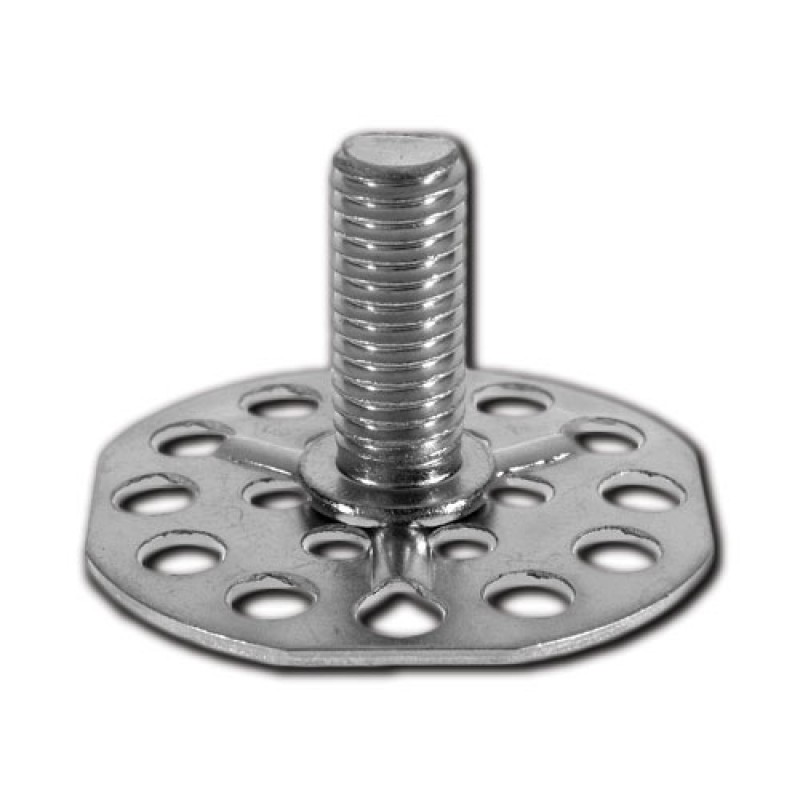
Chem-Set M1 no-drill bonding fasteners add a male 3/8-16 mounting point without drilling through the finished surface. This version pairs a 1-inch stud with a round 38 mm baseplate that is 1.2 mm thick. The broad plate creates an adhesive-bonding area that can spread load across the substrate while keeping the opposite face free of holes, weld marks, and exposed hardware.
Chem-Set No-Drill Installation
Prepare both the substrate and baseplate for the selected adhesive. Remove dust, oil, release agents, and loose surface material, then abrade or prime when required by the adhesive manufacturer. Apply a controlled amount of adhesive to achieve full coverage without excessive squeeze-out, place the fastener in its final orientation, and fixture it until the bond can support handling. Allow the full cure interval before applying installation torque or service load.
A bonded stud is only as reliable as the complete joint. Substrate strength, surface preparation, adhesive chemistry, bond-line thickness, plate geometry, cure temperature, and load direction all affect performance. Validate the assembly with representative parts and the actual installation process. For safety-critical or highly loaded equipment, engineering review and documented testing should define the allowable load and torque.
Chem-Set Bonding Stud Applications
The low-profile base is useful behind panels, signs, enclosures, transportation interiors, composite structures, equipment covers, and decorative surfaces where through-fastening is undesirable. The male thread can accept brackets, cable supports, clips, electronics, insulation hardware, trim components, and removable service parts. Because the attachment is made from one side, the installer can preserve the visible face and avoid access to the back of a closed panel.
Fixture design matters when many studs must share a common pattern. A locating template can control spacing, stud angle, and height while the adhesive cures. Use a fixture material that releases cleanly and does not disturb the bead. Check a sample assembly for squeeze-out around the plate, full seating, and perpendicular thread alignment before scaling the process.
The 3/8-16 thread suits common inch-pattern nuts and mounted components. Confirm thread engagement, stud length, clearance, and corrosion compatibility before release. Use washers, locking hardware, or controlled torque where the assembly requires them, but do not treat higher tightening torque as a substitute for adequate adhesive area or full cure.
When the substrate is thin, flexible, painted, or laminated, test whether the surface layer fails before the adhesive joint. Loads that peel or pry at one edge of the baseplate can be more demanding than loads applied close to the plate in shear. Position the mounted component to minimize eccentric loading, and include vibration, thermal cycling, moisture, and service access in qualification testing.
Specifications
| Property | Value |
|---|---|
| SKU | CCH-SSM1B38-3/8-16X1 |
| Fastener family | M1 no-drill bonding stud |
| Thread | 3/8-16 male |
| Stud length | 1 in |
| Baseplate | Round, 38 mm diameter |
| Baseplate thickness | 1.2 mm |
| Attachment method | Adhesive bonding |
Browse related bonding fasteners for other thread and base configurations. For surface preparation, adhesive application, and bonded-fastener demonstrations, visit the Chemical Concepts application video channel. Select the adhesive and fastener as one tested system.
Need Help?
Need help matching a bonding stud to the substrate, adhesive, and expected load? Call (800) 220-1966 or email [email protected].



Reviews
There are no reviews yet.