
Knife-Grade Epoxies for Stone Fabrication
|
Countertop Seaming Solutions Knife-Grade Epoxies for Stone FabricationKnife-grade adhesives are thick, non-slumping two-part systems used for seaming, laminating, mitering, and repairing stone. The paste consistency stays where you put it on a vertical miter instead of running down the face, and it takes tint so the seam reads as part of the slab. Fabricators call these knife grade epoxy, poly-epoxy, or just seam glue. The chemistry underneath varies, and that is what decides the job. We stock two: a methacrylate for speed and UV stability, and a styrene-free vinyl ester for shops cutting styrene out of the building. |
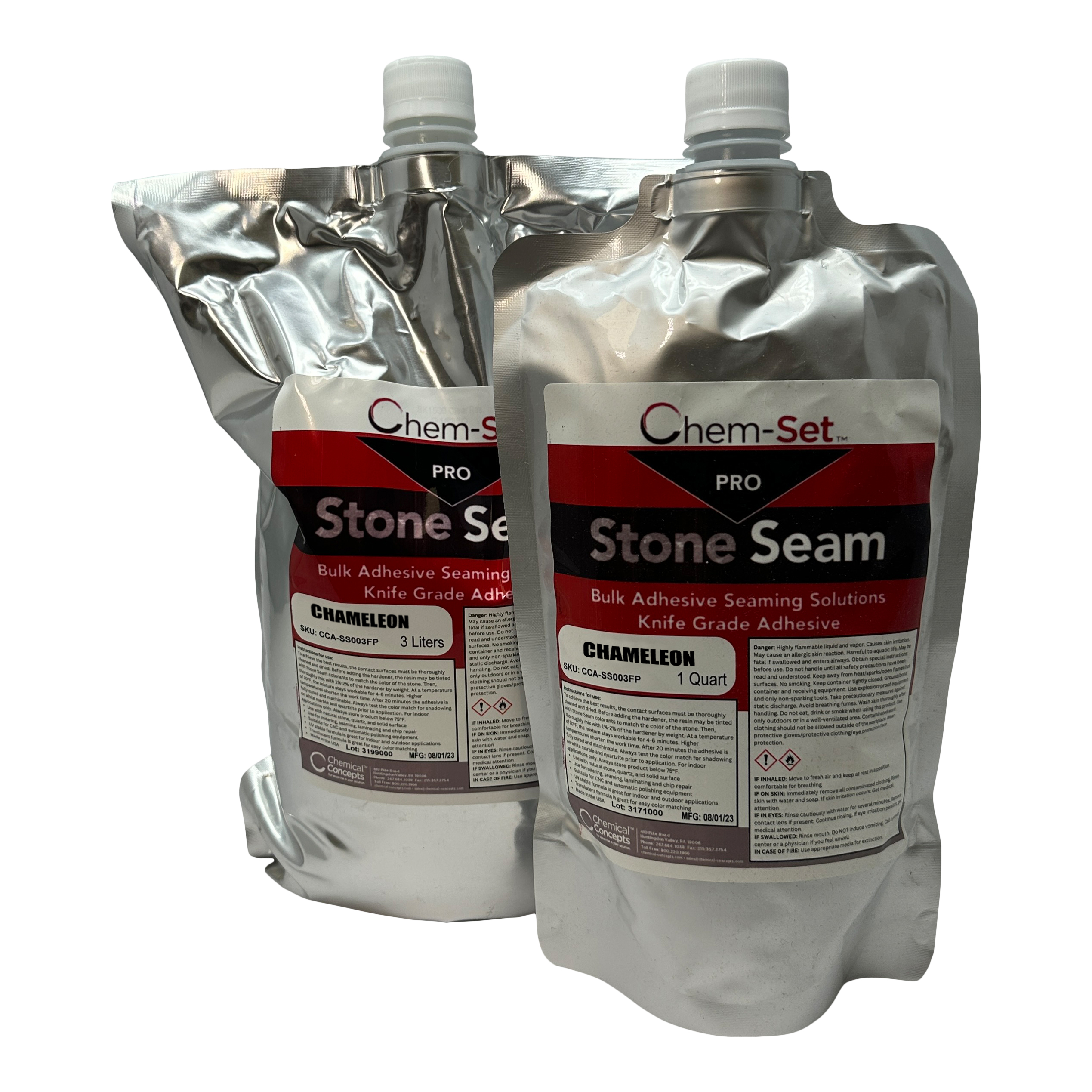
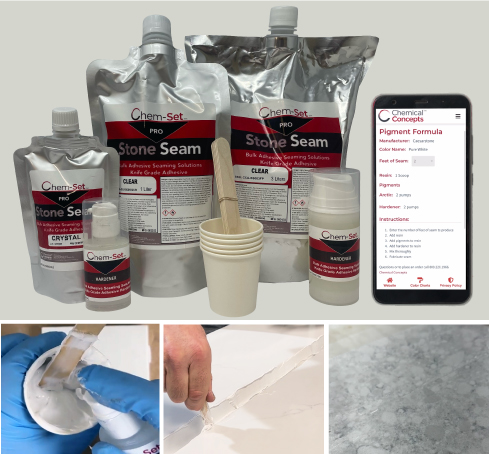 Stone Seam Pro Knife-Grade MMA |
What Is a Knife-Grade Seam Adhesive?
A knife-grade seam adhesive is a two-part, paste-consistency adhesive used to close countertop seams, build mitered edges, laminate slabs, and fill chips. Unlike a flowing adhesive, it does not run, so it holds position on a vertical joint while you pull the seam tight and let it set.
- Consistency. Thick and spreadable, non-slumping on vertical seams and miters.
- Application. Miter seams, lamination build-ups, chip and void repair, edge joining.
- Polishability. Takes polish and takes tint, so the seam can match the surrounding color and gloss.
- Cure. Fast-setting and extended-working-time options, depending on how your shop runs.
- Substrates. Granite, quartz, marble, engineered stone, solid surface, and other hard surfaces. Sintered stone and porcelain vary by product, so check the specific data.
- Flowing vs knife grade. Flowing grades wick into rodding channels and hairline cracks where a paste cannot reach. Knife grade handles the seam and the miter. Most shops keep both.
Stone Seam Pro, Knife-Grade MMAA methacrylate adhesive built for fast installs and repeatable color matching, with high bond strength across granite, quartz, porcelain, and sintered surfaces.
|

Bonstone Clarion SF, Styrene-Free Vinyl EsterA two-part vinyl ester adhesive with no styrene in the formula. Very light and translucent in the can, so it takes tint with very little pigment. Comes in three viscosities for flat work, general seaming, and vertical joints.
|
Clarion SF Comes in Three Viscosities
Same chemistry, same 85 to 90 Shore D, same 2.5 to 5 minute gel. What changes is body, and body decides which joints it can hold.
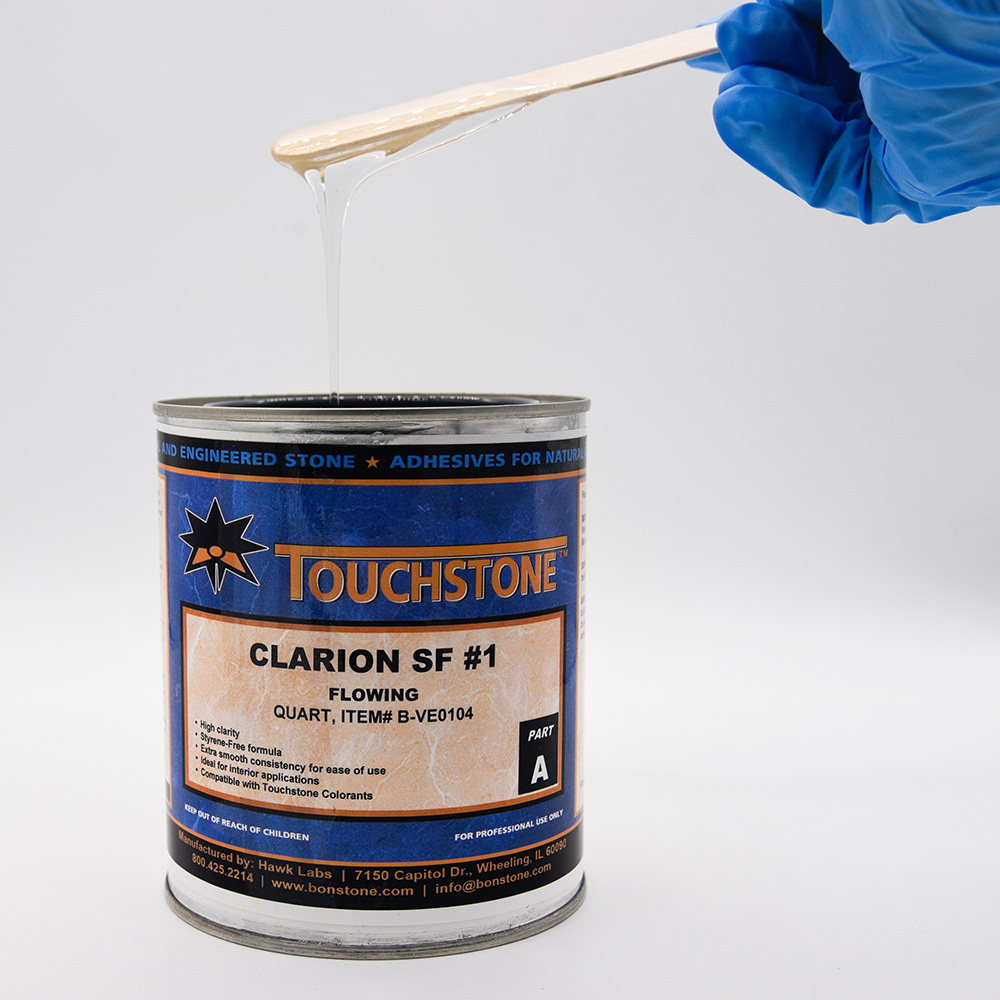
#1 FlowingThinnest of the three. Runs into the joint on its own. Horizontal applications only. |
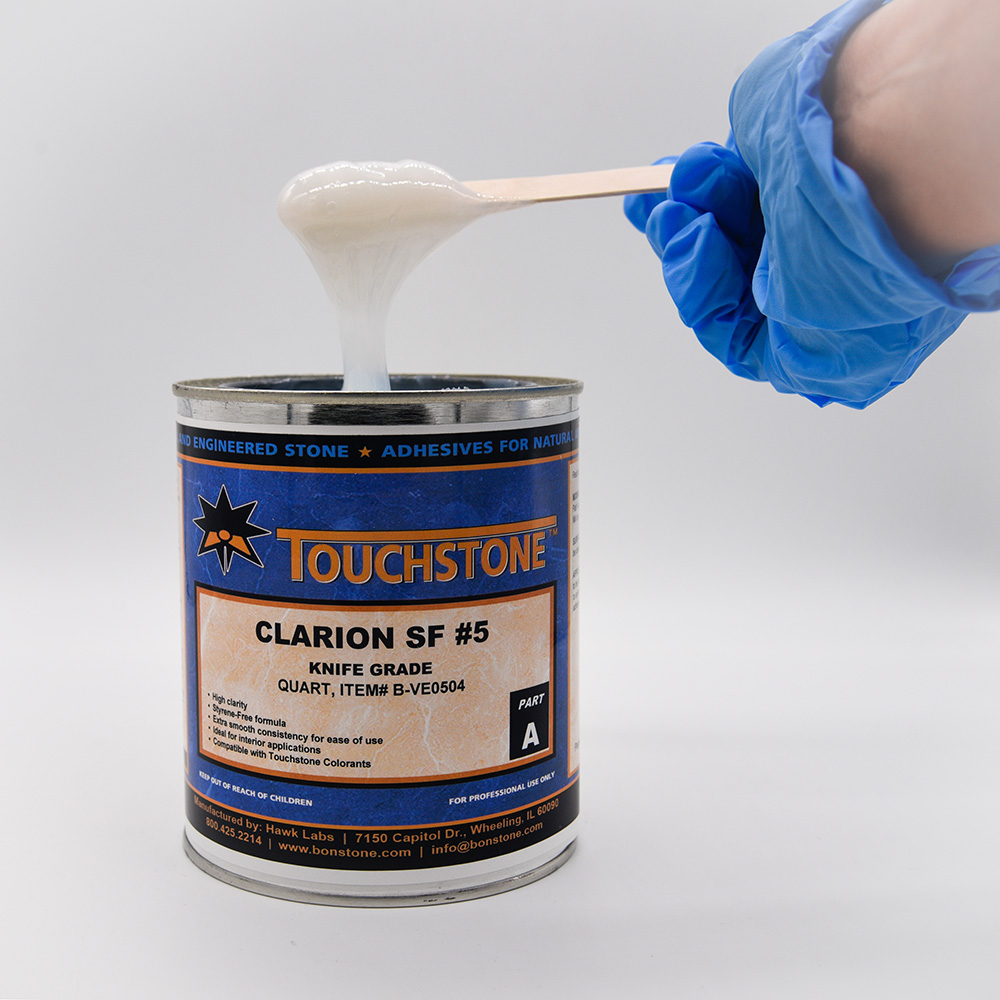
#5 Knife GradeThe general seaming, mitering, and laminating grade. Horizontal and vertical. This is the grade the ASTM D905 data was run on. |
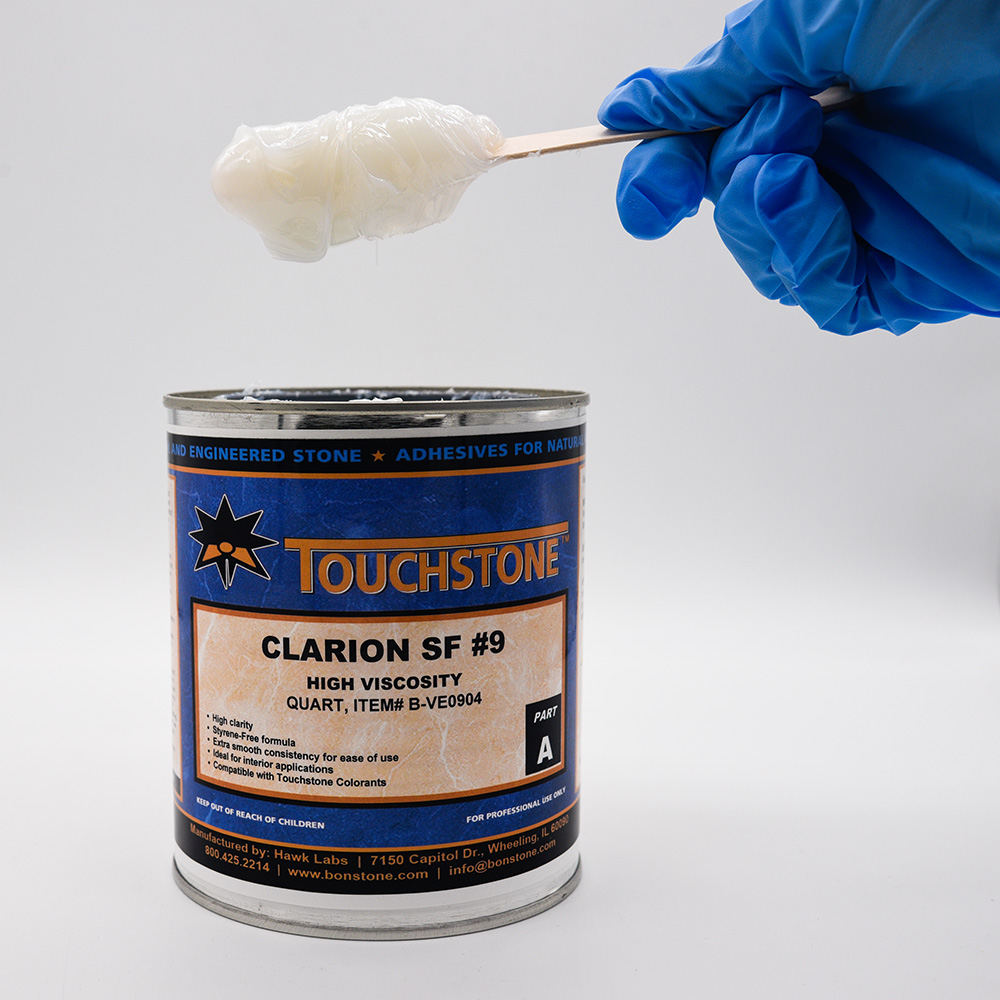
#9 High ViscosityHeaviest body. For vertical joints and anywhere the adhesive has nothing supporting it. Horizontal and vertical. |
Which One Fits Your Shop
| Product | Chemistry | Working Time | Back to Work | UV Stable | Best Use |
|---|---|---|---|---|---|
| Stone Seam Pro | Methacrylate (MMA) | 4 to 6 minutes | 12 to 15 minute fixture | Yes | Fast installs, repeatable color matching, quartz and porcelain |
| Bonstone Clarion SF | Two-part vinyl ester, styrene-free | 4 to 5 minutes | Tack-free in about 20 minutes | Not rated. Interior only | Interior seaming, mitering, laminating and repair. Shops removing styrene |
Short version: if the job sees sun, you want UV stability. If the shop is cutting styrene out for air quality or worker exposure reasons, you want Clarion SF. Plenty of shops run both.
Outdoor Kitchens and UV Exposure
A vinyl ester knife grade is an interior product. Clarion SF is rated for interior applications and carries no UV stability, freeze-thaw, or high-humidity rating, so an outdoor kitchen, an exterior cladding panel, or anything seeing sustained sun and temperature cycling is outside what it is built for. Using an interior seam adhesive outdoors is one of the more common causes of a callback nobody can fix without cutting the seam back out.
For those jobs we move to Bonstone Glacier, which Bonstone rates as UV stable and freeze-thaw stable, or to Stone Seam Pro where the install also needs speed. Call us before you commit a job and we will tell you which way to go.
Common Applications
| Countertop seaming and edge joining | Miter folds and waterfall edges | Laminating quartz and stone slabs |
| Chip, crack and void repair | Re-attaching broken stone | Bullnose and build-up work |
Knife-Grade Seam Adhesive Questions
+What is the difference between knife grade and flowing adhesive?
Knife grade is a thick paste that stays where you put it, so it works on vertical seams and mitered edges without running. Flowing grades are thin enough to wick into rodding channels and hairline cracks on their own, which a paste cannot do. Most shops keep both, and some products, including Clarion SF, come in both consistencies under one product name.
+Is knife grade epoxy actually epoxy?
Often not. Knife grade epoxy is what the trade calls the format, not the chemistry, and the products sold under that name include polyesters, vinyl esters, methacrylates, and true epoxies. Clarion SF is a vinyl ester. Stone Seam Pro is a methacrylate. Knife grade epoxy, poly-epoxy, seam glue, and seam adhesive all get used for the same shelf, so what matters is which chemistry is in the can and what it is rated for.
+Why would a shop want a styrene-free seam adhesive?
Because of shop air. Styrene is a volatile organic compound, the International Agency for Research on Cancer classifies it as a Group 2A probable human carcinogen, and the US National Toxicology Program lists it as reasonably anticipated to be a human carcinogen. Seaming and lamination happen indoors, often in enclosed space, and there are workplace exposure thresholds attached. If you want to know whether the adhesive on your shelf contains styrene, its Safety Data Sheet will tell you.
+How do I tint a seam adhesive to match the slab?
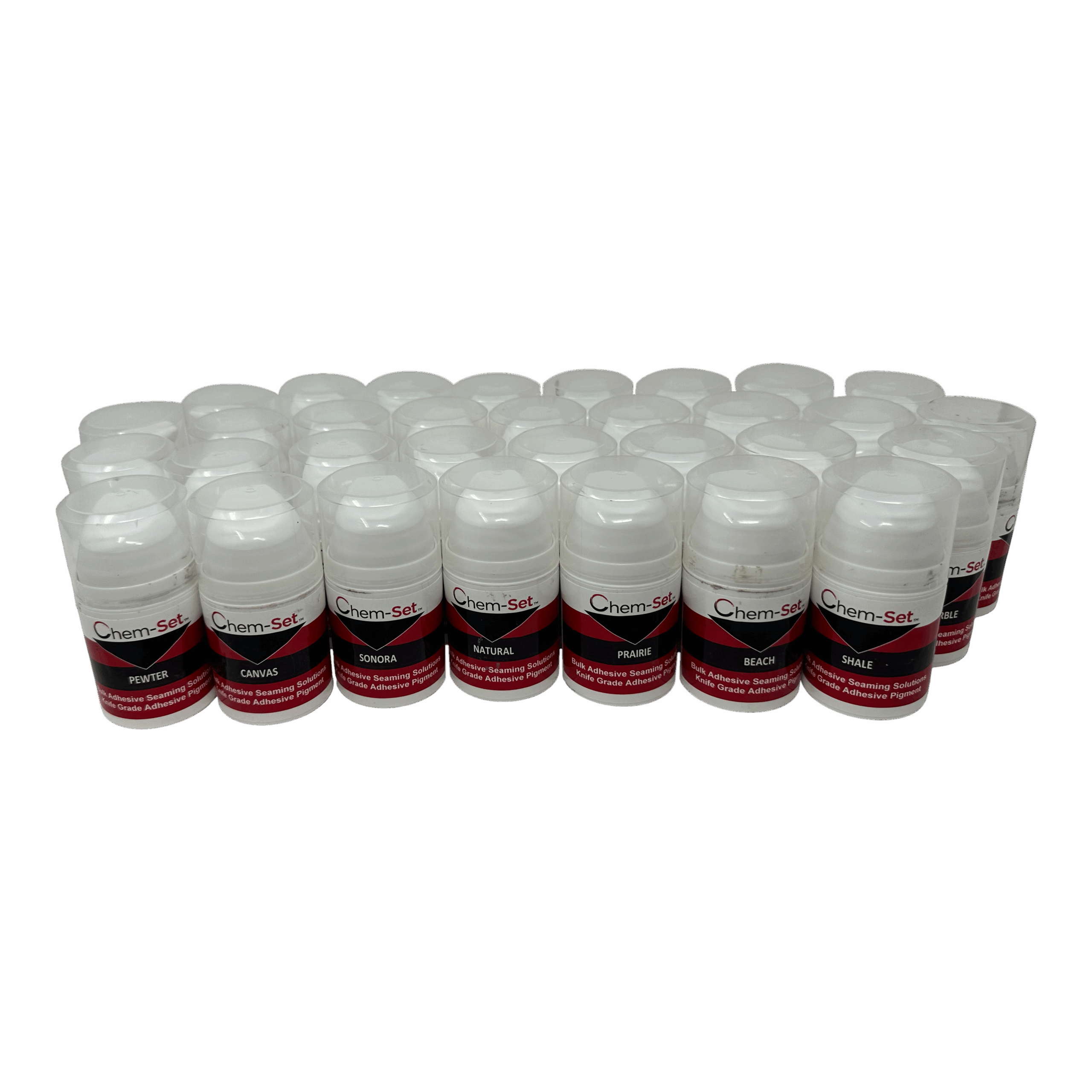
Tint the resin before you add the hardener, every time. Pull your portion of Part A, add pigment a drop at a time and mix to color, then check it in a thin film on an offcut with a blade before you commit. A pile on the mixing board reads completely differently than the same material squeezed into a hairline joint. Only after the color is right does the hardener go in, because once it does you have a few minutes and no way to correct a miss.
+Can I add extra hardener to make it set faster?
No, and on a tinted seam it will cost you the job. Clarion SF runs at 98 parts resin to 2 parts BPO cream hardener, and Bonstone states that exceeding 2% shortens the pot life and cure time and causes significant discoloration of the adhesive. Discoloration on a color-matched seam undoes the whole reason you tinted it. Mix only what you can spread inside the working window instead.
+Will a knife grade seam adhesive work on porcelain or sintered stone?
It depends on the product, so check the data rather than assuming. Clarion SF #5 was tested on Dekton at 698 psi shear under ASTM D905, and some specimens failed at the bond line rather than in the stone, so treat sintered surfaces as a test-first substrate. Stone Seam Pro is rated for porcelain and sintered surfaces. If you are running porcelain slab, call us at (800) 220-1966 before the job and we will tell you what we have seen hold.
Not Sure Which Seam Adhesive You Need?
Tell us the material, the joint, and whether the job is inside or out. We have been supplying the fabrication trade for over 45 years and we will point you at the right chemistry rather than the most expensive one.
|
Countertop Seaming Solutions Knife-Grade Epoxies for Stone FabricationKnife-grade adhesives are thick, non-slumping two-part systems used for seaming, laminating, mitering, and repairing stone. The paste consistency stays where you put it on a vertical miter instead of running down the face, and it takes tint so the seam reads as part of the slab. Fabricators call these knife grade epoxy, poly-epoxy, or just seam glue. The chemistry underneath varies, and that is what decides the job. We stock two: a methacrylate for speed and UV stability, and a styrene-free vinyl ester for shops cutting styrene out of the building. |
Stone Seam Pro Knife-Grade MMA |
What Is a Knife-Grade Seam Adhesive?
A knife-grade seam adhesive is a two-part, paste-consistency adhesive used to close countertop seams, build mitered edges, laminate slabs, and fill chips. Unlike a flowing adhesive, it does not run, so it holds position on a vertical joint while you pull the seam tight and let it set.
- Consistency. Thick and spreadable, non-slumping on vertical seams and miters.
- Application. Miter seams, lamination build-ups, chip and void repair, edge joining.
- Polishability. Takes polish and takes tint, so the seam can match the surrounding color and gloss.
- Cure. Fast-setting and extended-working-time options, depending on how your shop runs.
- Substrates. Granite, quartz, marble, engineered stone, solid surface, and other hard surfaces. Sintered stone and porcelain vary by product, so check the specific data.
- Flowing vs knife grade. Flowing grades wick into rodding channels and hairline cracks where a paste cannot reach. Knife grade handles the seam and the miter. Most shops keep both.
Stone Seam Pro, Knife-Grade MMAA methacrylate adhesive built for fast installs and repeatable color matching, with high bond strength across granite, quartz, porcelain, and sintered surfaces.
|
Bonstone Clarion SF, Styrene-Free Vinyl EsterA two-part vinyl ester adhesive with no styrene in the formula. Very light and translucent in the can, so it takes tint with very little pigment. Comes in three viscosities for flat work, general seaming, and vertical joints.
|
Clarion SF Comes in Three Viscosities
Same chemistry, same 85 to 90 Shore D, same 2.5 to 5 minute gel. What changes is body, and body decides which joints it can hold.
#1 FlowingThinnest of the three. Runs into the joint on its own. Horizontal applications only. |
#5 Knife GradeThe general seaming, mitering, and laminating grade. Horizontal and vertical. This is the grade the ASTM D905 data was run on. |
#9 High ViscosityHeaviest body. For vertical joints and anywhere the adhesive has nothing supporting it. Horizontal and vertical. |
Which One Fits Your Shop
| Product | Chemistry | Working Time | Back to Work | UV Stable | Best Use |
|---|---|---|---|---|---|
| Stone Seam Pro | Methacrylate (MMA) | 4 to 6 minutes | 12 to 15 minute fixture | Yes | Fast installs, repeatable color matching, quartz and porcelain |
| Bonstone Clarion SF | Two-part vinyl ester, styrene-free | 4 to 5 minutes | Tack-free in about 20 minutes | Not rated. Interior only | Interior seaming, mitering, laminating and repair. Shops removing styrene |
Short version: if the job sees sun, you want UV stability. If the shop is cutting styrene out for air quality or worker exposure reasons, you want Clarion SF. Plenty of shops run both.
Outdoor Kitchens and UV Exposure
A vinyl ester knife grade is an interior product. Clarion SF is rated for interior applications and carries no UV stability, freeze-thaw, or high-humidity rating, so an outdoor kitchen, an exterior cladding panel, or anything seeing sustained sun and temperature cycling is outside what it is built for. Using an interior seam adhesive outdoors is one of the more common causes of a callback nobody can fix without cutting the seam back out.
For those jobs we move to Bonstone Glacier, which Bonstone rates as UV stable and freeze-thaw stable, or to Stone Seam Pro where the install also needs speed. Call us before you commit a job and we will tell you which way to go.
Common Applications
| Countertop seaming and edge joining | Miter folds and waterfall edges | Laminating quartz and stone slabs |
| Chip, crack and void repair | Re-attaching broken stone | Bullnose and build-up work |
Knife-Grade Seam Adhesive Questions
+What is the difference between knife grade and flowing adhesive?
Knife grade is a thick paste that stays where you put it, so it works on vertical seams and mitered edges without running. Flowing grades are thin enough to wick into rodding channels and hairline cracks on their own, which a paste cannot do. Most shops keep both, and some products, including Clarion SF, come in both consistencies under one product name.
+Is knife grade epoxy actually epoxy?
Often not. Knife grade epoxy is what the trade calls the format, not the chemistry, and the products sold under that name include polyesters, vinyl esters, methacrylates, and true epoxies. Clarion SF is a vinyl ester. Stone Seam Pro is a methacrylate. Knife grade epoxy, poly-epoxy, seam glue, and seam adhesive all get used for the same shelf, so what matters is which chemistry is in the can and what it is rated for.
+Why would a shop want a styrene-free seam adhesive?
Because of shop air. Styrene is a volatile organic compound, the International Agency for Research on Cancer classifies it as a Group 2A probable human carcinogen, and the US National Toxicology Program lists it as reasonably anticipated to be a human carcinogen. Seaming and lamination happen indoors, often in enclosed space, and there are workplace exposure thresholds attached. If you want to know whether the adhesive on your shelf contains styrene, its Safety Data Sheet will tell you.
+How do I tint a seam adhesive to match the slab?
Tint the resin before you add the hardener, every time. Pull your portion of Part A, add pigment a drop at a time and mix to color, then check it in a thin film on an offcut with a blade before you commit. A pile on the mixing board reads completely differently than the same material squeezed into a hairline joint. Only after the color is right does the hardener go in, because once it does you have a few minutes and no way to correct a miss.
+Can I add extra hardener to make it set faster?
No, and on a tinted seam it will cost you the job. Clarion SF runs at 98 parts resin to 2 parts BPO cream hardener, and Bonstone states that exceeding 2% shortens the pot life and cure time and causes significant discoloration of the adhesive. Discoloration on a color-matched seam undoes the whole reason you tinted it. Mix only what you can spread inside the working window instead.
+Will a knife grade seam adhesive work on porcelain or sintered stone?
It depends on the product, so check the data rather than assuming. Clarion SF #5 was tested on Dekton at 698 psi shear under ASTM D905, and some specimens failed at the bond line rather than in the stone, so treat sintered surfaces as a test-first substrate. Stone Seam Pro is rated for porcelain and sintered surfaces. If you are running porcelain slab, call us at (800) 220-1966 before the job and we will tell you what we have seen hold.
Not Sure Which Seam Adhesive You Need?
Tell us the material, the joint, and whether the job is inside or out. We have been supplying the fabrication trade for over 45 years and we will point you at the right chemistry rather than the most expensive one.
Showing all 6 results
-
Bonstone Clarion SF Styrene-Free Vinyl Ester Seam Adhesive
SKU BON-TS CLARION Our Price Starting at $34.68 View ProductBonstone Clarion SF Styrene-Free Vinyl Ester Seam Adhesive
Styrene-free two-part vinyl ester seam adhesive for natural stone, quartz, and solid surface. Tintable for color-matched seams, in three viscosities.
Our Price Starting at $34.68



Featured Products
-
UltraLok® 9102 A/B Panel Bonding Epoxy
Ultralok 9102 epoxy adhesive is engineered for strong, reliable honeycomb and composite panel bonding with fire safety and thermal resistance.
Our Price Starting at $90.16 -
CarbonBar Versatile Flat Stock
Cut and drill like wood. Support like steel. Replace heavy, expensive custom metal fabrication with aerospace-grade carbon fiber structural blanks.
- 4X stronger & 5X lighter than steel.
- Customize on-site with standard carbide tools.
- 100% weatherproof and corrosion-proof.
↑ Select your Bar Length and Profile above ↑
Our Price Starting at $25.00 -

Chem-Set VST M1V38 Male High Bond Tape Fastener – M1-V38-1/4-20×1″
SKU CCH-M1V38-1/4-20X1P Our Price Starting at $1.80
You save View ProductChem-Set VST M1V38 Male High Bond Tape Fastener – M1-V38-1/4-20×1″
Our Price Starting at $1.80
You save


-
 Expert Support.
 -
 Same-Day Shipping.
 -
 50+ Years of Service
 Expert Support.
  Same-Day Shipping.
  50+ Years of Service
 Chemical-Concepts is a leading supplier of adhesives, chemicals and hardware for nearly every market in the industrial, government and defense sectors. Whatever your industry, we have all the hardware and adhesives you need to hold things together and keep things in place.