Why Composite Fabricators Are Switching from Standard Anchor Nuts to Float-Nut
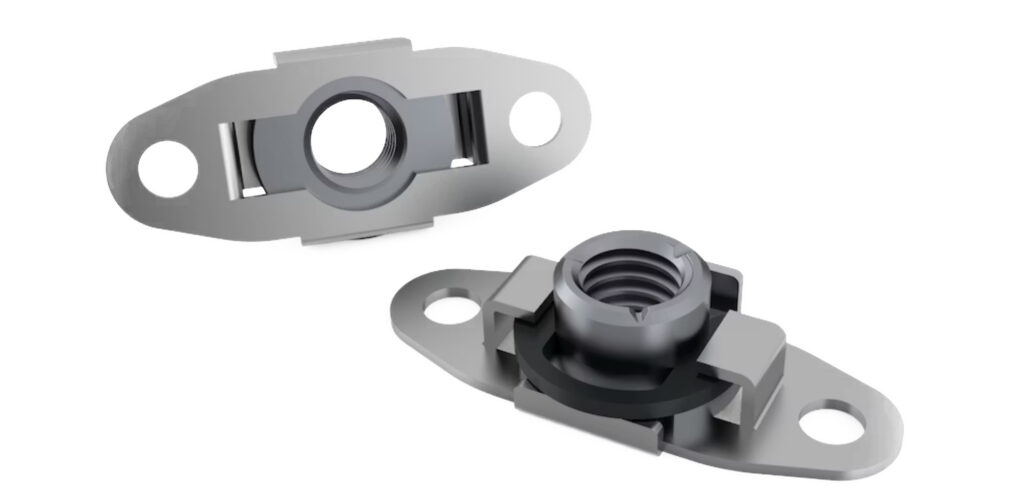
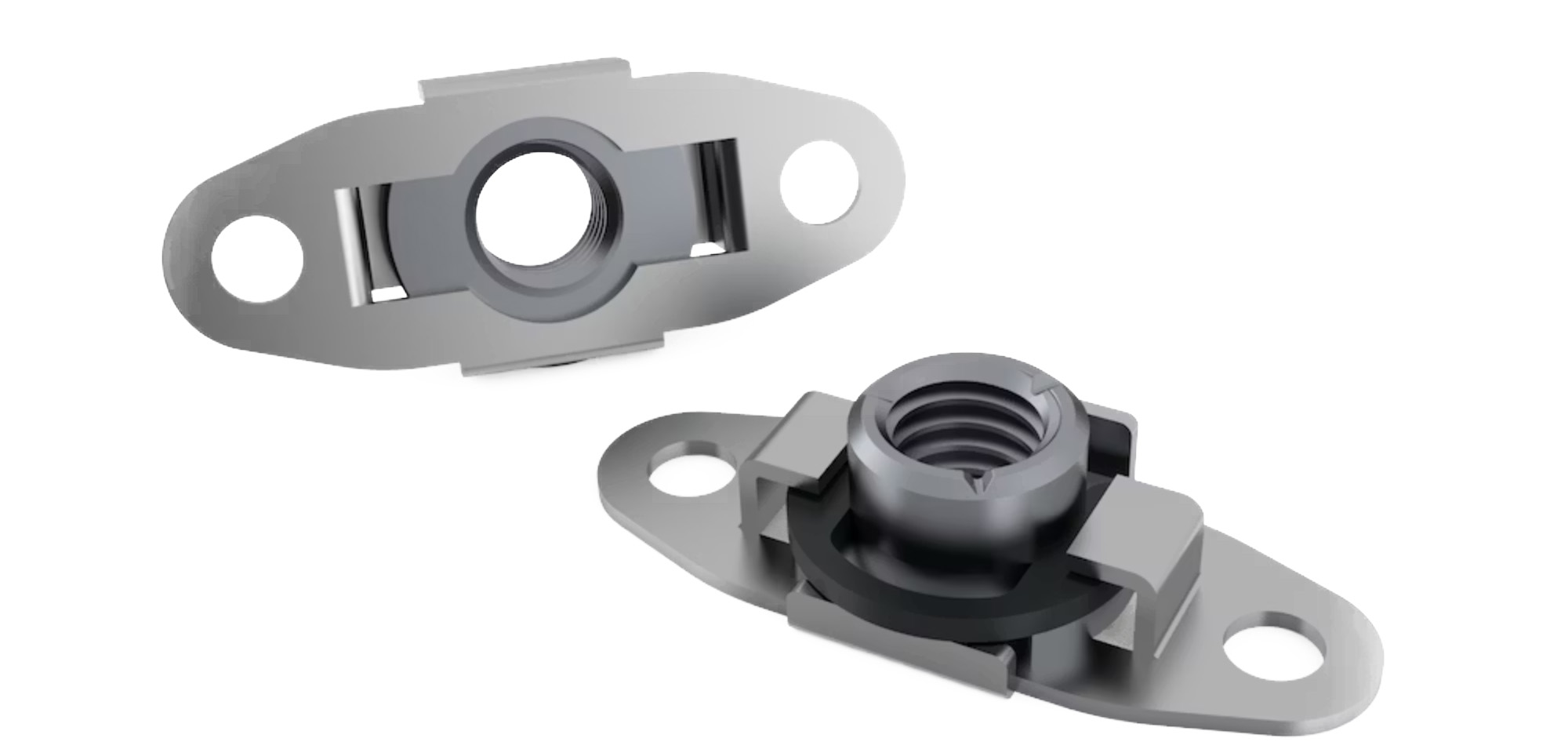
Conventional anchor nuts weren’t built for carbon fiber, resins, or thin composite panels. Fixed nut plates concentrate stress and demand perfect hole alignment, while standard floating designs lack the self-locking capability needed for vibration-prone assemblies. Float-Nut is a self-locking floating anchor nut that addresses all three problems, all in a single fastener.
This guide covers how Float-Nut works, where it performs best, and what separates it from the anchor nuts and nut plates most fabricators use today.
The Problem with Standard Anchor Nuts on Composites
Composites behave differently from metals. Fastening methods that work well on aluminum or steel sheet often cause problems on carbon fiber panels or resin-based materials. The issues tend to cluster around three areas that conventional anchor nuts weren’t designed to address.
Problem #1: Misalignment
Fixed anchor nuts assume mating holes will line up perfectly. Manufacturing tolerances, thermal expansion, and assembly variations make that difficult to achieve, and the consequences are expensive. Assemblers either elongate holes to force engagement (weakening the panel structure) or scrap parts entirely when misalignment exceeds the fastener’s capacity. In high-value composite assemblies, neither outcome is acceptable.
Problem #2: Vibration
Floating nut plates solve the alignment problem but create another one in vibration-prone applications. Most floating designs lack integrated self-locking, meaning every fastening point requires secondary hardware such as lock washers, safety wire, or thread-locking compounds. These add-ons increase assembly time, part count, and inspection requirements across the entire product.
Problem #3: Thread Damage
Threads wear out over time. Screws get cross-threaded during assembly. Corrosion sets in, especially in marine or outdoor environments. With conventional nut plates, damaged threads mean drilling out rivets and replacing the entire housing, a process that often damages surrounding composite material and always consumes significant labor hours.
How Float-Nut Works
Float-Nut combines three features that typically require separate products or workarounds, delivering alignment tolerance, vibration resistance, and serviceability in a single anchor nut designed for composite materials. Developed by Specialinsert, Float-Nut reflects decades of engineering experience with fasteners for thin materials and demanding applications.
Floating Bush for Alignment Tolerance
The threaded bush sits in a contained cage that allows lateral movement during assembly. When mating holes don’t align perfectly, the bush shifts to accommodate the misalignment rather than fighting it. The screw engages cleanly, the bush self-centers as the fastener threads in, and the risk of cross-threading drops significantly.
This floating capability matters most in applications where thermal cycling causes dimensional changes between assembly and service conditions, or where large panel assemblies accumulate tolerance stack-up across multiple fastening points. Rather than forcing perfect alignment at every location, Float-Nut accommodates the variation that fabricators actually encounter.
Integrated Self-Locking Thread
Float-Nut’s bush provides mechanical locking through its thread geometry rather than relying on deformable inserts or chemical compounds. Screws stay tight under vibration and dynamic loading without lock washers, adhesive, or safety wire on each fastening point.
The self-locking effect comes from the thread profile itself, which means it remains effective over many assembly cycles. Like all mechanical locking systems, the retention torque diminishes gradually with repeated use. When locking performance drops below acceptable levels, the bush is simply replaced, restoring full self-locking capability without touching the riveted housing.
Replaceable Bush Without Housing Removal
A circlip retains the bush in the Float-Nut housing. When threads wear out or sustain damage, the repair process is straightforward: remove the circlip, swap the bush, and reinstall. The riveted housing stays attached to the panel throughout, eliminating the structural rework required by conventional nut plate replacement.
This design also provides flexibility for changing thread sizes. The housing accepts bushes with different thread pitches, so a fastening point can be converted from one thread size to another without removing and replacing the anchor nut itself. For prototype development or field modifications, this adaptability saves time and preserves panel integrity.
Where Float-Nut Performs Best
Float-Nut was engineered for thin, non-load-bearing materials where conventional fastening methods create recurring problems. The double-wing design spreads rivet loads across a larger footprint than single-lug or barrel-style anchor nuts, reducing the stress concentration that can crack composite panels over time.
Aerospace Interiors and Exterior Panels
Aircraft interiors experience constant assembly and disassembly throughout their service life. Seat tracks, overhead bins, galley equipment, and access panels all require fastening points that can handle frequent maintenance without degrading. Float-Nut’s replaceable bush lets ground crews restore thread integrity without structural rework, and the self-locking feature eliminates inspection requirements for secondary locking hardware.
Exterior panels face different challenges: vibration from engines and airflow, thermal cycling between ground and cruise altitude temperatures, and exposure to weather and de-icing chemicals. The integrated self-locking thread keeps fasteners tight without adding weight or complexity to the fastening system, while the floating capability accommodates dimensional changes across the aircraft’s operating envelope.
Looking for aerospace products? Chemical Concepts supplies adhesives, sealants, and fasteners for aerospace and defense applications.
Motorsport and High-Performance Automotive
Carbon fiber bodywork has become standard in Formula One, endurance racing, and high-performance road cars, where weight reduction and serviceability both affect competitive outcomes. Racing teams need to swap panels quickly between sessions, and damaged threads can’t wait for complete housing replacement.
Ferrari, Lamborghini, Aston Martin, and McLaren have adopted Float-Nut for both racing and production vehicles. The composite housing option eliminates galvanic corrosion concerns when fastening carbon panels and reduces weight compared to all-metal alternatives. The replaceable bush means pit crews can address thread damage in minutes rather than pulling the car from competition for extensive rework.
Structural adhesive bonding plays a complementary role in automotive manufacturing, offering lightweight joining solutions alongside mechanical fasteners.
Marine, Defense, and Industrial Equipment
Saltwater environments accelerate corrosion, engine vibration loosens conventional fasteners, and maintenance access is often limited by equipment layout or operational constraints. Float-Nut’s stainless steel housing option handles corrosion resistance, the self-locking thread maintains clamp load despite constant vibration, and the replaceable bush enables field repairs without specialized equipment or complete disassembly.
Naval vessels, underwater drones, armored vehicles, and anti-drone systems have all adopted Float-Nut in applications where conventional anchor nuts created recurring maintenance headaches. The ability to service threads without disturbing the riveted housing proves particularly valuable when access requires removing other equipment or systems.
Looking for marine fasteners? Chemical Concepts provides fasteners, adhesives, and panel solutions for marine applications.
Technical Specifications
Float-Nut is available in configurations that match most common application requirements:
- Housing materials: Composite (for weight-sensitive applications), stainless steel (for corrosion resistance), or zinc-coated steel (for cost-efficient general use)
- Thread sizes: Metric and imperial options; different thread sizes can share the same housing
- Installation: Riveted or screwed attachment using standard hand tools
- Self-locking life: Locking effect diminishes gradually with repeated assembly cycles; replace the bush to restore full performance
Is Float-Nut Right for Your Application?
Float-Nut makes the most sense where current anchor nuts create measurable friction in production or maintenance. Common indicators include
- High scrap rates from hole misalignment
- Secondary locking hardware required at every fastening point
- Frequent thread damage requiring complete housing replacement
- Cracking or stress damage around existing nut plates in composite panels
Float-Nut won’t replace standard nut plates everywhere. Established options from manufacturers like LISI Aerospace, Howmet Fastening Systems, and TriMas Aerospace serve many applications reliably and cost-effectively. But where alignment tolerance, vibration resistance, and serviceability all matter, Float-Nut is worth evaluating.
Chemical Concepts provides application support to help determine whether Float-Nut fits your specific materials, environments, and performance requirements. We work across a range of industries, including aerospace, marine, transportation, and general manufacturing.
Have questions about Float-Nut or other fastening solutions for composites? Contact the Chemical Concepts team for product recommendations tailored to your application.