Best Adhesive for Plastic: How to Choose the Right Solution for Reliable Bonds
Bonding plastic can seem straightforward until a joint fails under heat, vibration, moisture, impact, or everyday use. In many cases, the problem is not the adhesive itself—it is selecting a product that does not match the plastic, the service environment, or the performance requirements.
There is no universal adhesive that works equally well for every plastic. Polyethylene, polypropylene, ABS, acrylic, PVC, nylon, and other engineered plastics each present different bonding challenges. Understanding how these materials behave makes it much easier to choose an adhesive that delivers reliable, long-term performance.
This guide explains why plastics require different bonding approaches, what factors influence adhesive performance, and how to choose the right solution for your application.
Why There Is No Single Best Adhesive for Every Plastic
Not all plastics accept adhesives in the same way. Some materials bond readily, while others actively resist adhesion because of their surface chemistry.
Low-surface-energy plastics such as polyethylene (PE) and polypropylene (PP) are particularly challenging because many adhesives cannot properly wet the surface. Without adequate surface contact, even high-strength adhesives may fail prematurely.
By comparison, plastics such as ABS, acrylic, polycarbonate, and PVC generally accept a wider variety of adhesive chemistries, making them easier to bond successfully.
Selecting the right adhesive depends on several key factors:
- The type of plastic being bonded
- The loads the bond will experience
- Exposure to heat, moisture, chemicals, or UV light
- Whether flexibility or rigidity is required
- Production speed and assembly requirements
Matching adhesive chemistry to these conditions helps reduce failures, rework, and long-term maintenance issues.
What Determines Plastic Bond Performance?
Successful plastic bonding depends on more than adhesive strength alone.
Surface Energy and Adhesion
For an adhesive to form a reliable bond, it must spread across the plastic surface and create intimate contact. Low-surface-energy plastics prevent this from happening, making them among the most difficult materials to bond.
When working with polyethylene or polypropylene, conventional cyanoacrylates or general-purpose adhesives often perform poorly without specialized adhesive systems or surface preparation techniques such as flame treatment or chemical activation.
Mechanical Loading
The way a bonded assembly will be used has a major influence on adhesive selection.
Rigid epoxy systems excel in static structural applications but may become brittle when subjected to repeated vibration or impact. Toughened acrylic adhesives generally provide better resistance to dynamic loading by distributing stress more effectively.
Choosing an adhesive that matches the expected loading conditions helps improve long-term durability.
Environmental Exposure
Heat, moisture, chemicals, solvents, and UV exposure can all affect bond longevity.
Applications exposed to demanding environments often benefit from structural acrylics or industrial epoxy systems designed to maintain bond integrity under challenging operating conditions.
Rigid vs. Flexible Plastics
Rigid plastics such as ABS and acrylic typically perform well with stiff structural adhesives.
Flexible plastics require adhesives capable of moving with the substrate. Using an overly rigid adhesive on a flexible material often concentrates stress at the bond line, increasing the likelihood of cracking or premature failure.
Adhesive Solutions for Common Plastic Bonding Challenges
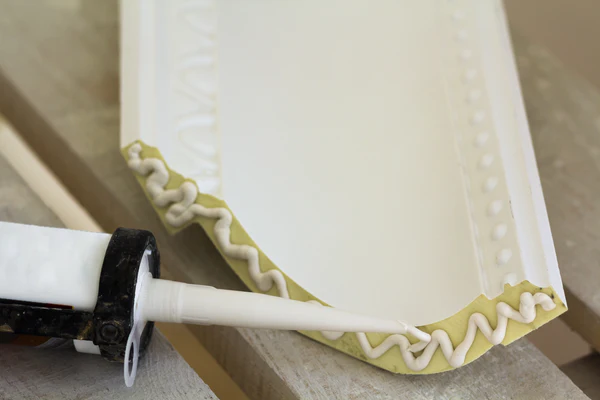
Permabond TA4610
Best For: Polyethylene, polypropylene, PTFE, rubber, and other low-surface-energy materials
Low-surface-energy plastics are among the most difficult materials to bond. Permabond TA4610 is specifically engineered to overcome this challenge without requiring primers or additional surface activation in many applications.
Its toughened acrylic formulation offers practical advantages in manufacturing environments where eliminating extra preparation steps can reduce labor and simplify production.
Why Choose It
- Bonds difficult plastics that commonly resist conventional adhesives
- Reduces process complexity by minimizing surface preparation
- Performs well with dissimilar material combinations
Typical Applications
- Polyethylene assemblies
- Polypropylene components
- PTFE bonding
- Rubber-to-plastic assemblies
- Rubber-to-metal bonding
Consider Another Product When
If your primary challenge involves nylon, engineered plastics, or elevated temperature service, another adhesive may provide a better overall fit.
Best For: Nylon and engineered thermoplastics
3M DP8910NS
Nylon presents different bonding challenges than polyethylene or polypropylene. Moisture absorption, thermal cycling, and demanding mechanical environments require an adhesive designed specifically for engineering plastics.
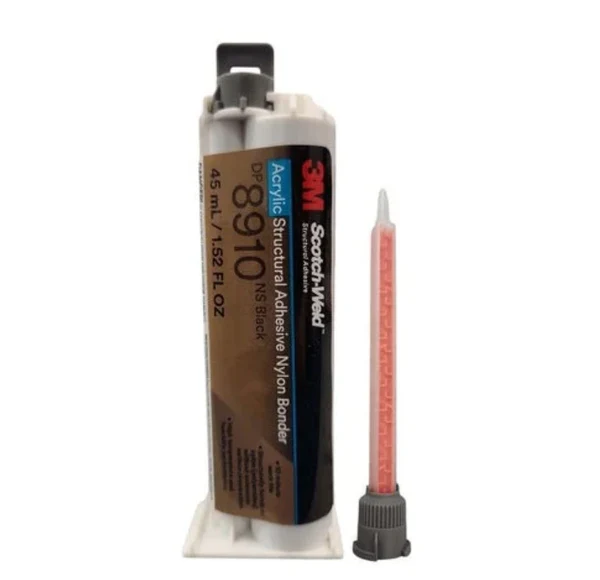
3M DP8910NS is formulated to provide durable structural bonding while maintaining impact resistance and flexibility.
Why Choose It
- Designed specifically for polyamide (nylon) applications
- Supports structural bonding under demanding operating conditions
- Requires minimal surface preparation compared to many alternative systems
Typical Applications
- Automotive components
- Electric vehicle battery assemblies
- Industrial equipment
- Composite manufacturing
- Aerospace applications
Consider Another Product When
For low-surface-energy plastics such as polyethylene or polypropylene, Permabond TA4610 is generally a more appropriate choice.
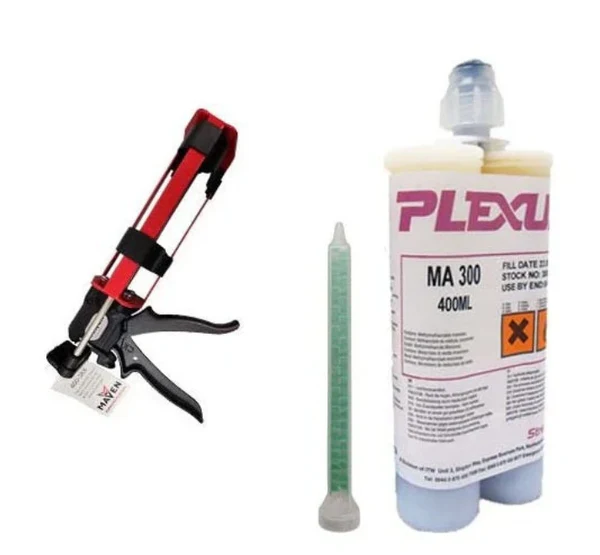
Plexus MA300
Best For: Fast structural bonding of thermoplastics, metals, and composites. Production environments often require adhesives that develop handling strength quickly while maintaining structural performance.
Plexus MA300 is a two-part methacrylate adhesive that combines rapid curing with excellent structural bonding across multiple substrates.
Why Choose It
- Fast working and fixture times improve manufacturing throughput
- Bonds thermoplastics, metals, and composites with minimal preparation
- Accommodates moderate bond gaps while remaining non-sag
Typical Applications
- Thermoplastic-to-metal assemblies
- Composite panel fabrication
- Structural production bonding
- Industrial manufacturing
Consider Another Product When
Applications requiring exceptional chemical resistance or sustained high-temperature performance may benefit more from an epoxy system.
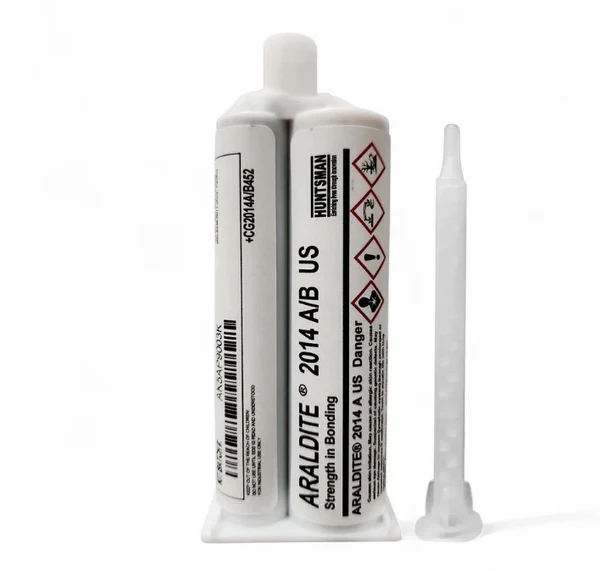
Huntsman Araldite 2014
Best For: High-temperature and chemically demanding environments. When environmental durability is the highest priority, epoxy chemistry often provides the most reliable solution.
Araldite 2014 is formulated for applications exposed to chemicals, elevated temperatures, and aggressive service conditions while providing excellent gap-filling capability.
Why Choose It
- Excellent resistance to chemicals and solvents
- Performs well at elevated operating temperatures
- Suitable for structural assemblies requiring longer working time
Typical Applications
- Chemical processing equipment
- Aerospace components
- Electronics
- Plastic-to-metal assemblies
- Industrial structural bonding
Consider Another Product When
If production speed is more important than environmental resistance, a faster-curing acrylic may improve manufacturing efficiency.
Huntsman FASTWELD 10
Best For: Fast repairs and general-purpose bonding
Not every application requires maximum structural performance. Maintenance, repair, and field service often benefit from adhesives that cure quickly and are easy to mix and apply.
FASTWELD 10 provides a convenient solution for routine industrial repairs and smaller assemblies.
Why Choose It
- Simple 1:1 mix ratio
- Rapid curing for quick turnaround
- Easy application for maintenance work
Typical Applications
- Plastic component repair
- Small assemblies
- Maintenance operations
- Field service repairs
Consider Another Product When
For demanding structural applications or difficult plastics, one of the specialty adhesives discussed above will generally deliver better long-term performance.
Product Comparison
| Product | Best For | Primary Strength | Choose Another Product If… | Typical Applications |
|---|---|---|---|---|
| Permabond TA4610 | Polyethylene, polypropylene, PTFE | Bonds low-surface-energy plastics | Bonding nylon or high-temperature assemblies | Difficult plastics, rubber bonding |
| 3M DP8910NS | Nylon and engineered plastics | Structural bonding with impact resistance | Bonding polyethylene or polypropylene | Automotive, EV, aerospace |
| Plexus MA300 | General structural bonding | Fast production assembly | Maximum chemical or heat resistance is required | Thermoplastics, composites, metal assemblies |
| Araldite 2014 | Heat and chemical exposure | Long-term environmental durability | Fast production cycles are the priority | Industrial, aerospace, electronics |
| FASTWELD 10 | Repairs and maintenance | Fast, convenient application | Structural or specialty plastic bonding | Repairs, maintenance, small assemblies |
Which Product Is Right for Your Application?
Choose Permabond TA4610 when bonding polyethylene, polypropylene, PTFE, or other difficult-to-bond plastics.
Choose 3M DP8910NS when working with nylon or engineered thermoplastics that must withstand demanding service conditions.
Choose Plexus MA300 when production speed and structural performance are equally important for thermoplastics, composites, or mixed-material assemblies.
Choose Araldite 2014 when long-term resistance to chemicals and elevated temperatures is critical.
Choose FASTWELD 10 when quick repairs, maintenance, or small assembly work require a fast and practical epoxy solution.
Final Thoughts
The strongest adhesive is not always the best adhesive. Reliable plastic bonding depends on selecting a chemistry that matches the plastic, the operating environment, and the performance requirements of the finished assembly.
Whether you are bonding polyethylene, polypropylene, nylon, ABS, composites, or mixed materials, selecting the right adhesive from the beginning helps reduce failures, minimize rework, and improve long-term reliability.
If you are unsure which adhesive best fits your application, the technical team at Chemical Concepts can help evaluate your materials, service conditions, and performance requirements to identify the most appropriate bonding solution.