



Description
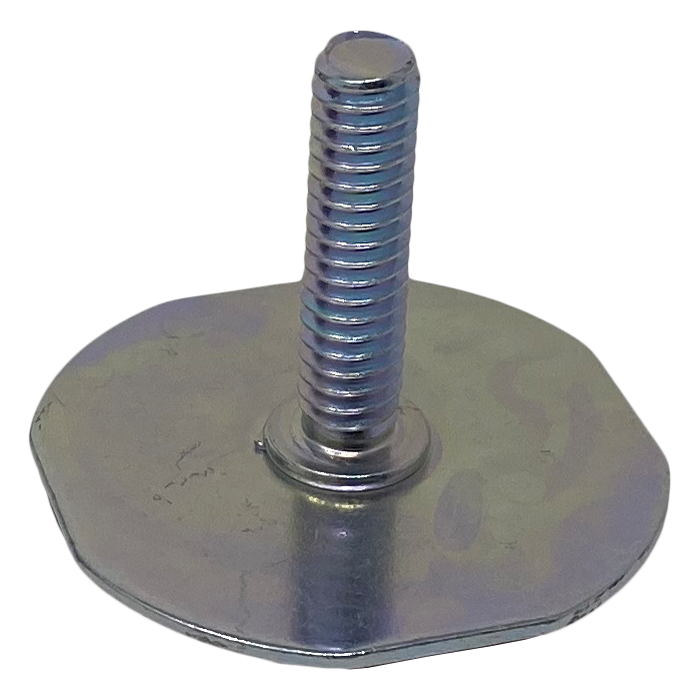
The M1-V38 bonding fastener adds a 1/4-20 male attachment point to a panel or assembly without drilling through the visible face. Its 38 mm round Master-Plate base spreads adhesive across a broad bonding area, while the 1-inch threaded post accepts matching nuts, brackets, clamps, and mounted components. The smooth base version has no dimples and no holes, giving fabricators an uninterrupted adhesive surface for controlled installation.
Where the M1-V38 Bonding Fastener Is Used
Bonding fasteners are useful when the finished side must remain clean or when welding, through-bolting, and backside access are impractical. Typical work includes signs, transportation panels, marine interiors, cabinets, equipment covers, composite structures, and fabricated enclosures. Prepare the substrate and fastener base for the selected adhesive, apply a controlled bead, press the base into position, and fixture it until the adhesive reaches handling strength. Keep adhesive out of the threads and verify that the base remains fully seated. The adhesive chemistry, surface treatment, bond-line thickness, cure schedule, and applied load all affect final performance.
M1-V38 Bonding Fastener Performance and Installation Details
This configuration uses a 38 mm round base, 1/4-20 male thread, and 1.00-inch post length. Product-family information attributes improved adhesive distribution to the V38 geometry and reports increases of 25 percent in tensile performance and 48 percent in shear performance compared with the earlier base design under the referenced test conditions. Those figures are family comparisons, not a universal joint rating. Qualify the fastener and adhesive as a complete system for the actual substrate, temperature, moisture exposure, vibration, peel loading, safety factor, and service life. Use a fixture or positioning template when multiple studs must share accurate spacing.
Planning the Application
Plan the complete installation before committing production parts. Review the drawing or technical sheet, confirm that the selected size matches the mating hardware and joint geometry, and inspect incoming material for damage or contamination. Run a representative trial with the actual substrates, surface preparation, tools, and cure or engagement sequence. The trial should check alignment, handling time, finished appearance, access for assembly, and the loads expected during manufacturing and service. Record the setup that works so operators can repeat it consistently. Keep contact surfaces protected until use and separate clean parts from oily tools, dust, release agents, and shop debris. When an adhesive is involved, control bead size and fixture movement. When mechanical engagement is involved, confirm clearance and full seating before applying load. Do not substitute dimensions, chemistries, fasteners, or preparation steps solely because two parts look similar. Project engineering requirements, substrate condition, temperature, moisture, vibration, chemical exposure, and maintenance access can change the right choice. A short qualification step reduces rework and helps establish a repeatable process for future batches.
Technical Specifications
| Property | Detail |
|---|---|
| Fastener type | Male bonding stud |
| Thread | 1/4-20 |
| Post length | 1.00 inch |
| Base shape | Round |
| Base diameter | 38 mm (1.5 inch) |
| Base surface | Smooth, no dimples or holes |
| Installation | Adhesive bonded |
For related components, browse compatible products from Chemical Concepts. For additional background, visit Specialinsert bonding fastener product families.
Need Help?
Call (800) 220-1966 or email [email protected] for help confirming fit, substrate preparation, dispensing, or application requirements.


Reviews
There are no reviews yet.