



Description
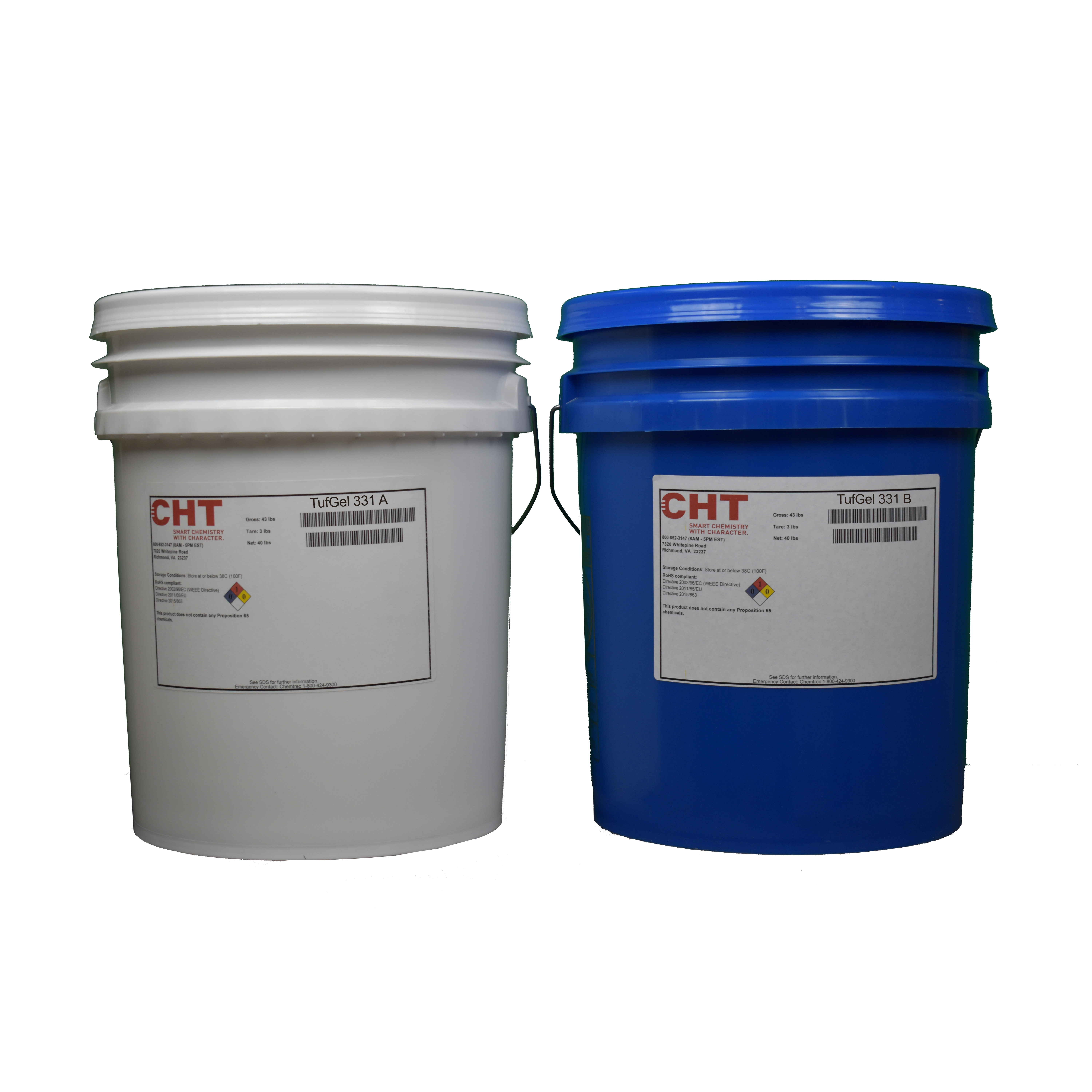
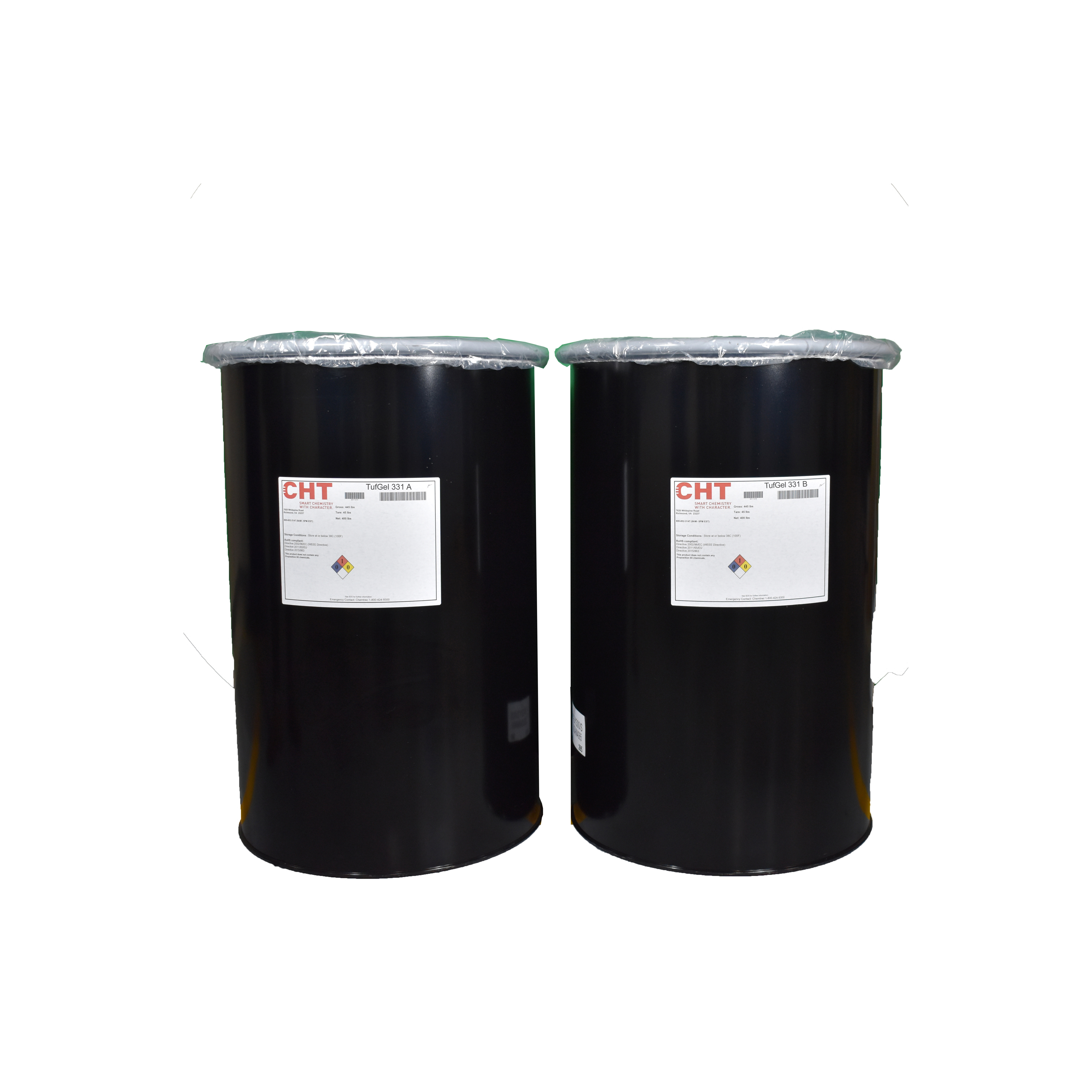
TufGel 331 gel is a two-part, high-strength silicone gel for encapsulating and protecting electronic components. The system mixes 1:1 by weight, combines a clear Part A with a transparent blue Part B, and cures into a soft adherent gel that helps protect assemblies from vibration, thermal shock, mechanical shock, water, and environmental contamination.
TufGel 331 gel Benefits
- Low viscosity 800 cP parts flow around leads, connectors, and component edges before cure.
- Soft, adherent cured gel helps reduce stress on sensitive electronics compared with rigid potting materials.
- Addition-cure silicone chemistry supports deep-section encapsulation without solvent loss.
- Blue-tinted Part B gives operators a visual check while mixing and dispensing.
- Published dielectric properties and flame-retardant behavior support electrical protection work.
Use this gel where a board, sensor, connector, or module needs flexible protection rather than a hard casting resin. It is a good fit for electronics that may need stress relief, moisture protection, or later access by trained repair teams.
TufGel 331 gel Applications
- Printed circuit board encapsulation in control modules and sensor housings.
- LED and power electronics assemblies exposed to vibration or humidity.
- Connector and cable-end protection where a soft fill is preferred.
- Electronic modules that need shock absorption during handling or service.
- Assemblies using glass, aluminum, or copper where primer-supported adhesion is required.
Surface Preparation And Use
Clean parts before potting so oil, flux residue, dust, and loose particles do not interfere with wetting. Dry the assembly before filling, especially around connectors, wire exits, and component pockets. Mix Part A and Part B evenly at the specified 1:1 ratio, then pour or dispense in a controlled way so trapped air can escape.
Confirm compatibility on production parts before release. Primer may be needed on glass, aluminum, copper, or other low-energy surfaces when stronger adhesion is required. Cure schedule depends on part mass and temperature, with published options of 24 hours at 25 C, 60 minutes at 100 C, or 30 minutes at 150 C.
Technical Details And Documentation
CHT lists this material as a two-part high-strength silicone gel with 40 minute gel time at 25 C, 800 cP viscosity for both parts, 1:1 mix ratio by weight, and service range from -55 C to 204 C. Review current data from CHT Group before qualifying the process.
Dispensing And Ordering Help
For related electronic protection materials, browse Chemical Concepts encapsulants and potting compounds. For help matching gel, primer, cure schedule, and package size, call (800) 220-1966 or email [email protected].



Reviews
There are no reviews yet.