Why Adhesives Matter More Than Ever—and What Every Sign Fabrication Shop Needs to Know
Adhesives are no longer a backup plan in today’s signage industry—they’re a core component of efficient, high-quality fabrication. Whether you’re bonding aluminum to acrylic, streamlining your assembly process, or eliminating unsightly rivets, understanding adhesive fundamentals can save time, reduce costs, and elevate your final product.
At the 2025 ISA Sign Expo, Andrew Morris, President and CEO of Chemical Concepts, returned to share insights from decades of helping sign fabrication shops solve bonding challenges. His key message? Adhesives are just tools—but knowing when and how to use them makes all the difference.
Here’s a breakdown of why adhesives have become indispensable in modern sign making and how to get the most from them.
Adhesives Are Changing How Shops Think About Performance and Cost
From Backup Plan to Primary Method
Adhesives have historically been treated as a workaround when welding or fasteners couldn’t do the job. But that thinking is increasingly outdated. Today, adhesives play a central role in achieving the clean aesthetics, material compatibility, and production speed that modern signage demands.
Their advantages span both function and form. Adhesives create smooth, hardware-free finishes, making them ideal for architectural signage and brand-forward designs. They also open the door to bonding materials that would otherwise require mechanical fastening workarounds, like aluminum to polycarbonate, or painted metals to plastics.
And critically, adhesives solve more than just visual challenges. They reduce the stress concentrations that come with spot welding or riveting, helping distribute loads more evenly across bonded surfaces. That means stronger assemblies, fewer failures, and better long-term durability.
For shops balancing production speed with product quality, adhesives aren’t just an option—they’re often the most strategic solution.
Reducing Labor, Not Just Material Waste
One of the most common objections to using adhesives is cost. At first glance, a cartridge of structural acrylic or epoxy can seem more expensive than rivets or screws. But that comparison overlooks the bigger picture. Adhesives can simplify workflows, reduce manual labor, and eliminate steps like grinding or surface finishing, resulting in faster builds and more efficient production overall.
Every time a welder has to prep a joint, seal it, grind it, and then finish the surface, you’re compounding labor hours. Adhesives streamline that process. They allow for bonding and sealing in a single step, reduce the need for grinding or finishing, and can even enable the use of lighter-gauge metals that would deform under welding heat.
When you look beyond the tube and evaluate how adhesives affect your full workflow, the value becomes clear: fewer steps, faster production, and lower labor cost per sign.
Selecting the Right Adhesive for the Job
With adhesives now playing a central role in sign production, knowing which type to use is critical. Different materials, environments, and production speeds all influence what adhesive chemistry is best suited for a job. Let’s explore the most common adhesive types and what jobs they are best suited for.
Structural Acrylics (MMA)
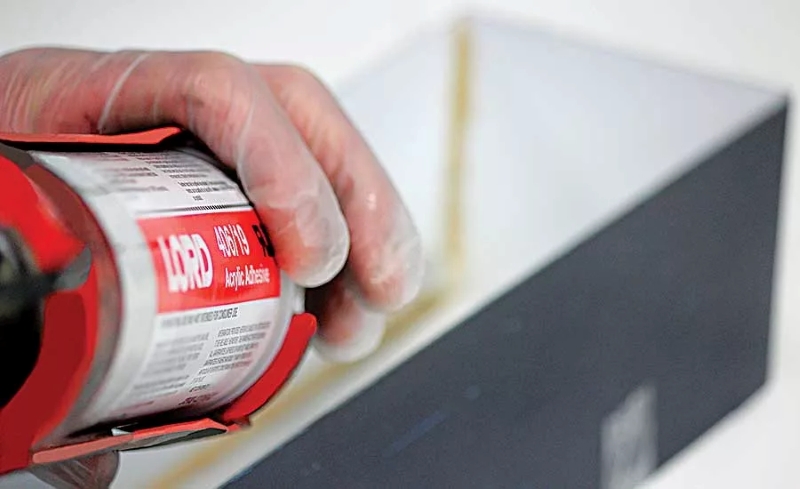
Ideal for bonding metals and plastics, structural acrylics cure quickly and tolerate minimal surface prep. They’re especially useful for aluminum-to-aluminum or aluminum-to-acrylic applications where speed and strength matter. Many also come in low-odor formulas, making them safer for enclosed shops.
READ MORE: 5 Safety Features to Look for in a Structural Adhesive
Epoxies
Known for durability and high bond strength, epoxy adhesives work well on porous materials like wood, concrete, or foam. While slower to cure, they offer excellent temperature and chemical resistance, making them a strong choice for structural or outdoor signage.
Urethanes
Flexible and cost-effective, urethanes are ideal for bonding painted metals and plastics. They don’t bond bare metal as well as acrylics, but they offer more elasticity and lower odor, making them great for vibration-prone installations or temperature-variable environments.
The bottom line is the right adhesive isn’t always the one with the highest bond strength—it’s the one that fits your substrates, application environment, and production schedule.
READ MORE: How to Choose the Right Adhesive for Your Application: A Step-by-Step Guide
Where Tapes and Sealants Fit in Modern Signage
Not every bonding job calls for a liquid adhesive. High-performance tapes and modern sealants have found an important place in signage workflows, especially when fast fixturing or clean finishes are top priorities.
High-Bond Tapes
High-bond tapes like VHB or comparable acrylic-core tapes offer instant adhesion without the need for clamps. They’re particularly useful for mounting panels or face materials where appearance is key. But their success depends on proper surface prep and application pressure. Without those, even the best tape can fail prematurely.
MS Polymer Sealants
As the industry shifts away from traditional silicones, due to paintability issues and VOC regulations, MS polymer-based sealants are emerging as better all-around options. They offer strong adhesion, weather resistance, and flexibility with none of the silicone-related paint compatibility problems.
When used alongside structural adhesives, these products can serve as gap fillers, vibration dampeners, or quick hold solutions, allowing shops to fine-tune bond lines while ensuring a secure, professional finish.
Navigating Regulatory Changes in Acrylic Bonding
Solvent welding has long been a go-to for bonding acrylics in signage, with products like Weld-On 3 and 16 leading the way. But changes are underway. In 2024, the EPA moved to ban methylene chloride in most industrial settings due to its health risks. While signage applications are currently exempt, compliance requirements are rising, including ventilation protocols and chemical safety programs.
Shops still using methylene chloride-based adhesives will need to evaluate whether continuing is worth the regulatory risk. Fortunately, solvent-free options are catching up quickly. Advanced acrylic adhesives and tapes now offer safer alternatives with comparable performance, and without the compliance burden.
Making the switch early can help your shop stay ahead of evolving regulations while protecting employee health and avoiding disruptions down the line.
Conclusion
The sign industry is in the midst of a quiet transformation, and adhesives are at the heart of it. They’re enabling faster production, smarter material choices, and more visually striking designs. But unlocking that value means moving beyond adhesive as a commodity and seeing it for what it really is: a powerful tool in your fabrication strategy.
The most competitive sign shops aren’t just using adhesives—they’re using them thoughtfully. They’re choosing the right chemistries for the right substrates, matching cure times to production flow, and combining tapes, sealants, and liquids in ways that simplify labor and boost durability.
READ MORE: What to Consider When Selecting an Industrial Adhesive Supplier
If your shop is still relying on one-size-fits-all solutions or outdated methods, it may be time to reconsider your approach and your adhesive partner. Because in today’s sign fabrication, what holds everything together can be what sets you apart.
Want a deeper dive into how adhesives are transforming sign-making? Watch the full 2025 ISA Sign Expo presentation from Andrew Morris to learn about real-world applications, emerging technologies, and practical tips to improve your bonding processes.