
Pre-Mixed Cartridge Adhesives vs. Hand-Mixed Adhesives: Which is Best for Stone Fabrication?
For years, stone fabrication shops have relied on hand-mixed adhesives. But as labor costs continue to rise and fewer young people enter skilled trades, needing to hand-mix adhesives for every project has become a barrier to improved efficiency and growth. Some shops are exploring newer alternatives like cartridge-based adhesives to streamline their operations.
In this blog, we’ll compare cartridge-based adhesives and hand-mixing, exploring the strengths and limitations of each to help you decide what’s best for your projects.
The Case for Hand-Mixing Adhesives
Hand-mixing adhesives remains a critical solution for custom applications.
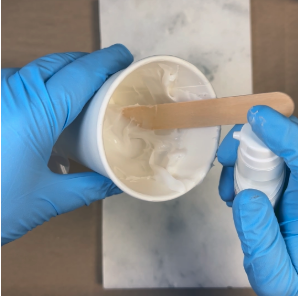
- Custom Color Flexibility: When a unique stone color is needed, hand-mixing allows fabricators to precisely adjust pigments to achieve a perfect color match that off-the-shelf cartridges can’t always guarantee. This flexibility makes it indispensable for one-of-a-kind surfaces or luxury installations.
- Greater Control Over Mixture: Hand-mixing gives experienced fabricators more control over the mix ratio and viscosity, enabling them to fine-tune adhesive performance based on environmental factors like temperature and humidity.
Challenges with Hand-Mixing
- Color Matching Takes Skill: Achieving the right color often involves multiple rounds of pigment adjustment. This is a time-consuming trial and error process of continually adjusting the color until you have a good match.
- Inconsistent Hardener Ratios: In most cases, it’s a 100:1 ratio of adhesive to hardener, but there is no easy, repeatable way to measure the correct amount of hardener. Without precise measurements (e.g., “golfball and a pea” method), curing times and bond strength can vary. Adding in too much hardener or “burning” the resin also makes it turn yellow, become more brittle, and lose strength and performance.
- Skilled Labor Required: New hires often need months or years of training to master hand-mixing, which can slow down onboarding and limit shop scalability. This reliance on veteran fabricators also makes it harder to adapt quickly when workloads spike or key team members are unavailable.
While hand-mixing remains the gold standard for specialized projects, it can be inefficient for standard, high-volume jobs.
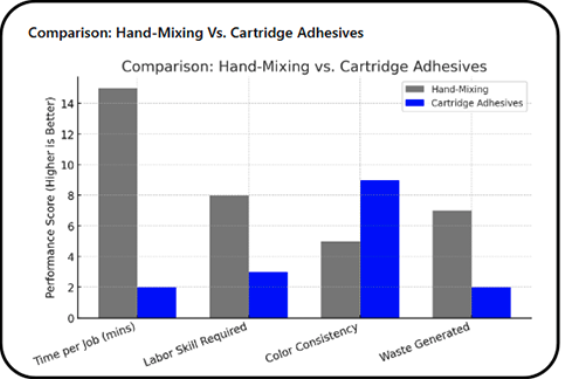
The Case for Cartridge-Based Adhesives
Cartridge adhesives have been gaining popularity because they streamline standard fabrication tasks:
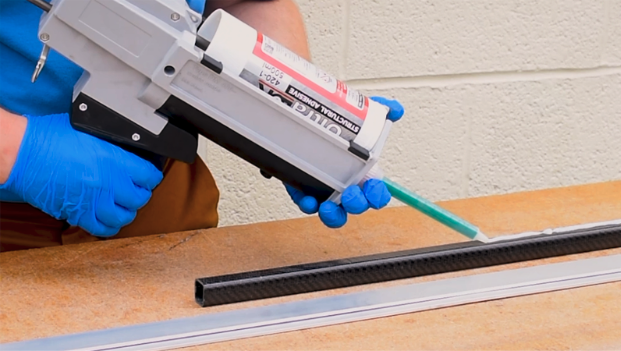
- Simple Speed and Convenience: Simply load the cartridge, apply, and move on. Some fabricators can get the right color match on the first mix, but finding and hiring those skilled fabricators is challenging. Cartridges offer hundreds of pre-mixed, pigmented adhesive options made to match any natural stone, solid surface, quartz, and other composite materials on the market.
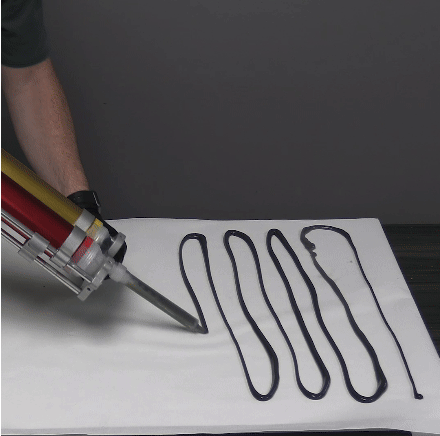
- Less Skilled Labor Needed: Cartridge-based adhesives are much easier to use and require less skill to apply a consistent bead of adhesive every time. That means you don’t need to find and hire skilled labor to ensure the best results. Colors also come pre-mixed, so you only need to grab the right color cartridge – no more mixing pigment.
- Time Savings Add Up: Saving 10–15 minutes per job may seem minor but multiplies quickly over dozens of daily projects, boosting overall shop productivity.
Cartridge adhesives:
- Eliminate the need for time-consuming hand-mixing.
- Are easier and faster to apply for non-skilled labor.
- Achieve more consistent results and reliable bonds.
- Make color-matching as easy as it can be.
All of these benefits translate into cost savings for your shop—through time saved, more consistent work, and reduced reliance on highly skilled labor—allowing you to complete more projects in the long run.
Limitations of Cartridge Systems
Despite their advantages, cartridge adhesives aren’t perfect for every situation:
- Higher Upfront Costs: Cartridges typically cost more per ounce compared to bulk adhesives.
- Limited Customization: If a project requires a custom color not available in a pre-mixed cartridge, you are limited in your options.
Conclusion: Start Using Cartridge Adhesives on Standard Jobs
If your stone fabrication shop is still hand-mixing adhesive for every job, switching to a cartridge-based adhesive system for jobs that don’t require a custom color mix can help you save time, resources and money, giving your shop a competitive advantage.
Adhesive technology has come a long way. Cartridge adhesives are just as strong (if not stronger) than traditional hand-mixing adhesives, and you never have to worry about color matching. Hundreds of color options are available so that you can match any surface in your shop’s inventory every single time. If you need assistance with your color matches, try the Integra color match tool.
Recommendations for Hand-Mixed Adhesives:
Recommendations for Pre-Mixed Cartridges:
Watch the Integra system in action. Decide for yourself which method makes the cut.
The Integra Challenge – TISE 2025 | Las Vegas, NV
Final Note
The choice isn’t about abandoning one method for the other; it’s about using the right tool for the job. With the right adhesive solution, your shop can improve efficiency, reduce rework, and deliver stunning results every time.
Ready to streamline your workflow? Contact Chemical Concepts today for expert recommendations, or shop pre-mixed cartridge adhesives now.