
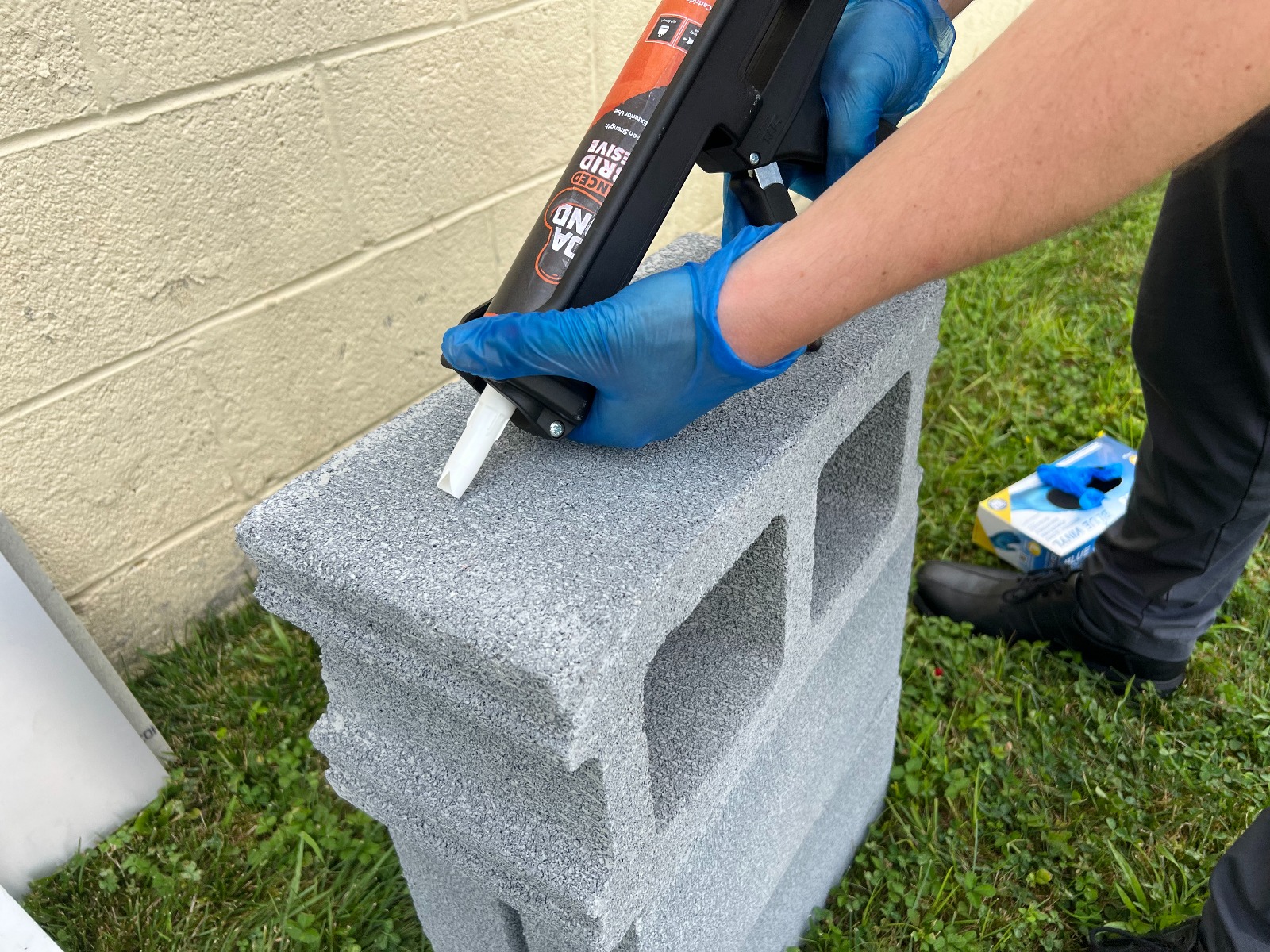
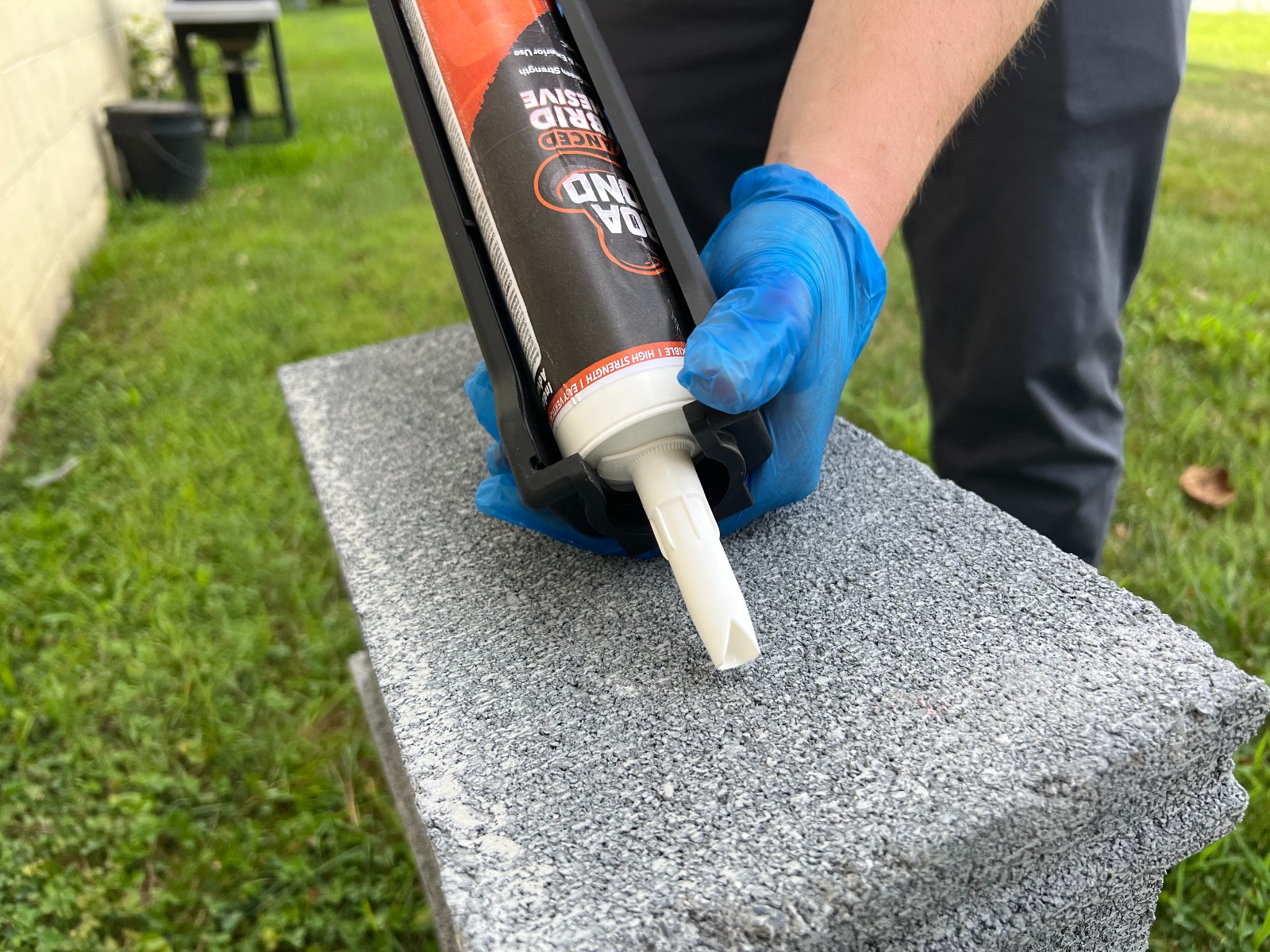
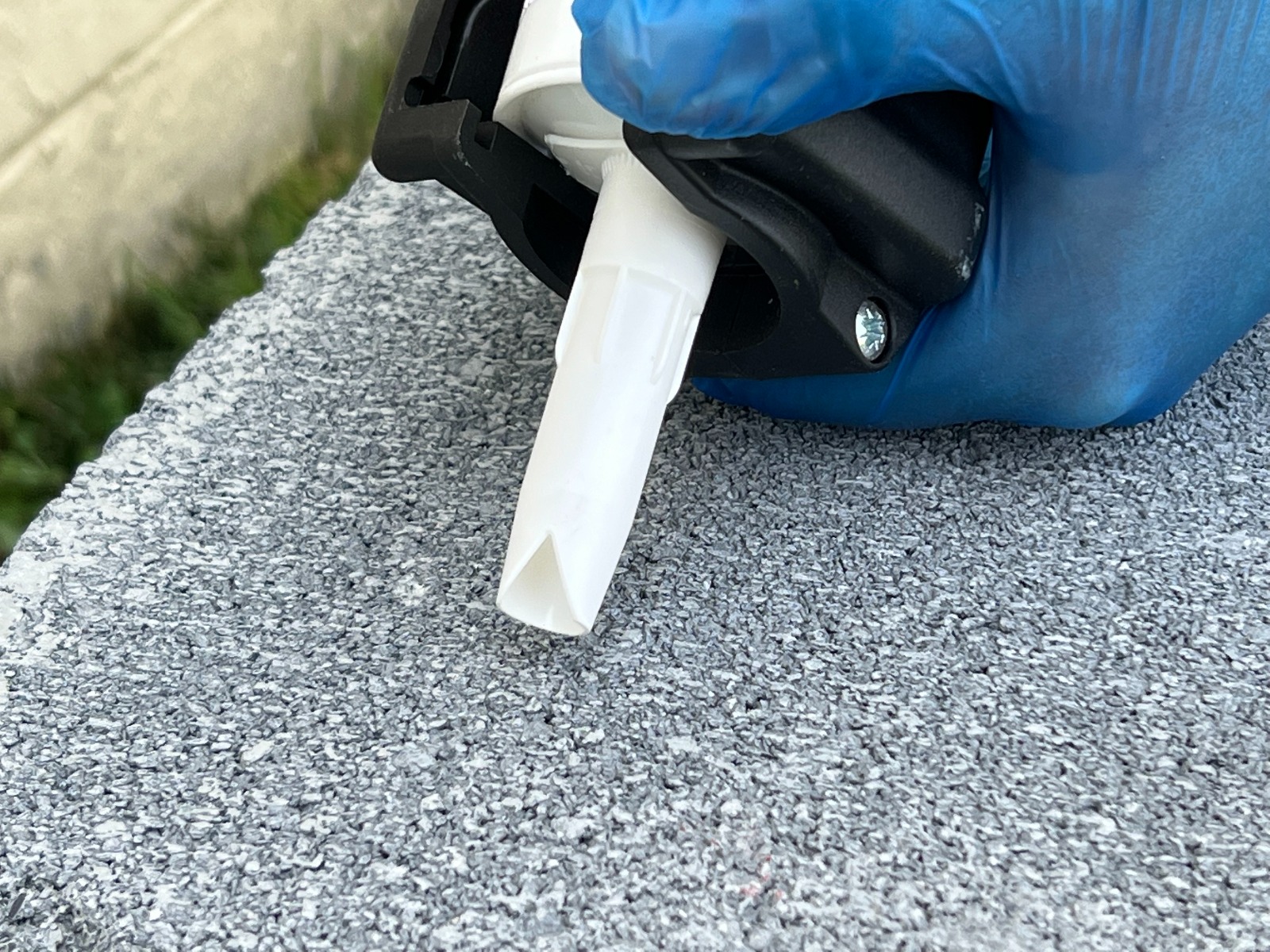
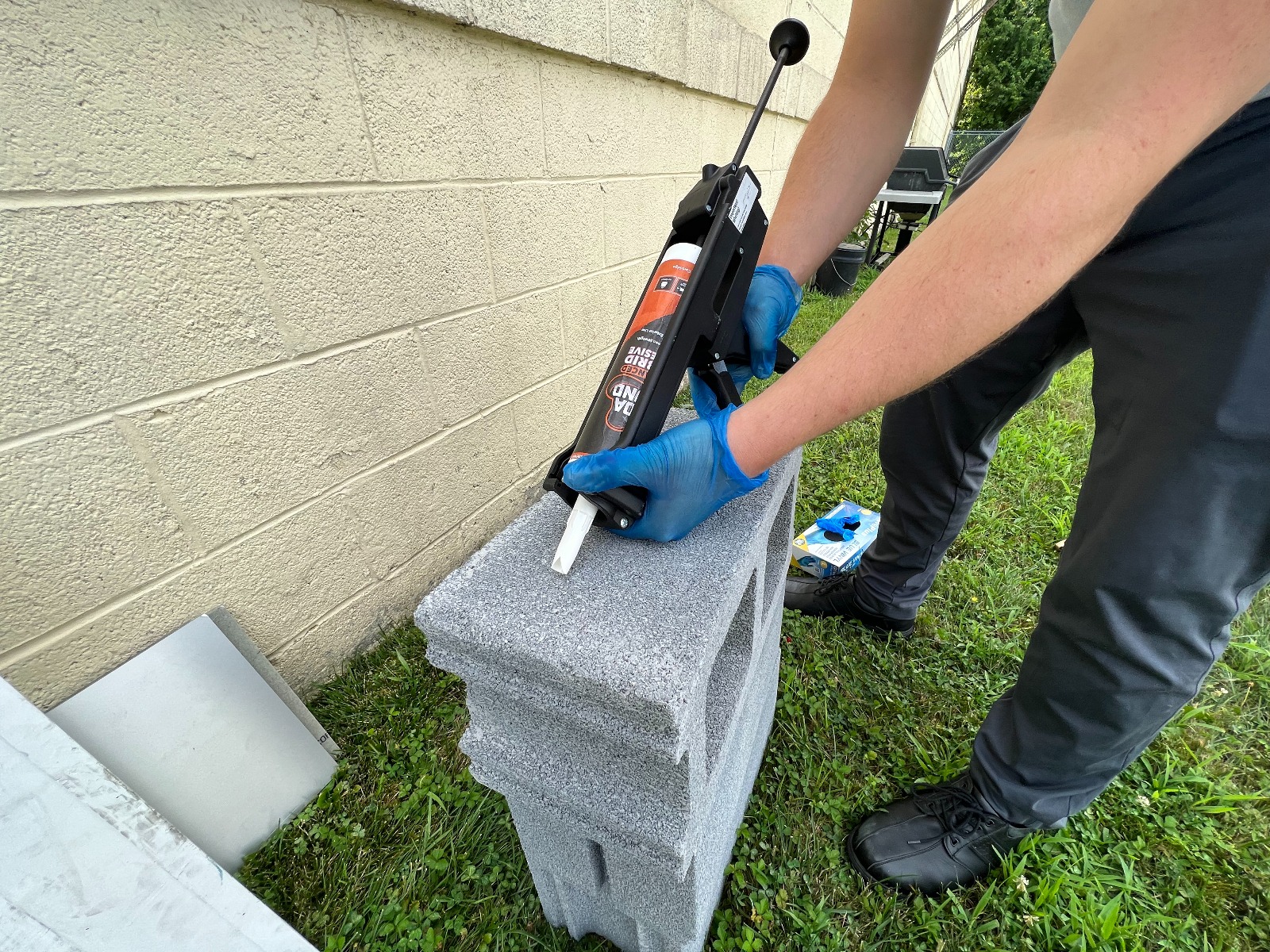



Description
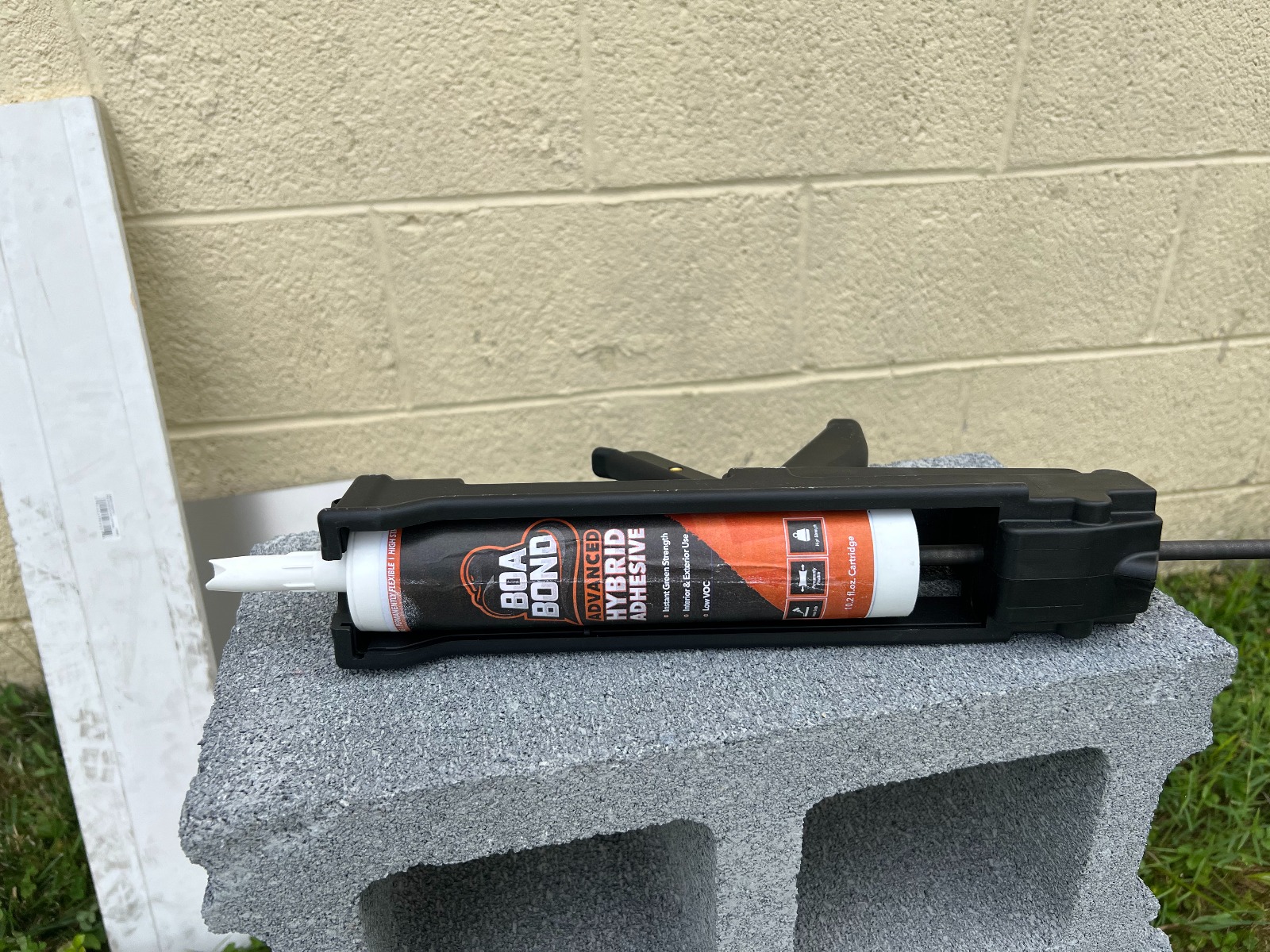
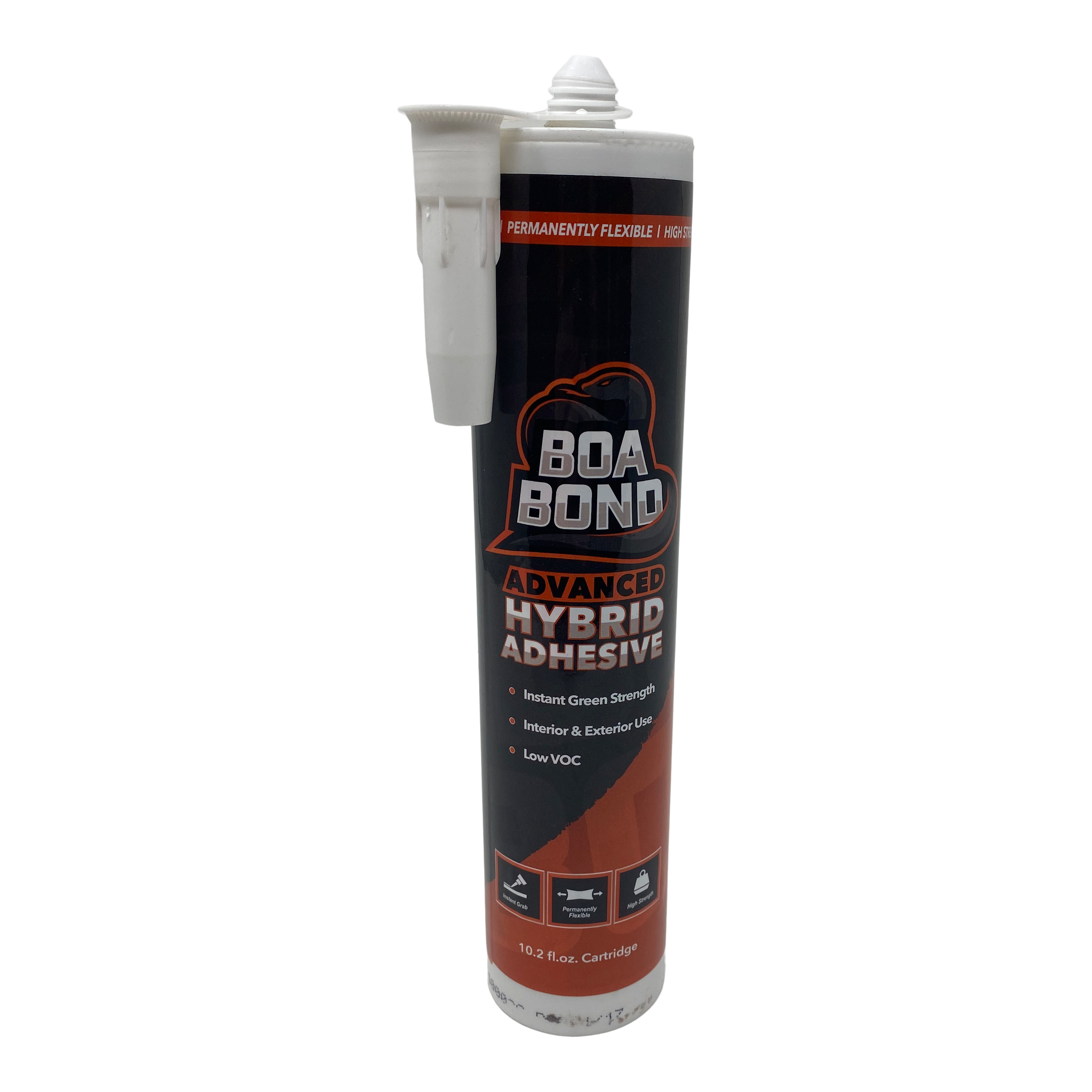
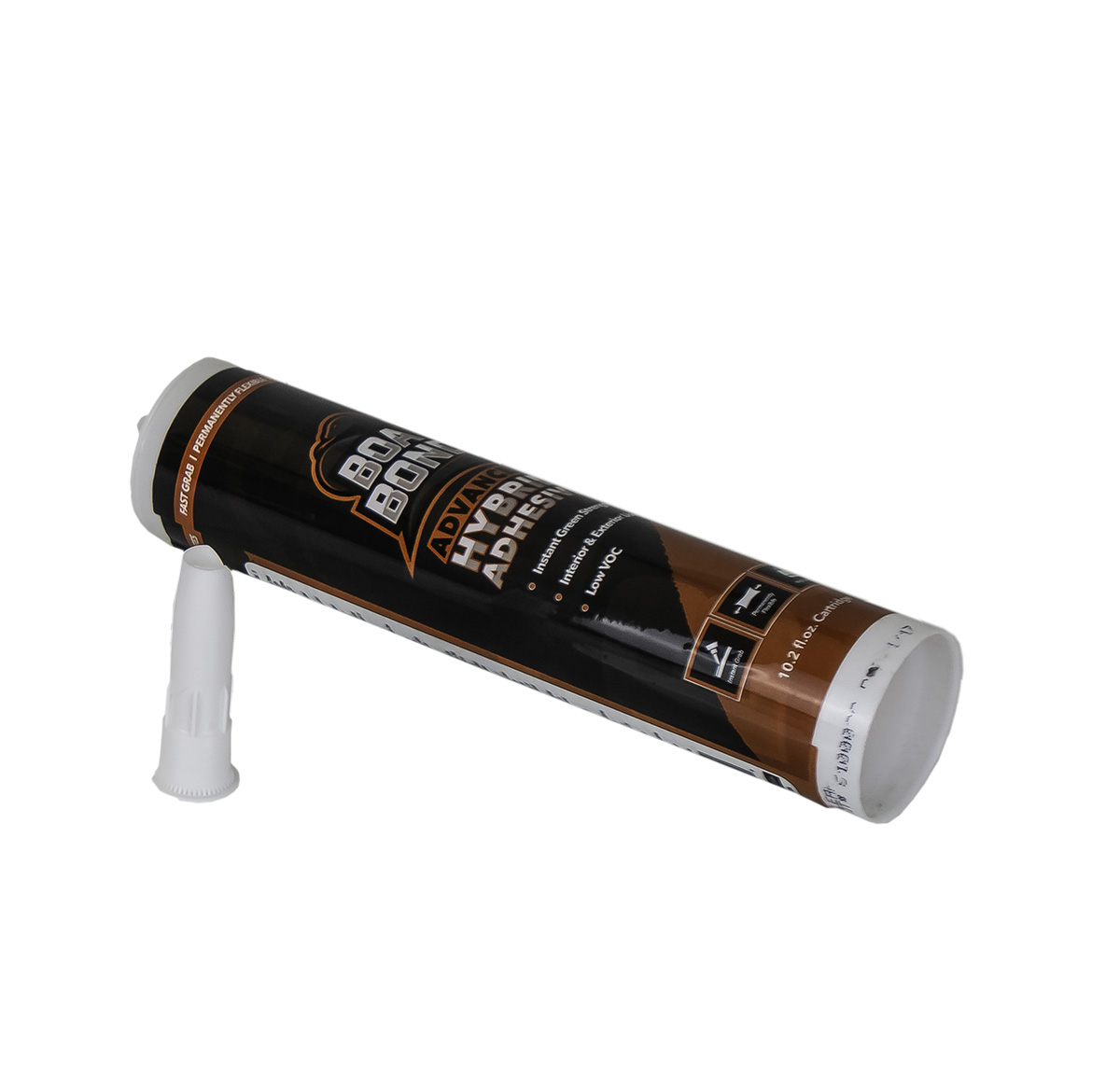
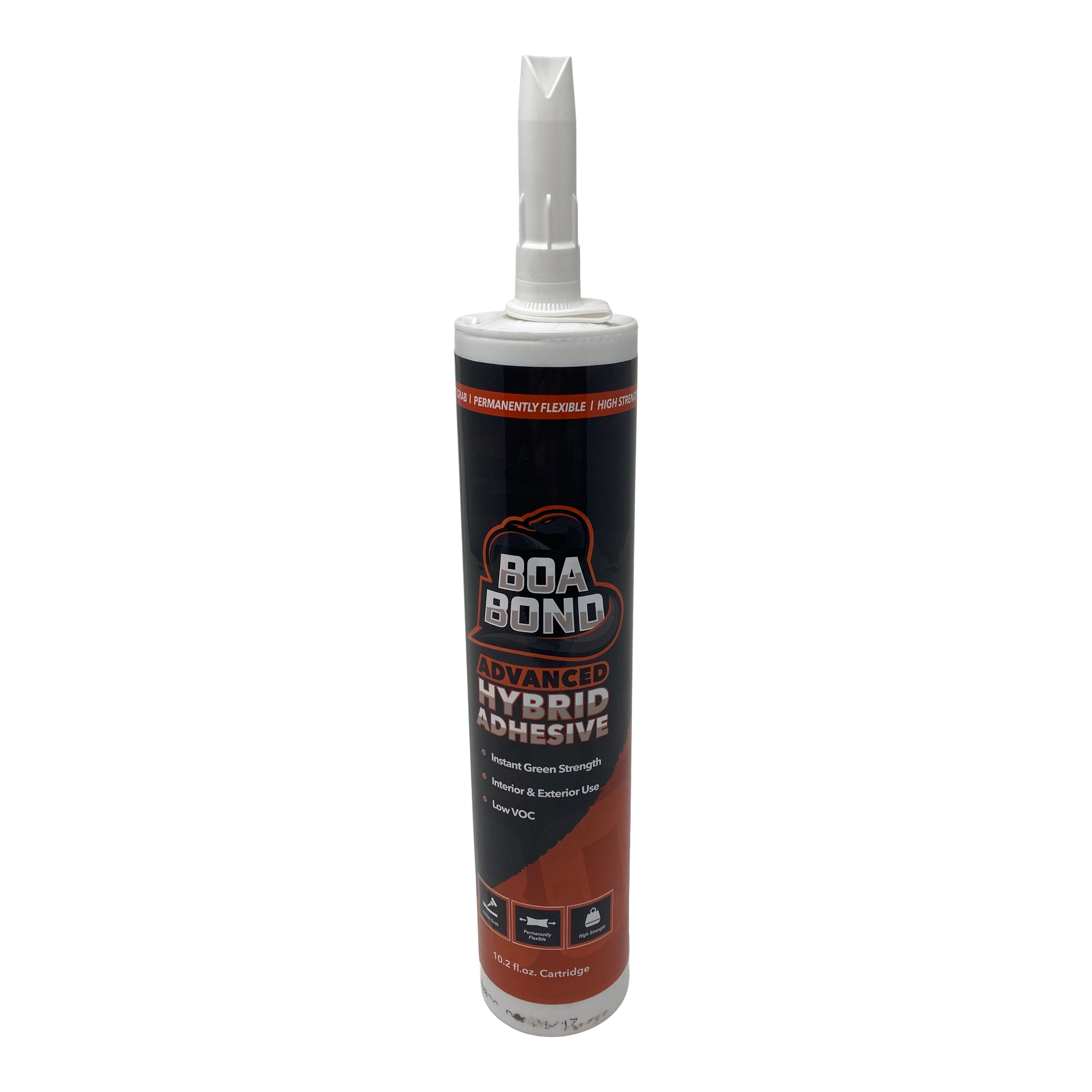
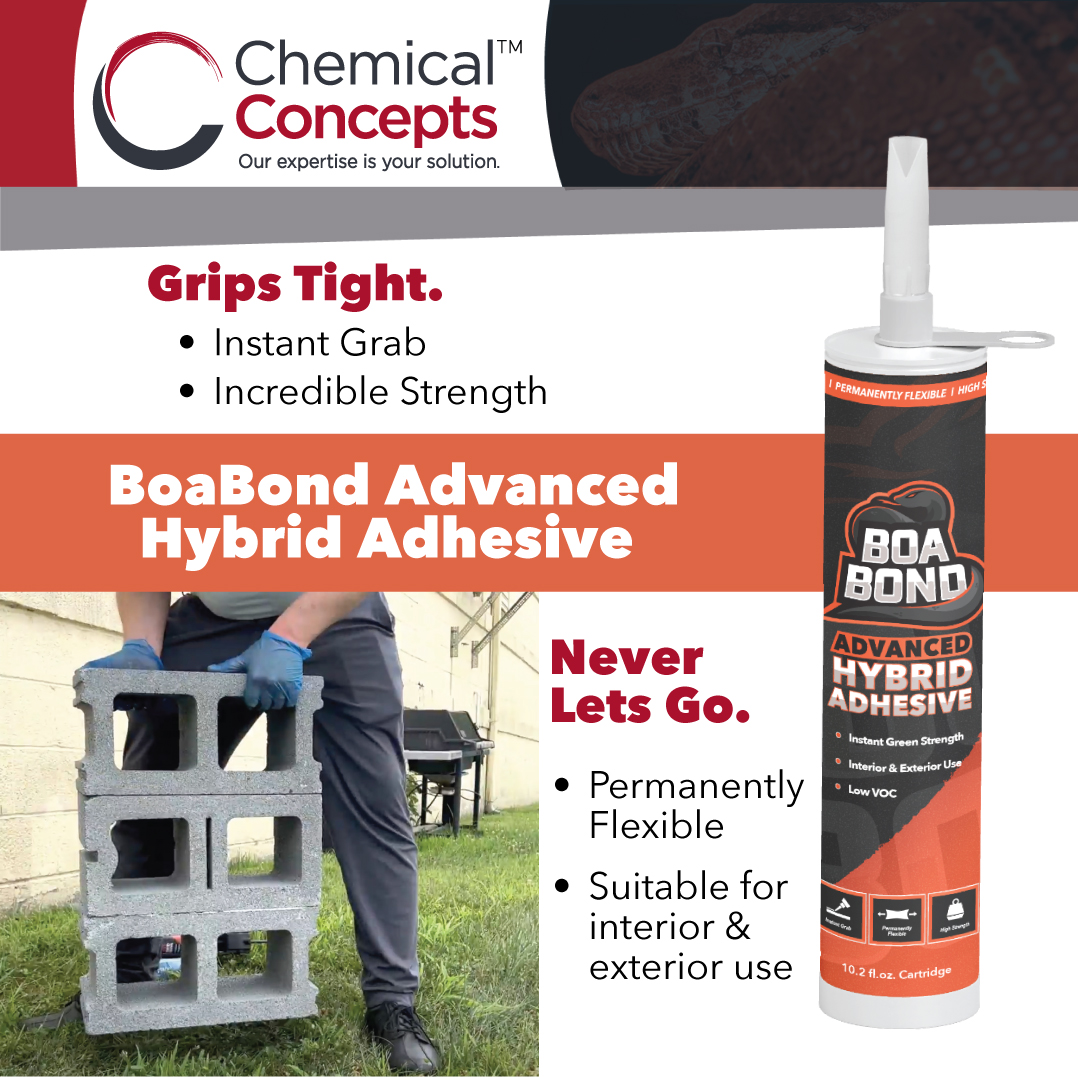
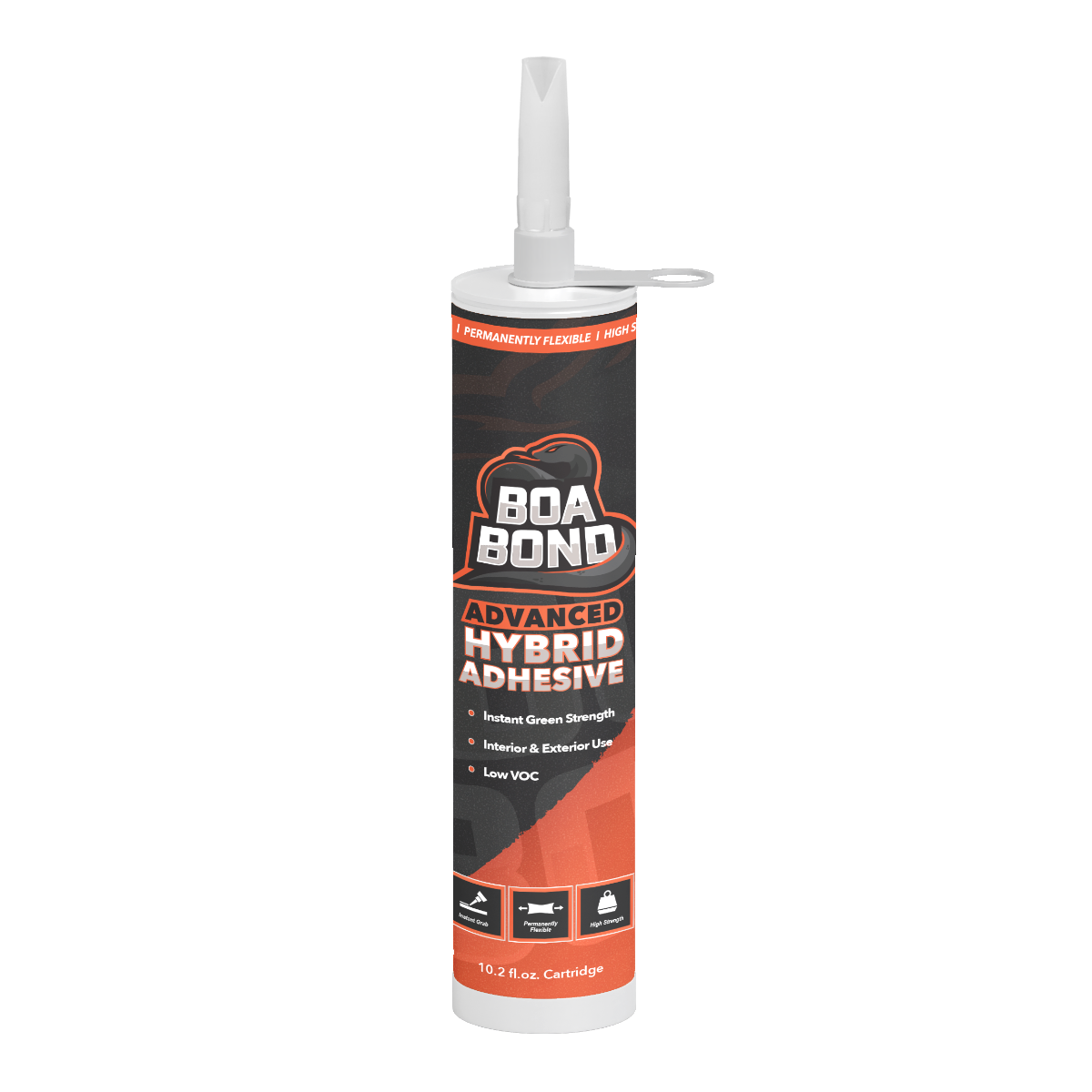
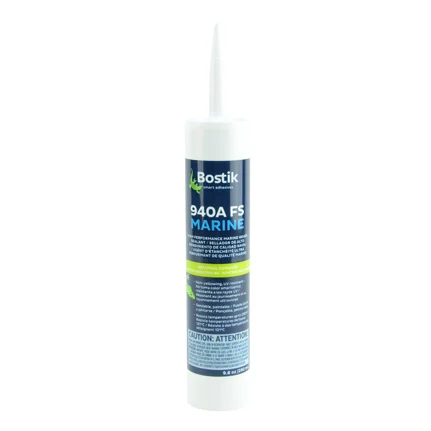
BoaBond Advanced Hybrid Adhesive – 10.2 oz White Cartridge
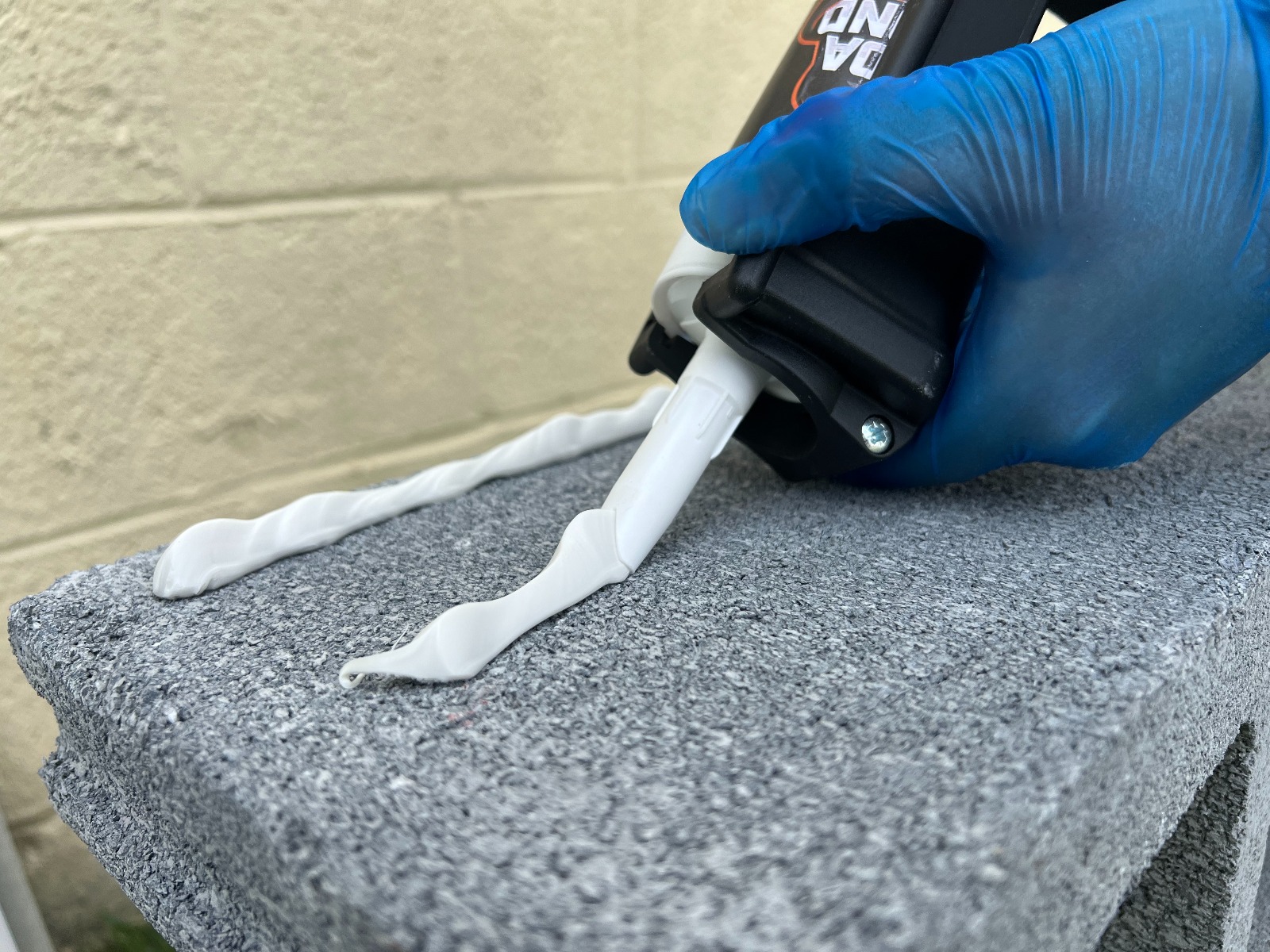
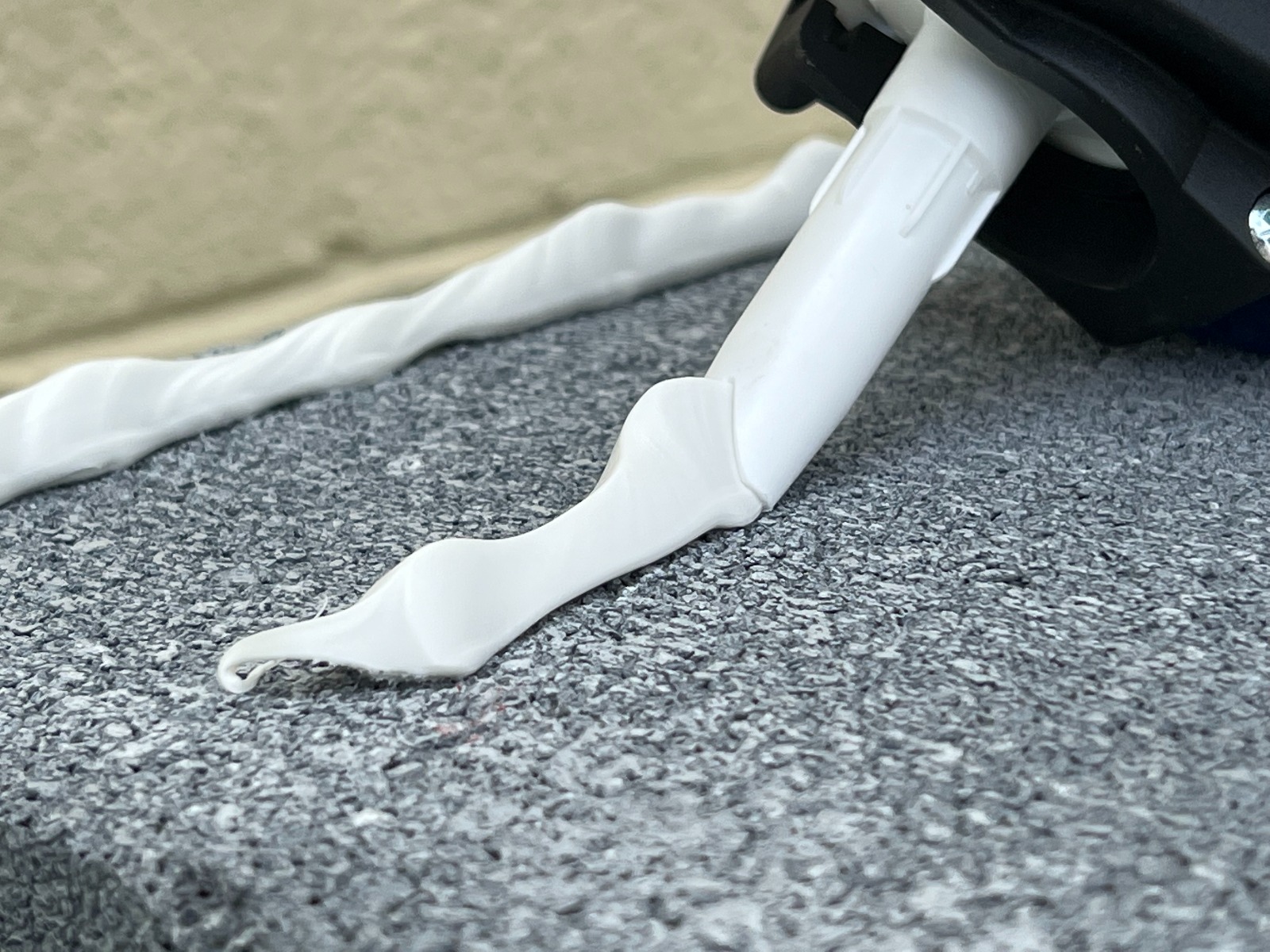
BoaBond Advanced Hybrid Adhesive is a one-part MS polymer adhesive that develops immediate green strength, holding parts in position while the bond cures. It is 100% solids with no solvents or isocyanates, so the bead does not shrink or lose volume during cure. It bonds to wet and damp substrates and holds a non-slump bead in vertical and overhead work.
It is used across countertop and solid surface fabrication, sink installation, sign work, panel assembly, trailer and RV manufacturing, and general construction. VOC content is 9.55 g/L by ASTM D2369, and the product meets CARB and SCAQMD requirements.
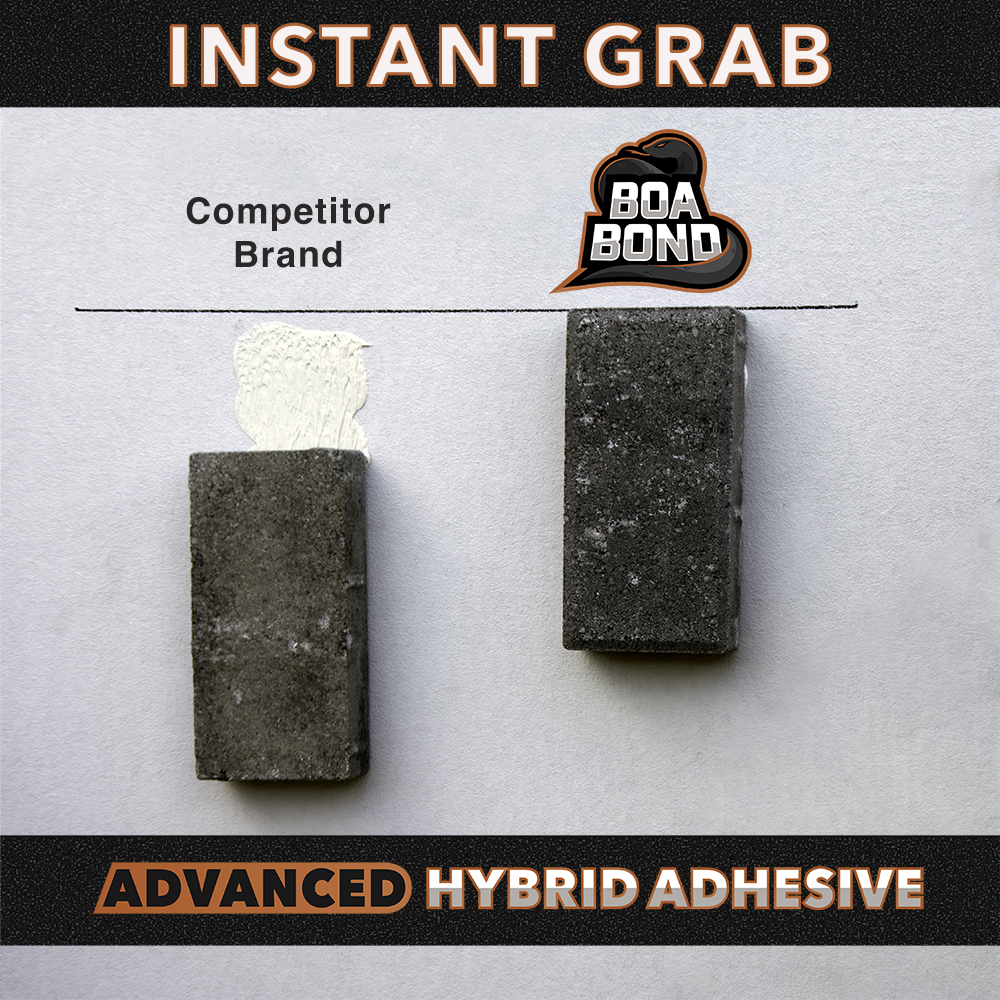
Instant Grab
Immediate green strength holds parts in position, reducing or eliminating temporary bracing, clips, and fasteners during assembly.
Zero Shrink
100% solids. The bead does not lose volume during cure the way solvent-based and water-based adhesives do.
No Sag
Passes gun grade testing as non-slump. Applies vertically and overhead without slumping.
Damp Surface Rated
Bonds to wet or damp substrates without washing off or outgassing.
Common Applications
- Countertop and solid surface installation
- Undermount sink installation
- Signage installation and channel letter mounting
- Panel assembly and architectural panel bonding
- Trailer and RV manufacturing
- Industrial manufacturing and general assembly
- Faux rock and decorative panel installation
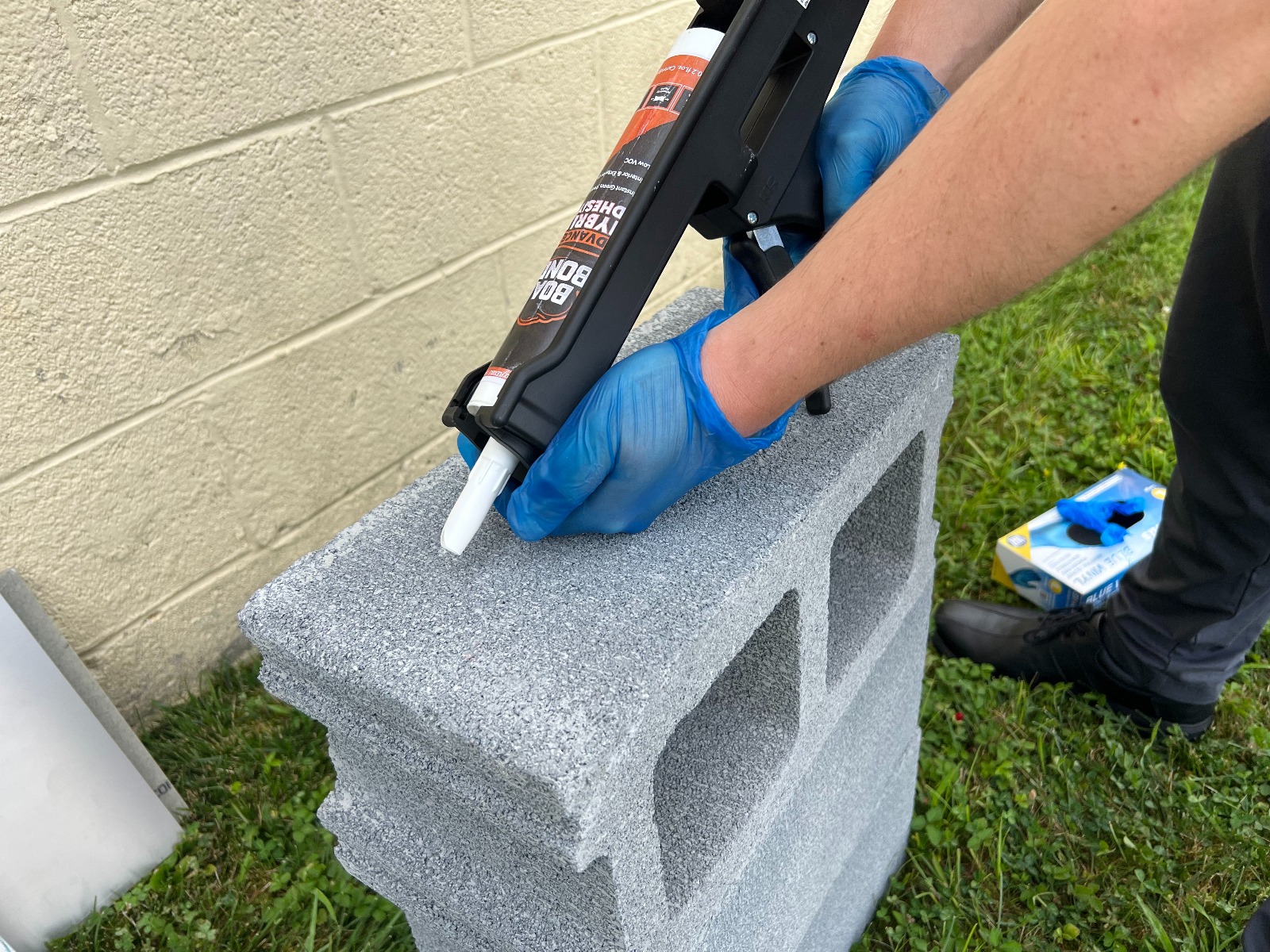
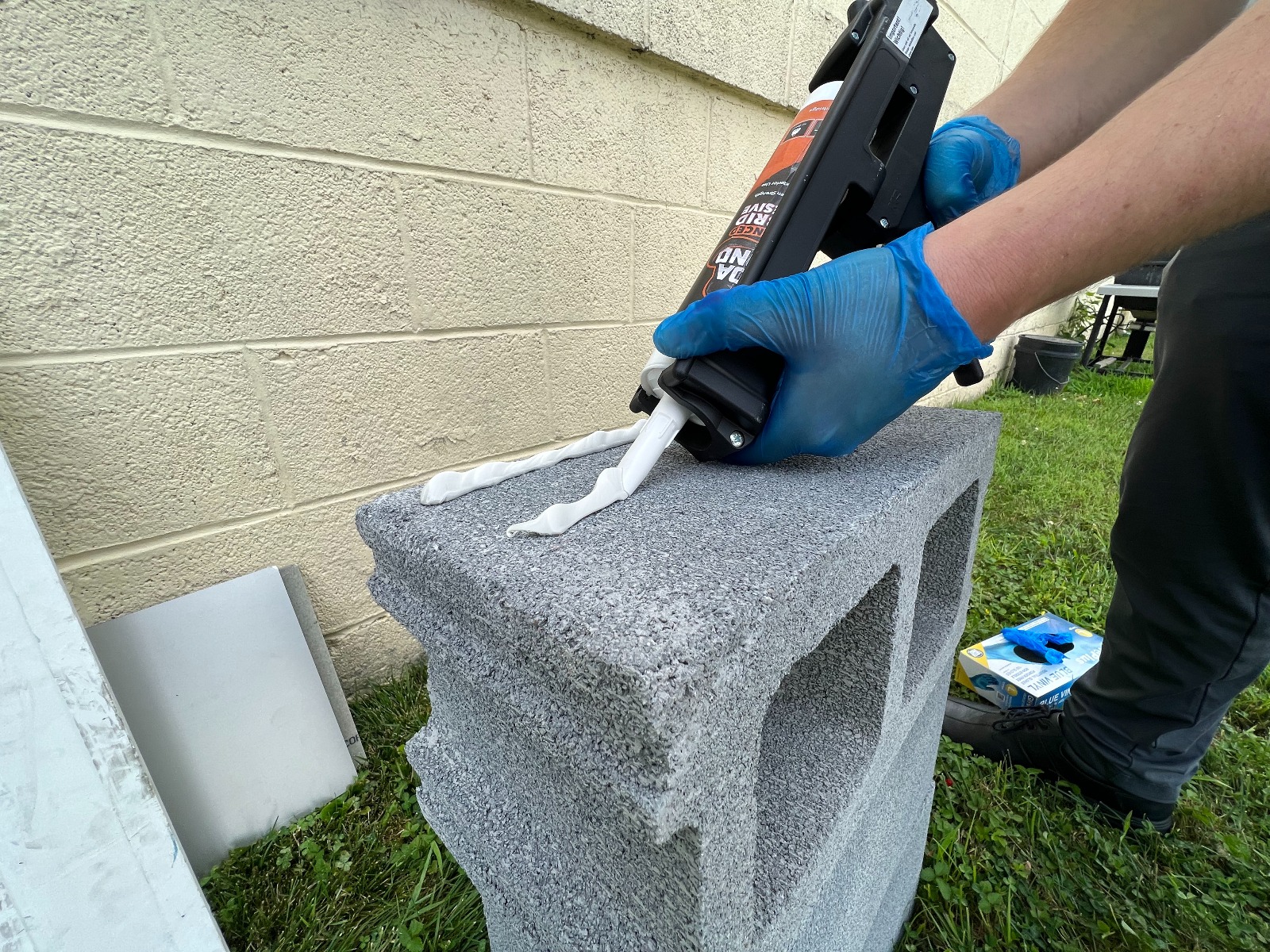
- Landscape block bonding
- Roof bow bonding
- Mirror installation
- General construction and remodeling
Bonding Substrates
- Granite, marble, and natural stone
- Porcelain and ceramics
- Glass
- Aluminum and galvanized metal
- Wood
- PVC and other plastics
- Fiberglass
- EPDM
- EPS and Styrofoam insulation
- Porous surfaces including concrete and brick
Additional substrates not listed may be suitable. Testing is recommended prior to production use.
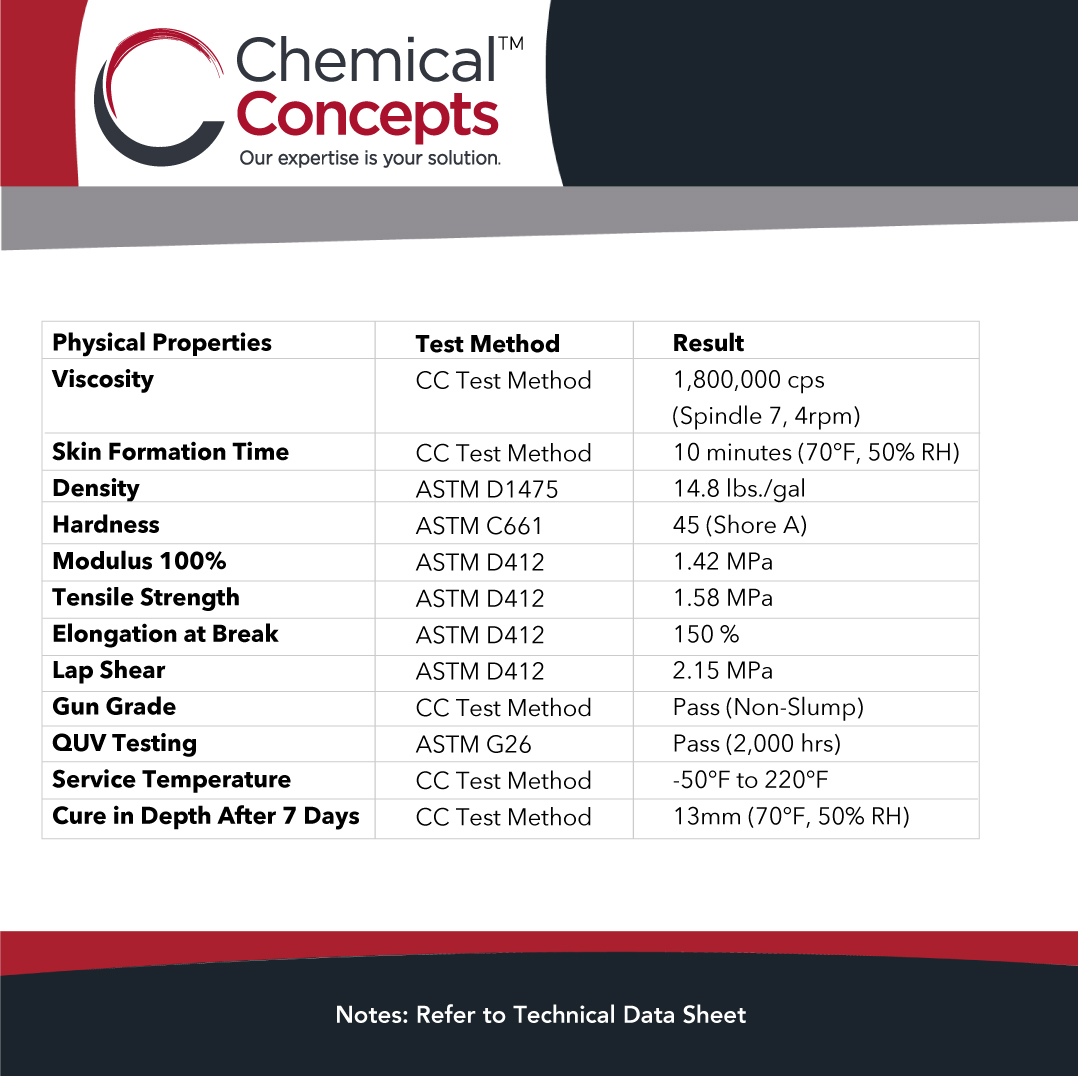
Technical Specifications
| Chemistry | One-part MS polymer hybrid |
| Cure Type | Moisture cure |
| Color | White |
| Solids Content | 100% |
| Viscosity | 4,500,000 cps (Spindle 7, 4 rpm) |
| Skin Formation Time | 10 minutes at 70°F, 50% RH |
| Cure In Depth | 13 mm after 7 days at 70°F, 50% RH |
| Density | 14.4 lbs/gal (ASTM D1475) |
| Hardness | 47 Shore A (ASTM C661) |
| Tensile Strength | 1.8 MPa (ASTM D412) |
| 100% Modulus | 1.35 MPa (ASTM D412) |
| Elongation at Break | 200% (ASTM D412) |
| Gun Grade | Pass, non-slump |
| QUV Testing | Pass, 10,000 hours (ASTM G154) |
| Service Temperature | -50°F to 220°F |
| Application Temperature | 32°F to 150°F |
| VOC Content | 9.55 g/L (ASTM D2369) |
| Shelf Life | 12 months in cartridges, 6 months in pails and drums |
| Packaging | 10.2 oz cartridge |
See It In Action
BoaBond Advanced Hybrid Adhesive product overview.
Undermount sink mounting with BoaBond.
Performance in Production
- Skin time is approximately 10 minutes at 70°F and 50% RH. Tooling should be completed before skinning begins.
- Higher temperature and humidity accelerate skin and cure time. Cold and low humidity slow it.
- Permanently flexible after cure, allowing for vibration and movement in mixed-material assemblies.
- Dispenses and tools consistently across a 32°F to 150°F application range.
- Priming is not normally required on nonporous surfaces. Unprimed adhesion can be verified with a trial bead over 7 days.
- Allow 7 days for maximum strength to develop before testing adhesion or bond strength.
Surface Preparation
All surfaces should be clean. Alcohol can be used to clean the surface. Do not use petroleum-based solvents, as residue can interfere with adhesion. Priming is not normally required for applications to nonporous surfaces. Wet adhesive can be cleaned up with alcohol.
Limitations
- Do not use on olefins such as polyethylene, polypropylene, or TPO without testing first.
- Test all paints before application.
- Allow treated wood and asphalt to cure 6 months before application.
- Long-term submersion under water can cause loss of adhesion on some substrates.
- Cold temperature and low humidity slow curing. Below 32°F the effect is most significant.
- Do not store at elevated temperatures.
- Coverage, surface area, bond area, and joint design all affect initial holding strength. Test all applications prior to use.
Frequently Asked Questions
What is BoaBond Advanced Hybrid Adhesive?
BoaBond Advanced Hybrid Adhesive is a one-part MS polymer hybrid adhesive supplied in a 10.2 oz white cartridge. It cures with moisture and develops immediate green strength, which holds parts in position while the bond develops.
What does BoaBond bond to?
BoaBond bonds to granite, marble, natural stone, porcelain, ceramics, glass, aluminum, galvanized metal, wood, PVC and other plastics, fiberglass, EPDM, EPS insulation, concrete, and brick. Olefins such as polyethylene, polypropylene, and TPO require testing first.
Can BoaBond be used to install undermount sinks?
Yes. Sink installation is a listed application on the BoaBond technical data sheet. Both surfaces should be clean and free of stone dust, slurry, and cutting residue before the bead is applied. Support the sink until the adhesive has developed enough strength for handling.
Can BoaBond be applied to damp surfaces?
Yes. BoaBond bonds to wet or damp substrates and can be applied when moisture is present without washing off or outgassing. Surfaces still need to be free of dust, dirt, oil, and loose debris.
How long does BoaBond take to cure?
BoaBond forms a skin in approximately 10 minutes at 70°F and 50% relative humidity. Cure in depth reaches 13 mm after 7 days under the same conditions. Strength develops immediately and continues increasing for 7 days. Higher temperature and humidity accelerate cure. Cold and dry conditions slow it.
Does BoaBond shrink as it cures?
No. BoaBond is 100% solids and will not shrink. Solvent-based and water-based adhesives lose volume during cure as the solvent or water evaporates, which can leave a recessed joint.
Does BoaBond contain solvents or isocyanates?
No. BoaBond contains no solvents, no isocyanates, and no water. VOC content is 9.55 g/L by ASTM D2369.
Is BoaBond VOC compliant?
Yes. BoaBond meets CARB and SCAQMD requirements and conforms to California Proposition 65 and USDA requirements for non-food contact. VOC content is 9.55 g/L tested to ASTM D2369.
Can BoaBond be applied overhead or on vertical surfaces?
Yes. BoaBond passes gun grade testing as non-slump and can be applied overhead with no sag.
What temperature range can BoaBond be applied and used in?
Application temperature range is 32°F to 150°F. Service temperature range after cure is -50°F to 220°F. BoaBond can be applied below 32°F but curing speed will slow significantly.
What is the shelf life of BoaBond?
BoaBond has a shelf life of 12 months in cartridges and 6 months in pails and drums when stored at 70°F and 50% relative humidity. High temperature and high humidity can significantly reduce shelf life.
What color is BoaBond available in?
BoaBond is available in white. Custom colors can be purchased at batch volumes.
How is BoaBond cleaned up?
Wet adhesive can be cleaned with alcohol. Do not use petroleum-based solvents on the bonding surface.
Documentation
Talk to a Technical Specialist
Share your substrates, bead size, temperature range, and exposure conditions and we can help narrow the choice.


Reviews
There are no reviews yet.