

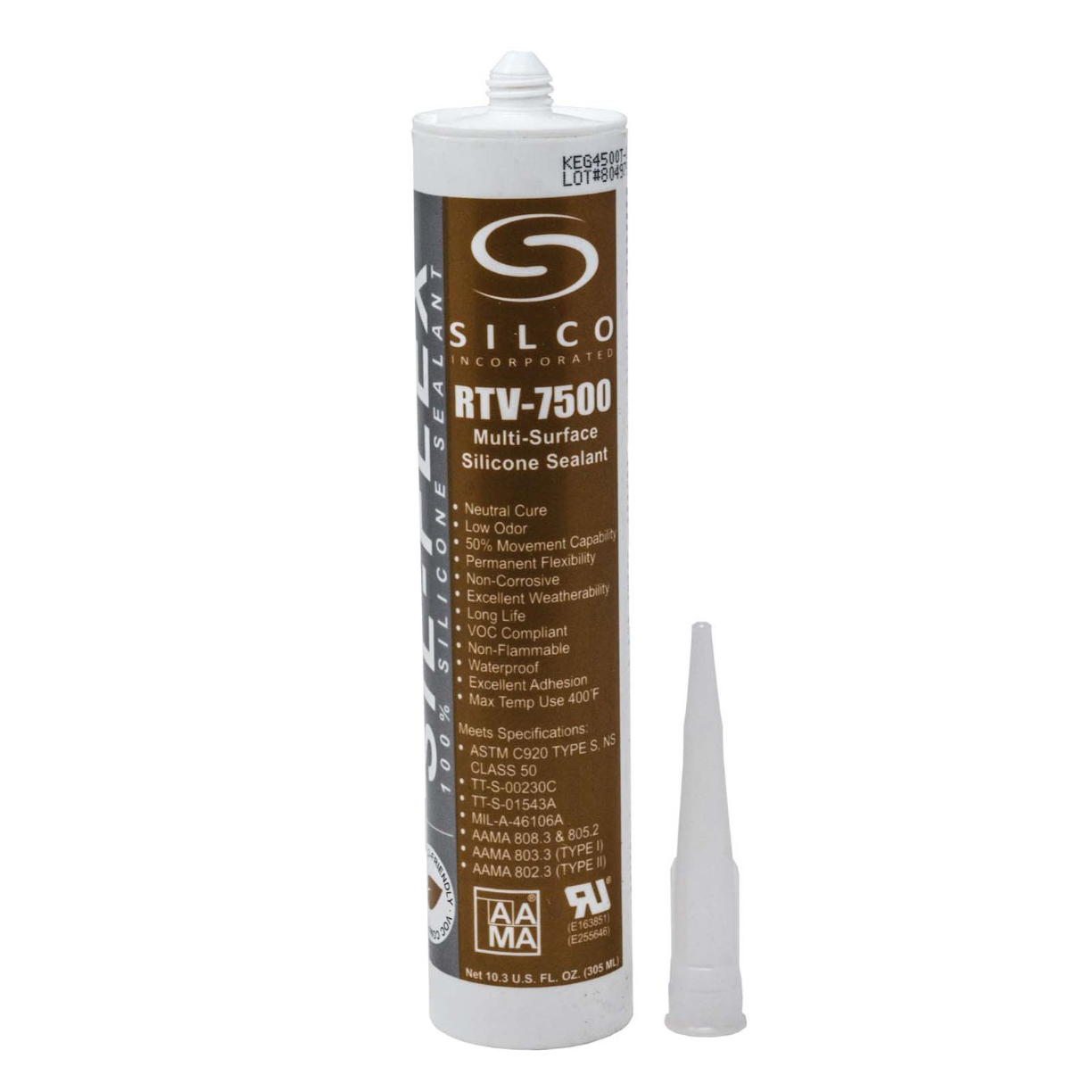


Description
Sil-Flex RTV-7500 in Aluminum is a neutral cure silicone sealant, one-component and low modulus, in a 10.3 fl oz cartridge. Neutral cure means it releases a non-acidic oxime byproduct as it cures rather than the acetic acid an acetoxy silicone gives off, and that difference is the whole reason to specify it: non-corrosive to metals, safe around electronics, safe on polished marble and quartzite, and far lower in odor. It carries ASTM C920 Class 50 at 50% joint movement, is UL recognized, and meets four AAMA glazing and perimeter sealing standards.
Aluminum is the color for metal work: mill-finish and anodized aluminum, curtainwall and storefront perimeters, architectural cladding and rainscreen joints, metal panel systems, and equipment housings. Non-corrosive cure against the metal plus four AAMA ratings is the combination that makes this a facade product rather than a general purpose one. Full specifications and the other eight colors are on the Sil-Flex RTV-7500 composite page.
Key Product Details
| Property | Value |
|---|---|
| Cure System | Neutral / oxime, one component, low modulus |
| Color | Aluminum, opaque, non-metallic |
| Package | 10.3 fl oz (305 mL) cartridge, fits a standard 10 oz caulk gun |
| Movement Capability | ±50%, ASTM C-719, Class 50 |
| Durometer | 15 Shore A, ASTM C-661 |
| Tensile Strength | 190 psi, ASTM D-412 |
| Elongation | 650%, ASTM D-412 |
| Extrusion Rate | 500 g/min, ASTM C-1183 modified |
| Skin Over / Tack Over | 12 min / 25 min |
| Cure Rate | 1/8 in per 30 hrs |
| Temperature Range | -62°F to 400°F, intermittent to 450°F |
| Accelerated Weathering | No change at 10,000 hrs, QUV Weatherometer |
| Dielectric Strength | 20 kv/mm (500 v/mil) |
| VOC | 40 g/L |
| Shelf Life | 18 months |
| Paintable | No |
| Approvals | ASTM C920 Type S, Grade NS, Class 50; TT-S-00230C; TT-S-01543A; MIL-A-46106A; AAMA 808.3, 805.2, 803.3 (Type I), 802.3 (Type II); UL Recognized Component |
| SKU | CCS-RTV7500 |
| Related Composite Product | Silco Sil-Flex RTV-7500 Neutral Cure Silicone Sealant |
Why Neutral Cure Instead of Acetoxy
Every one-component silicone cures by reacting with moisture in the air and releasing a byproduct. What that byproduct is determines where the sealant can go.
An acetoxy silicone releases acetic acid, which is where the vinegar smell comes from. That acid can have adverse effects on some delicate electronic components and can be corrosive to certain substrates and metals. RTV-7500 releases an oxime instead, which is non-acidic and non-corrosive, and the odor is much milder. On metal work that is the whole argument.
- Non-corrosive against plated, polished, anodized, and conductive metal, and in assemblies where the sealant sits on metal for decades.
- Four AAMA ratings covering exterior perimeter sealing, cold-applied glazing, narrow joint seam sealer, and back bedding glazing compound.
- Class 50 at ±50% joint movement, double a Class 25 sealant. A 1/2 in joint absorbs roughly 1/4 in of movement, which is what a facade needs through a full thermal cycle.
- No change after 10,000 hours on the QUV weatherometer, with a -62°F to 400°F service range.
- Low modulus at 15 Shore A with 650% elongation, so the bead stretches at low stress rather than loading the joint edge.
- 500 g/min extrusion rate, which shows up on long perimeter runs and in cold weather where a stiffer product fights the gun.
- The tradeoff is cure speed. 30 hours on a 1/8 in bead against 24 for acetoxy, and a higher price per cartridge.
Substrates and Applications
Fully cured, RTV-7500 offers UV stability and adhesion to PVC, concrete, glass, aluminum, painted surfaces, wood, plywood, stucco, building paper, window wrap, fiber cement, brick, stone, steel, ceramic, porcelain, and masonry, plus many other common material surfaces. Neutral cure silicones adhere to a wide range of plastic and masonry substrates without primer.
Named applications include sealing openings and exterior surfaces, countertops, HVAC and refrigeration, plumbing, roofing, kitchen and bath, sanitary seals, industrial gaskets, precast concrete, transportation seals, marine cabins, and appliance trim and parts, interior and exterior above grade.
About the Aluminum Color
Aluminum is a color name, not a finish. The cured bead is flat and non-reflective with no metallic sparkle or sheen to it. It reads as the shadowed tone of aluminum rather than the shine, which is what lets it sit next to real metal in most lighting without standing out.
On new mill-finish stock, wipe the surface even if it looks clean. Rolling oil and handling residue are common and both interfere with adhesion. Anodized and coated finishes vary widely by manufacturer, so test adhesion and appearance on an offcut before a production run.
Using the Cartridge
- Fits a standard 10 oz caulk gun. One component, no mixing, no additives, no static mixer.
- Clean and dry both faces before beading. Never a petroleum based solvent, it leaves a film that kills adhesion.
- On mill-finish and galvanized stock, wipe even when the metal looks clean.
- Tool inside 12 minutes, with tack over at 25. That is a longer working window than an acetoxy silicone gives you.
- 500 g/min extrusion rate pushes easier than most silicones, which helps on long perimeter runs and in cold weather.
- Cure runs 1/8 in per 30 hours, so plan the schedule around it on deep joints and do not load the assembly early.
- Priming is not normally required. On an unfamiliar anodized or coated finish, bead an offcut and give it the full cure before judging adhesion.
Related Products
- Silco Sil-Flex RTV-7500 Neutral Cure Silicone, all nine colors with full specifications
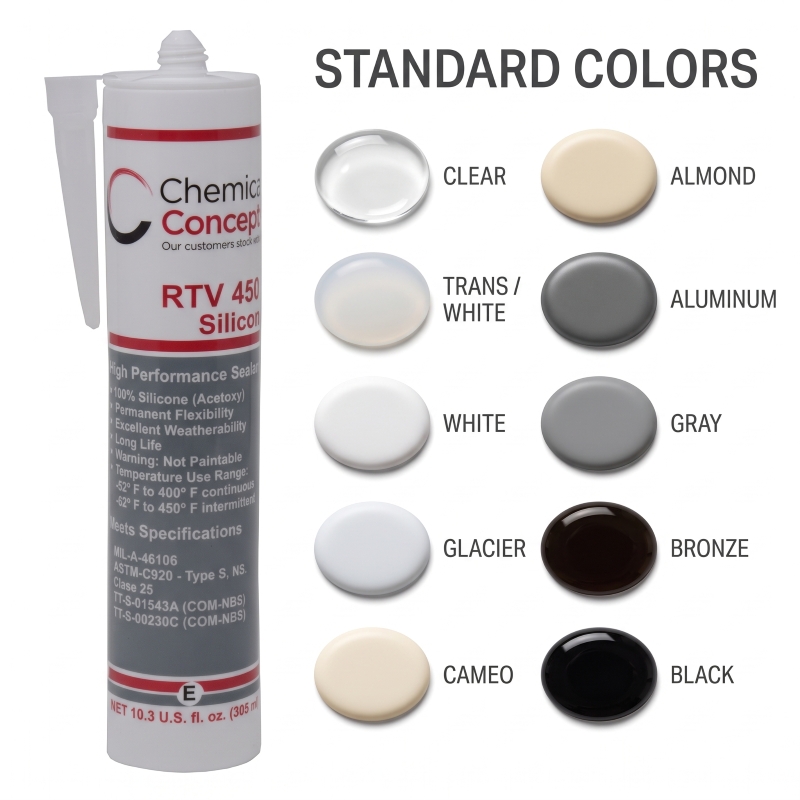
- Chem-Set RTV4500 100% Silicone Sealant, acetoxy cure, faster set and lower cost, where acid cure is not a concern
- Silicone and Caulk Collection
Frequently Asked Questions
What is neutral cure silicone?
Neutral cure silicone releases a non-acidic byproduct as it cures, rather than the acetic acid an acetoxy silicone gives off. RTV-7500 is an oxime cure, one of the neutral chemistries. The practical result is a sealant that is non-corrosive, much lower in odor, and suitable for sensitive metals, electronics, and stone that an acid cure silicone should not touch. It is also called non-acid cure or oxime cure silicone.
Will neutral cure silicone corrode aluminum or other metals?
No. RTV-7500 is specified as non-corrosive, which is why it gets used against plated, polished, anodized, and conductive metal and in assemblies where the sealant sits on metal long term. The cured bead is also rated at 20 kv/mm (500 v/mil) dielectric strength. That is the practical difference from an acetoxy silicone, where the acid released during cure can be corrosive to certain substrates and metals.
Is this approved for curtainwall and perimeter sealing?
It meets AAMA 808.3 for exterior perimeter sealing compound, AAMA 805.2 for cold-applied glazing sealant, AAMA 803.3 Type I for narrow joint seam sealer, and AAMA 802.3 Type II for back bedding glazing compound. It also carries ASTM C920 Type S, Grade NS, Class 50 and is a UL Recognized Component. Send us the spec section if you need the submittal package.
Is Aluminum silicone metallic?
No. Aluminum is a color name, not a finish. The cured bead is flat and non-reflective with no metallic sparkle, shine, or sheen. It reads as the shadowed tone of aluminum rather than the shine, which is what lets it sit next to real metal without standing out. No silicone in the line contains metallic pigment.
What does Class 50 mean on a silicone sealant?
Class 50 is the ASTM C920 rating for a sealant that handles 50% joint movement, tested to ASTM C-719. In practice a 1/2 in joint can absorb roughly 1/4 in of movement in either direction. That is double a Class 25 product, which is why Class 50 gets specified on curtainwall, expansion joints, and long exterior runs where thermal cycling moves the building more than a standard sealant can follow.
How long does it take to cure?
It skins over in about 12 minutes and tacks over at 25 minutes, so tool inside that window. Cure runs 1/8 in per 30 hours at 77°F and 50% relative humidity. That is slower than an acetoxy silicone at 24 hours, which is the tradeoff for non-corrosive cure and low odor. Deep and confined joints take proportionally longer, and cold dry conditions slow it further.
Can neutral cure silicone be painted?
No. Silicone is not paintable and paint will not bond to the cured bead. Pick the color closest to the joint from the nine in the line instead.
What size is the cartridge and how long does it keep?
10.3 fl oz (305 mL), fitting a standard 10 oz caulk gun. Shelf life is 18 months. Cartridges ship from our warehouse in Huntingdon Valley, Pennsylvania, and in-stock items ordered by 2pm EST ship the same day.
Need the AAMA and ASTM submittal package for a curtainwall spec? Call (800) 220-1966 or email [email protected].


Reviews
There are no reviews yet.