

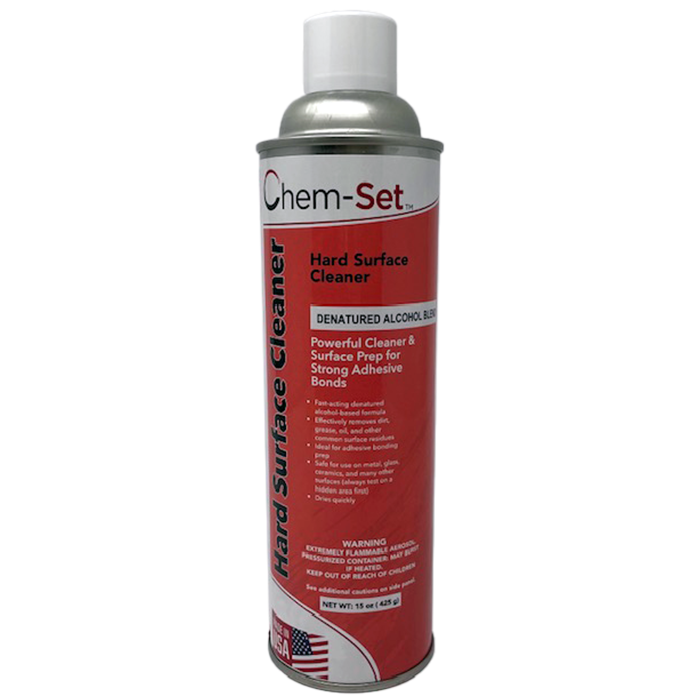


Description
Chem-Set hard surface cleaner is a fast-evaporating denatured alcohol blend in a convenient 14 oz aerosol that removes light oils, fingerprints, and shop residues from hard, non-porous surfaces. It dries quickly and leaves no oily film, so your parts move to the next step sooner.
Why choose Chem-Set hard surface cleaner
- Rapid, residue-free cleaning: The methyl acetate/ethyl alcohol formula flashes off fast and wipes clean for reliable prep.
- Controlled coverage: A precise spray pattern helps reduce over-application and solvent waste compared with pour-and-wipe methods.
- Shop-ready format: Ready to use—no mixing or decanting—so technicians stay productive on the bench or jobsite.
- CO₂ propellant: Delivers a consistent spray without adding oily residues.
Typical uses
Use for pre-bond wipe-downs when your adhesive specifies an alcohol/solvent prep, for light shop cleanup on compatible metals, glass, and ceramics, and for fixture and tool cleaning. Always test first on plastics, elastomers, and coated or painted surfaces.
How to use
- Wear suitable gloves and eye/face protection. Ensure good ventilation.
- Shake well. Hold the can upright and wet a small area.
- Allow a brief dwell. Wipe with a clean, dry, lint-free cloth. Avoid pooling on sensitive finishes.
Safety & compliance
- Classification: Flammable aerosol (Category 2); Signal word: Warning.
- VOC (regulatory): 69.74 g/L (7.425 wt%). Verify local regulations for claims.
- Storage: Keep below 122 °F (50 °C) in a well-ventilated place. Do not puncture or incinerate cans.
- Electrical: Do not use on energized equipment. De-energize and allow full evaporation before re-energizing.
For general solvent safety, review the NIOSH Pocket Guide to Ethyl Alcohol. Then follow your adhesive manufacturer’s surface-prep instructions for best bond performance.
Pair it with the right products
After cleaning, choose the proper adhesive for the job in our Adhesives category. You can also browse more options in our Solvents collection to keep your workflow efficient.
Note: This product is intended for hard, non-porous surfaces. Plastics and coated substrates may be sensitive—always test first.
Product Comparison
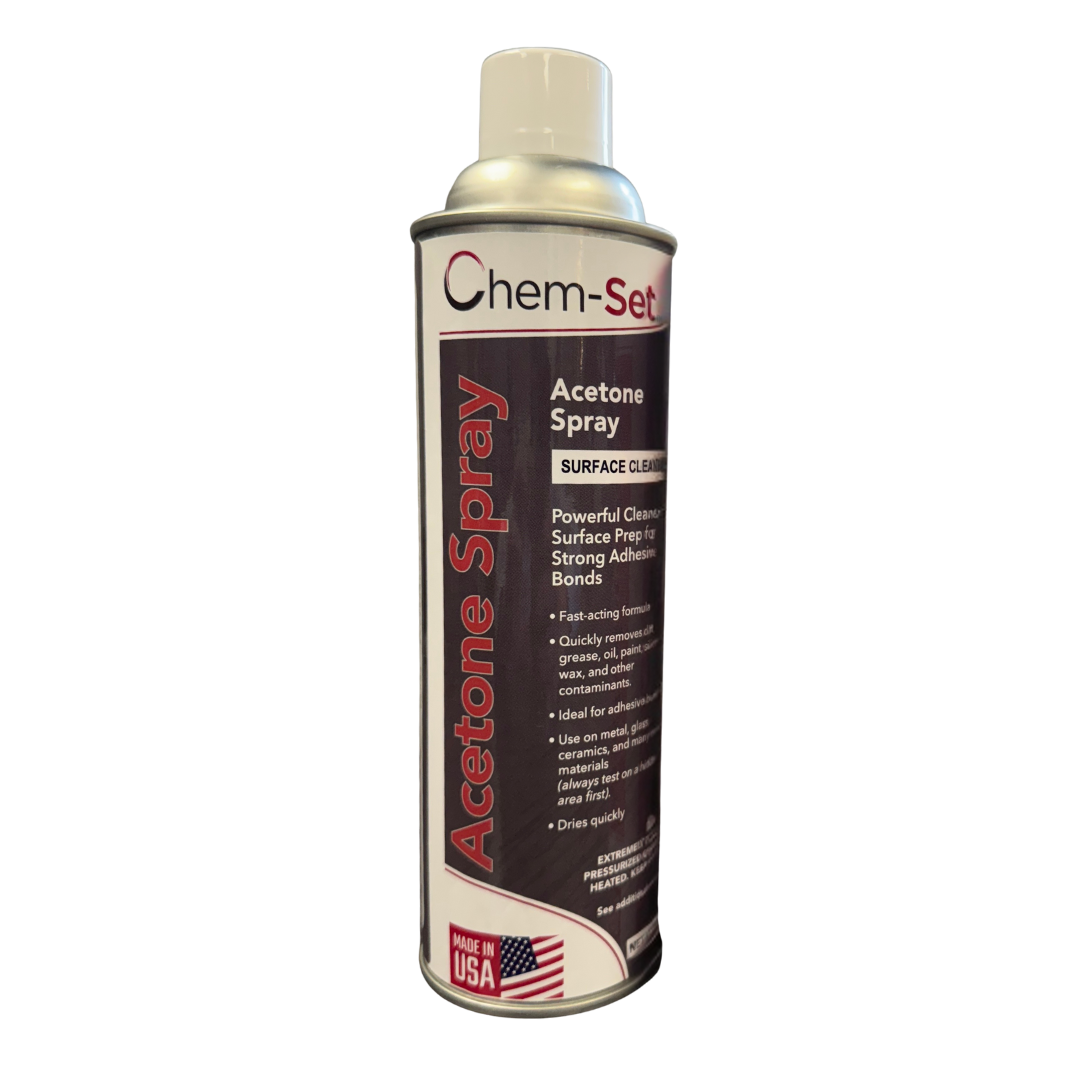
| Feature | Acetone Spray | Hard Surface Cleaner |
| Solvent Base | Acetone | Methyl acetate/Ethyl alcohol |
| Propellant | Nitrogen | CO2 |
| VOC (Regulatory) | 0 g/L | 69.74 g/L |
| Signal Word | Danger | Warning |
| Best For | Fastest flash-off & zero-VOC | Alcohol-compatible wipe steps |
When to Use Which?
|
Quartz & Engineered stone Use Hard Surface Solvent & Clearer (denatured alcohol blend). |
|
Solid Surface & Laminates Begin with Hard Surface Solvent & Cleaner. This gentler option is safer for delicate finishes like finished cabinetry or painted parts. |
|
Metals, Glass & Ceramics Acetone Spray is ideal for these materials, offering the fastest flash-off and a zero-VOC regulatory claim. Perfect for jigs and tooling without sensitive coatings. |
|
Plastics & Elastomers Prioritize Hard Surface Solvent & Cleaner and always spot-test first. Acetone can cause crazing or chemical attack on many plastic types. |
|
Adhesive Pre-Bond Steps If specifications call for “IPA/denatured alcohol,” use Hard Surface Solvent & Cleaner to comply with technical requirements. |
|
Quartz & finished surfaces? Use the alcohol blend. Bare metal & glass? Use acetone—unless the spec says otherwise. |


Reviews
There are no reviews yet.