

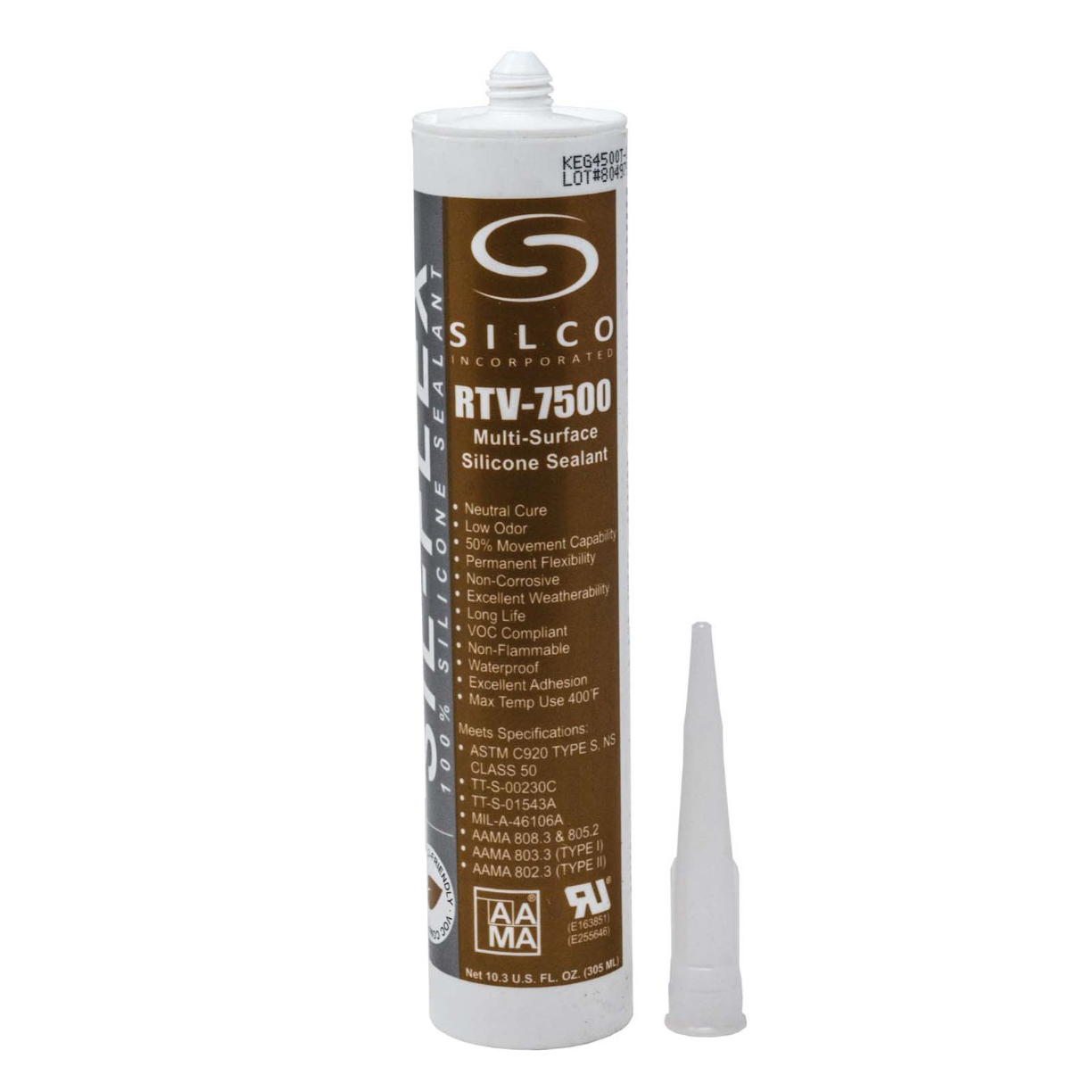


Description
Sil-Flex RTV-7500 is a neutral cure silicone sealant, one-component and low modulus, formulated to bond and seal a wide range of building materials. Neutral cure means it releases a non-acidic oxime byproduct as it cures rather than acetic acid, and that single difference is why it goes where an acetoxy silicone should not: on sensitive metals, around electronics and enclosures, and on polished marble and quartzite where an acid cure silicone can stain or bleed. It carries ASTM C920 Class 50 at 50% joint movement, is UL recognized, and meets four AAMA glazing and perimeter sealing standards.
Low modulus is the other half of the story. At 15 Shore A with 650% elongation, the cured bead is softer and stretchier than a standard acetoxy silicone, so it absorbs movement without pulling hard on the bond line. That matters on stone, on glass, and on anything where the substrate is more fragile than the sealant. Nine colors are stocked in 10.3 oz cartridges, with custom colors available on request.
Key Product Details
| Property | Test Method | Result |
|---|---|---|
| Cure System | Neutral / oxime, one component | |
| Movement Capability | ASTM C-719 | ±50% |
| Modulus | ASTM D-412 | Low |
| Durometer | ASTM C-661 | 15 Shore A |
| Tensile Strength | ASTM D-412 | 190 psi |
| Elongation | ASTM D-412 | 650% |
| Extrusion Rate | ASTM C-1183 modified, 1/8 in orifice at 50 psi | 500 g/min |
| Skin Over Time | MNA Method | 12 minutes |
| Tack Over Time | ASTM C-679 | 25 minutes |
| Cure Rate | MNA Method | 1/8 in per 30 hrs |
| Temperature Range | -62°F to 400°F, intermittent to 450°F | |
| Accelerated Weathering | QUV Weatherometer, 10,000 hrs | No change |
| Dielectric Strength | 20 kv/mm (500 v/mil) | |
| Dielectric Constant | 100 Hz | 2.7 at 96 |
| Specific Gravity | 1.04 | |
| VOC | 40 g/L | |
| Shelf Life | 18 months | |
| Paintable | No | |
| Approvals | ASTM C920 Type S, Grade NS, Class 50; TT-S-00230C; TT-S-01543A; MIL-A-46106A; AAMA 808.3, 805.2, 803.3 (Type I), 802.3 (Type II); UL Recognized Component | |
| Packaging | 10.3 fl oz (305 mL) cartridge | |
| SKU | CCS-RTV7500 |
Published properties are derived from lab conditions at 77°F and 50% relative humidity.
Why Neutral Cure Instead of Acetoxy
Every one-component silicone cures by reacting with moisture in the air and releasing a byproduct. What that byproduct is determines where the sealant can go.
An acetoxy silicone releases acetic acid, which is where the vinegar smell comes from. That acid can affect delicate electronic components and it can be corrosive to certain substrates and metals. A neutral cure silicone like RTV-7500 releases an oxime instead, which is non-acidic and non-corrosive, and the odor is much milder. That is the whole basis for reaching for neutral cure on a sensitive job.
Sensitive metals and finished hardware
Non-corrosive cure is the reason this is the pick around plated, polished, and decorative metal, and in assemblies where a sealant sits against metal for decades. Aluminum and steel are both listed adhesion substrates, and the sealant will not work against the finish it is sealing.
Electrical and equipment work
The cured bead is rated at 20 kv/mm (500 v/mil) dielectric strength with a dielectric constant of 2.7, which is why this turns up in electrical enclosures, control panels, and equipment housings rather than just in construction. Neutral cure silicones are non-corrosive and suited to electronics applications, and HVAC, refrigeration, and industrial gaskets are named applications on the data sheet. For sealing around powered equipment, conductors, and cooling infrastructure, the combination of non-corrosive cure and documented dielectric performance is what separates this from a general purpose sealant. Call us with the detail if you are specifying it into an electrical assembly.
Polished marble and quartzite
An acetoxy silicone can cause staining or bleeding on some natural stone, and quartzite and marble are the two that come up most in fabrication. Neutral cure is what we recommend on those. Low modulus helps here too: at 15 Shore A the bead flexes rather than loading the bond line, which suits a joint in a material that is harder and more brittle than the sealant.
Occupied and interior spaces
Low odor makes a difference on a kitchen install with the homeowner standing there, in an occupied building, or anywhere a crew is working in an enclosed space for a full shift. Acetoxy is fine outdoors and in a shop. Indoors on a finished job, low odor is worth the slower set.
RTV-7500 Compared to an Acetoxy Silicone
| Sil-Flex RTV-7500 | Chem-Set RTV4500 | |
|---|---|---|
| Cure chemistry | Neutral, oxime | Acetoxy |
| Odor while curing | Low, non-corrosive | Vinegar-type |
| Joint movement | ±50%, Class 50 | 25%, Class 25 |
| Durometer | 15 Shore A | 25 Shore A |
| Elongation | 650% | 500% |
| Cure rate on a 1/8 in bead | 30 hrs | 24 hrs |
| Polished marble, quartzite | Recommended | Use neutral cure instead |
| Sensitive metals, electronics | Recommended | Use neutral cure instead |
| Concrete, brick, masonry | Rated | Not rated |
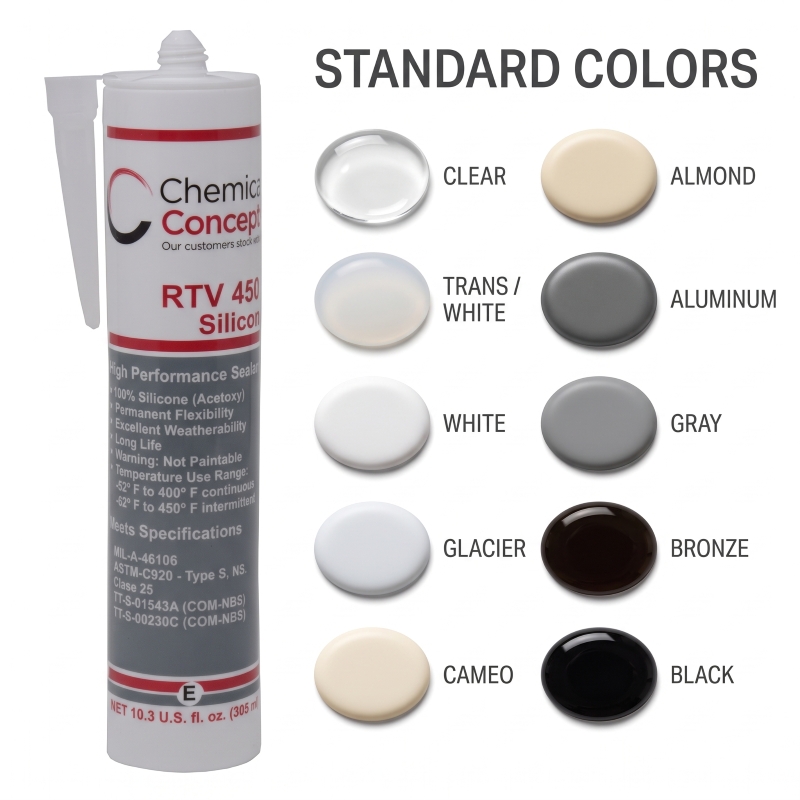
| Colors | 9 | 17 across two ranges |
Skin and cure figures are measured at different reference conditions on the two data sheets, 77°F for RTV-7500 and 70°F for RTV4500, so treat the comparison as directional rather than exact. See the Chem-Set RTV4500 acetoxy silicone when acid cure is not a concern and faster set matters, or read more on acetoxy versus neutral cure silicones.
Substrates
Fully cured, RTV-7500 offers UV stability and adhesion to PVC, concrete, glass, aluminum, painted surfaces, wood, plywood, stucco, building paper, window wrap, fiber cement, brick, stone, steel, ceramic, porcelain, and masonry, plus many other common material surfaces. Unlike an acetoxy silicone, it is rated for concrete, brick, and masonry, which is a real difference on jobs that cross from finished material into structure.
Neutral cure silicones adhere to a wide range of plastic and masonry substrates without primer. Test an unfamiliar coated or anodized finish on an offcut before a production run, since coatings vary by manufacturer.
Performance in Production
- Class 50 at ±50% movement is double the capability of a Class 25 sealant, so a 1/2 in joint absorbs roughly 1/4 in of movement. That covers curtainwall, expansion joints, and long exterior runs that a Class 25 product cannot.
- 15 Shore A with 650% elongation is a soft, low modulus rubber. It stretches with the joint at low stress instead of pulling on the substrate, which is what you want when the material is more brittle than the sealant.
- 190 psi tensile is lower than a standard acetoxy silicone, and that is the tradeoff for low modulus. This is a movement sealant, not a structural adhesive.
- 500 g/min extrusion rate pushes easier than most silicones, which shows up on long beads and in cold weather where a stiffer product fights the gun.
- 12 minute skin and 25 minute tack time give a longer working window than an acetoxy silicone, so you can bead more before you tool.
- Cure runs 1/8 in per 30 hours, so deep joints and confined details take real time. Plan the schedule around it rather than loading the assembly early.
- No change after 10,000 hours on the QUV weatherometer, with a -62°F to 400°F range and intermittent service to 450°F.
- Non-flammable and waterproof, at 40 g/L VOC.
Common Applications
- Sealing openings and exterior surfaces
- Countertops, including polished marble and quartzite seams and sink perimeters
- HVAC and refrigeration
- Industrial gaskets
- Precast concrete
- Roofing
- Plumbing
- Kitchen and bath
- Sanitary seals
- Transportation seals
- Marine cabins
- Appliance trim and parts
- Interior and exterior, above grade
Available Colors
Clear, Trans/White, Blue White, White, Almond, Light Gray, Aluminum, Bronze, and Black. Custom colors are available on request. Color chips reproduce differently on every screen, so request a sample cartridge before committing on a visible seam.
Available Sizes
- 10.3 fl oz (305 mL) cartridge, CCS-RTV7500
Documents
Related Products
- Chem-Set RTV4500 100% Silicone Sealant, acetoxy cure, Class 25, ten standard colors, for quartz, solid surface, glass, metal, and tile
- Chem-Set RTV4500 Specialty Translucent Colors, seven translucent shades for visible seams
- Silicone and Caulk Collection
Frequently Asked Questions
What is neutral cure silicone?
Neutral cure silicone releases a non-acidic byproduct as it cures, rather than the acetic acid an acetoxy silicone gives off. RTV-7500 is an oxime cure, which is one of the neutral chemistries. The practical result is a sealant that is non-corrosive, much lower in odor, and suitable for sensitive metals, electronics, and stone that an acid cure silicone should not touch. Neutral cure is also called non-acid cure or oxime cure.
Why use neutral cure silicone instead of acetoxy?
Because of what the cure releases. The acid from an acetoxy silicone can affect delicate electronic components and can be corrosive to certain substrates and metals, and on some natural stone including marble and quartzite it can cause staining or bleeding. Neutral cure avoids all of that. RTV-7500 also carries double the joint movement at Class 50 and a softer low modulus bead. The tradeoff is cure speed, 30 hours on a 1/8 in bead against 24 for acetoxy, and a higher price.
Will neutral cure silicone corrode metal?
No. RTV-7500 is specified as non-corrosive, which is the reason it gets used against plated, polished, and decorative metal and in assemblies where the sealant sits on metal long term. The cured bead is also rated at 20 kv/mm (500 v/mil) dielectric strength. If you are sealing in or around an electrical enclosure or equipment housing, call us with the detail and we will confirm fit.
What silicone is safe for marble and quartzite?
A neutral cure silicone. Our guidance on polished marble and quartzite is that an acetoxy silicone can cause staining or bleeding, which shows up as a dark shadow line along the joint weeks after the install is signed off. RTV-7500 is the neutral cure option in the line, and its low modulus bead at 15 Shore A also loads the bond line less than a harder sealant. Bead a trial on an offcut of the actual slab and give it the full cure before you commit.
What does Class 50 mean on a silicone sealant?
Class 50 is the ASTM C920 rating for a sealant that handles 50% joint movement, tested to ASTM C-719. In practice a 1/2 in joint can absorb roughly 1/4 in of movement in either direction. That is double a Class 25 product, which is why Class 50 gets specified on curtainwall, expansion joints, and long exterior runs where thermal cycling moves the building more than a standard sealant can follow.
How long does RTV-7500 take to cure?
It skins over in about 12 minutes and tacks over at 25 minutes, so tool inside that window. Cure runs 1/8 in per 30 hours, measured at 77°F and 50% relative humidity. Deep and confined joints take proportionally longer because the cure needs air moisture to reach the silicone. Cold and dry conditions slow it down further.
Can neutral cure silicone be used on concrete and masonry?
Yes. Concrete, brick, stucco, fiber cement, precast concrete, and masonry are all listed adhesion substrates for RTV-7500, and neutral cure silicones adhere to masonry without primer. That is a real difference from an acetoxy silicone, which is not rated for porous surfaces like concrete, mortar, or brick.
What colors does RTV-7500 come in, and how long does it keep?
Nine stocked colors: Clear, Trans/White, Blue White, White, Almond, Light Gray, Aluminum, Bronze, and Black, with custom colors available on request. Shelf life is 18 months. It ships in 10.3 fl oz (305 mL) cartridges from our warehouse in Huntingdon Valley, Pennsylvania, and in-stock items ordered by 2pm EST ship the same day.
Not sure whether neutral cure or acetoxy is right for your substrate? Call (800) 220-1966 or email [email protected].



Reviews
There are no reviews yet.