5 Adhesive Myths Debunked: What You Really Need to Know About Modern Industrial Bonding
What if the assembly method you’ve been avoiding could cut your production time in half and create stronger, more durable products? While manufacturers that avoid adhesives and stick to familiar fastening practices based on myths and outdated assumptions fall behind, companies that embrace modern adhesive capabilities gain a competitive edge.
This guide examines the five most common myths that could prevent organizations from saving time, money, and accessing better bonding solutions.
Myth #1: “Bonding is Messy and Time-Consuming”
This myth comes from old adhesive systems that required extensive setup, created waste, and needed lengthy cure times. Modern adhesive systems solve these issues, offering cleaner, faster, and more reliable performance.
Precision Dispensing Systems Eliminate Waste
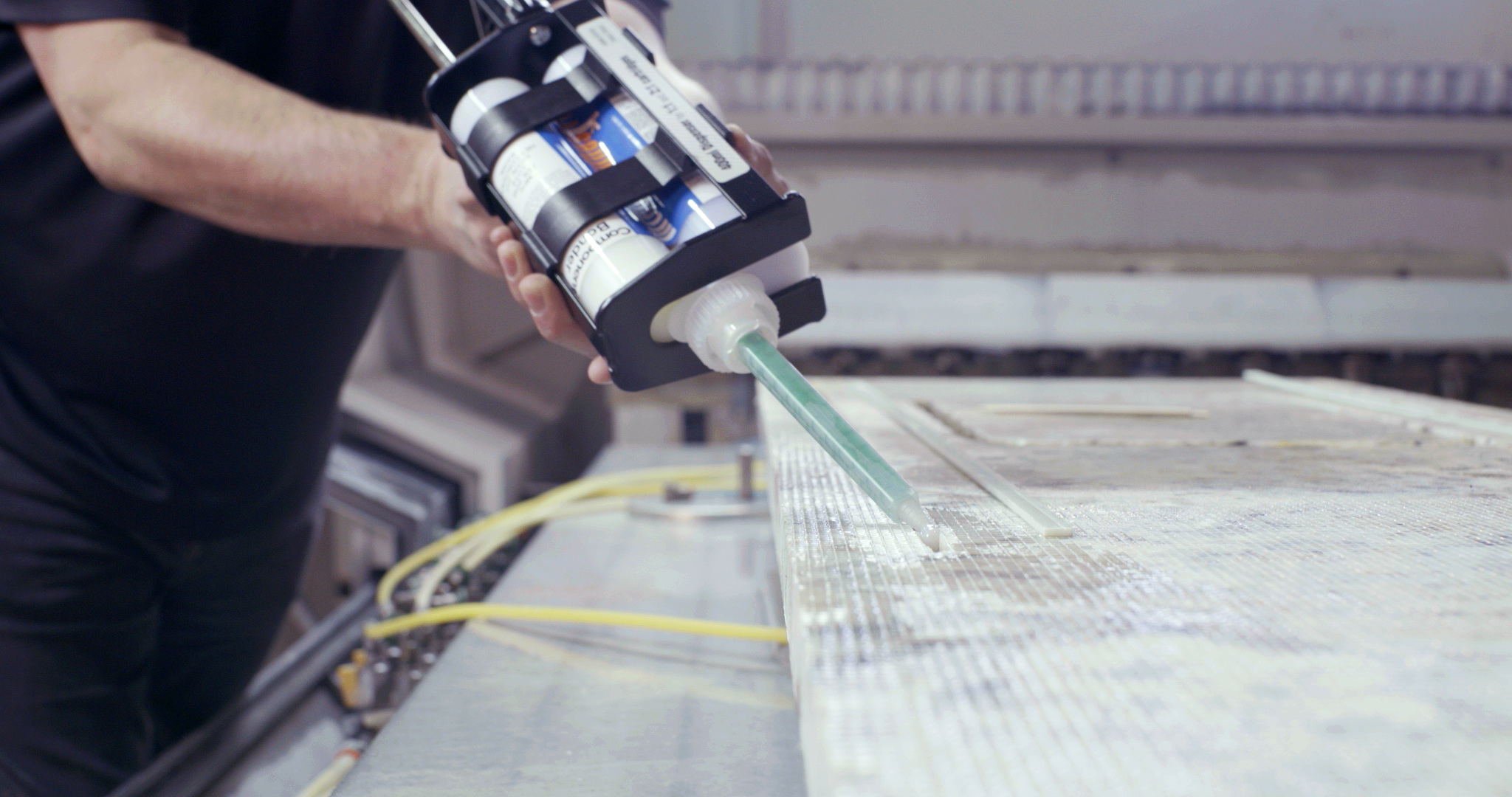
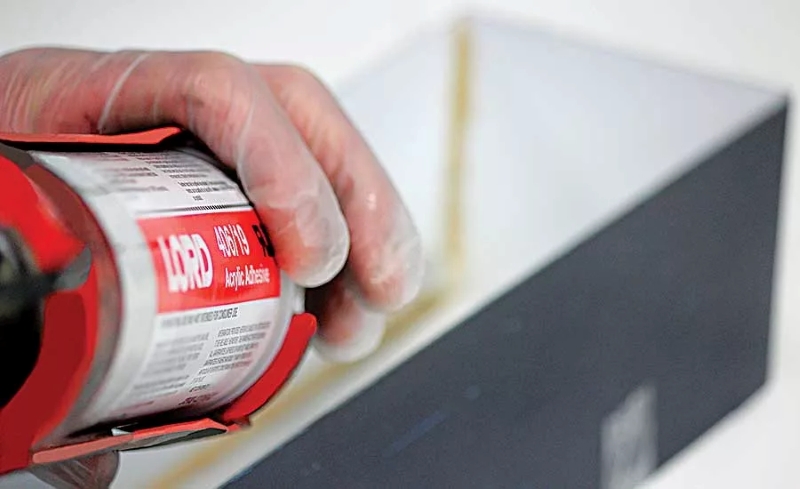
Automated dispensing equipment delivers the exact amount of adhesive precisely where it’s needed, eliminating waste and mess. Manual application has also improved through better packaging and applicator designs, like single-use cartridges, precision tip designs, and measured dispensing systems that ensure clean, controlled application every time.
READ MORE: Pre-Mixed Cartridge Adhesives vs. Hand-Mixed Adhesives: Which is Best for Stone Fabrication?
Speed Advantages Over Traditional Methods
Consider the time needed for mechanical fastening: marking hole locations, drilling pilot holes, deburring, inserting fasteners, and final tightening. Adhesive bonding eliminates these steps while creating stronger, more durable connections.
Fast-cure adhesives reach handling strength in minutes. Some systems achieve significant bond strength in 30 seconds or less. UV-curable adhesives achieve full cure in seconds under proper light exposure, while structural acrylics and epoxy adhesives offer working times that accommodate complex assemblies without sacrificing final cure speed.
Automotive Manufacturing Example
Automotive manufacturers have embraced adhesive bonding for efficiency and performance. Body panel bonding, interior component attachment, and structural applications now rely heavily on adhesives, resulting in faster production lines, reduced material costs, and vehicles that are lighter and stronger than their mechanically fastened counterparts.
Myth #2: “Adhesives Cannot Handle Extreme Environments”
This misconception comes from generalizing the limitations of basic adhesives to all bonding systems. Today’s specialized adhesives are designed to thrive in harsh conditions.
Temperature and Chemical Resistance
Most industrial adhesives operate in temperature ranges from -65°F to over 500°F, with specialized formulations handling even more extreme conditions. Chemical-resistant adhesives withstand exposure to acids, bases, solvents, and fuels, maintaining their bond strength over time. Unlike some mechanical fasteners that can corrode or degrade, properly selected adhesives often improve their performance characteristics as they age.
READ MORE: Bonding in Extreme Conditions: How to Select the Right Adhesive for the Job
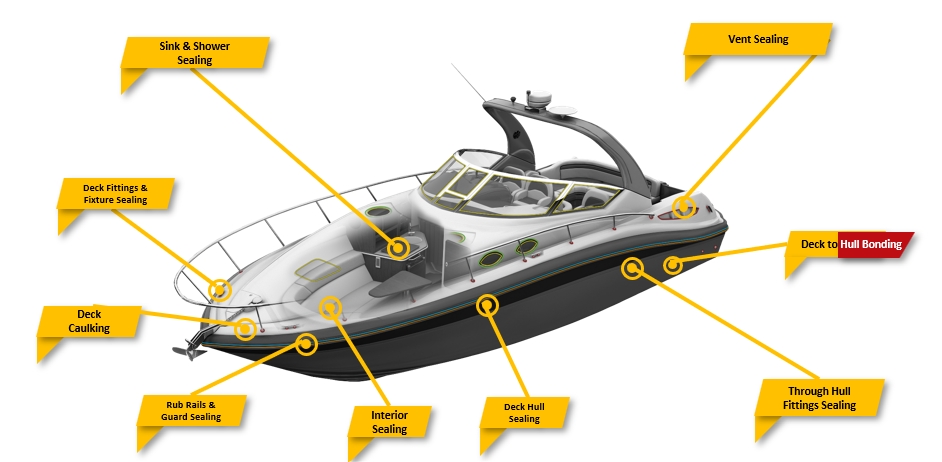
Waterproof and marine-grade adhesives provide reliable bonding in underwater applications and constant moisture exposure, resisting osmotic blistering, saltwater corrosion, and thermal cycling.
Wind Energy Example
Wind turbine manufacturers rely on structural adhesives to bond massive fiberglass blades that must withstand decades of extreme weather, temperature cycling, UV exposure, and mechanical stress. These bonds routinely outlast the expected service life of the turbines themselves.
Myth #3: “Adhesives Are Weaker Than Mechanical Fasteners”
Many continue to rely on mechanical fasteners, even in scenarios where adhesives would provide more advantages for their application, because of the persistent myth that adhesive bonds fail at the bond line. In reality, when joints are properly designed, failure typically occurs in the substrate, not the adhesive itself.
Stress Distribution Advantages
Mechanical fasteners concentrate all applied stress at specific points—the holes where bolts or screws pass through materials. These stress concentrations become failure initiation points, especially under dynamic loading. Adhesive bonds distribute stress across the entire bonded area, eliminating these stress concentrations.
Current structural adhesives often achieve shear strengths well beyond 3,000 psi. When distributed across a large bond area, the total joint strength can far exceed what is achievable with mechanical fasteners. Adhesive bonds also demonstrate superior fatigue resistance because they eliminate the stress concentrations that initiate fatigue cracks.
Aerospace Example
Aircraft manufacturers use structural adhesives in applications where failure would be catastrophic. Wing skins, control surfaces, and even primary structural elements rely on adhesive bonding for strength and durability. The Boeing 787 Dreamliner uses adhesive bonding for both primary and secondary structures, demonstrating that adhesives can meet the most stringent strength and reliability requirements in commercial aviation.
Myth #4: “There is a ‘Universal’ Adhesive for Everything”
This myth leads to poor adhesive selection and disappointing results, perpetuating the myths above. The truth is, there is no one universal adhesive. Adhesive diversity is actually an advantage—it means there is an optimal solution for virtually every application.
Matching Solutions to Applications
Different materials have different surface energies, thermal expansion coefficients, and mechanical properties. Specialized adhesives are formulated to excel with specific material combinations and loading conditions based on substrate materials, environmental conditions, mechanical requirements, and processing constraints.
Electronics Manufacturing Example
Electronics manufacturers use dozens of different adhesive formulations within a single product. Circuit board attachment requires thermally conductive adhesives, component potting needs flexible formulations, and housing assembly uses structural adhesives. Each application is optimized for its specific requirements, resulting in better performance than any universal solution could provide.
Myth #5: “Bonding Requires Perfect Surface Preparation”
This myth comes from early adhesive systems that were indeed sensitive to surface conditions and required time-consuming surface prep. Current adhesive technology has largely eliminated these limitations.
Low-Surface-Energy Solutions and Advanced Primers
Traditional adhesives struggled with materials like polyethylene and polypropylene, which were considered “difficult to bond.” Low-surface-energy adhesives have completely changed this by creating strong bonds directly to untreated plastic surfaces without primers or surface treatment.
When surface preparation is needed, advanced primer systems make it simple and reliable. These engineered systems provide consistent results with minimal application requirements. Current adhesives are also formulated to work in real manufacturing environments, tolerating light oils, dust, and other contaminants that would have prevented bonding with earlier formulations.
Automotive Plastics Example
Automotive manufacturers bond plastic components without extensive surface preparation. Interior panels, exterior trim, and even structural plastic components are bonded using systems that work reliably with minimal surface prep, enabling increased use of lightweight plastic components while maintaining assembly efficiency.
The Real Impact of Understanding These Truths
Dispelling these myths unlocks practical advantages that can improve your approach to manufacturing and assembly challenges. Using the right adhesive unlocks design possibilities that mechanical fasteners cannot accommodate, like invisible joints, complex geometries, and material combinations.
Design Freedom and Innovation
Adhesive bonding helps manufacturers to join material combinations like metal to plastic, composite to glass, and ceramic to rubber. These combinations would be difficult or impossible with mechanical fasteners. This flexibility allows engineers to optimize each component for its specific function rather than limiting material choices based on fastening ability.
The elimination of holes, bolts, and visible fasteners creates cleaner product aesthetics and reduces manufacturing complexity. Products can be designed with smooth, continuous surfaces that improve appearance and performance. In applications where weight matters, adhesive bonding eliminates overlapping materials, flanges, and reinforcement required by mechanical fastening.
Cost Analysis Beyond Initial Price
The total cost of ownership for adhesive joints undercuts mechanical fastening when you account for material costs, labor time, and tooling requirements. Consider the complete cost picture: mechanical fastening requires purchasing fasteners, drilling equipment, deburring tools, and assembly hardware. Workers need training on proper torque specifications, hole placement, and quality control procedures.
Adhesive bonding eliminates these requirements and assembly time. A single adhesive application can replace multiple mechanical fasteners, reducing material costs and labor hours. The elimination of holes also reduces material waste and the need for precise machining operations.
Performance Advantages in Real Applications
Adhesive joints exceed the performance of mechanical fasteners while eliminating their inherent weaknesses. Mechanical fasteners create stress concentrations and potential failure points, while adhesive bonds distribute loads more evenly across the joint.
This results in improved fatigue life, better vibration resistance, and enhanced durability under cyclic loading.
Making the Switch to Adhesives: What You Need to Know
Start by clearly defining your application requirements. What materials are you joining? What environmental conditions will the bond face? What are the primary loading conditions?
Application Assessment Framework
Document the time required for each step of your mechanical fastening process, from marking and drilling to final assembly. Calculate the total material costs, including fasteners, washers, nuts, and any specialized tools or equipment required.
Identify the performance requirements that matter most to your application. Is strength the primary concern, or do you need flexibility, chemical resistance, or temperature tolerance? Understanding these priorities helps narrow down adhesive options and ensures you select solutions that deliver the exact characteristics your project demands.
Also, consider the production environment where bonding will occur. What temperature and humidity conditions exist? Are there contamination concerns or space limitations that might affect adhesive selection or application methods? These factors influence both adhesive choice and the equipment needed for successful implementation.
Working with Adhesive Suppliers
Leading adhesive suppliers offer testing and validation support to ensure proposed solutions are effective in your specific applications. Take advantage of these resources—some suppliers have application laboratories or use cases where they can test adhesive performance under conditions that simulate your actual environment.
Request samples for in-house testing, but also ask for standardized tests that demonstrate performance under your specific conditions. This testing phase is crucial for building confidence in adhesive solutions and identifying any application challenges before full-scale implementation.
Implementation Strategy
Successful adhesive bonding involves selecting the right adhesive along with appropriate equipment, curing conditions, and quality control procedures. Start with a pilot program on a single product line or component to gain experience with a product before broader implementation.
READ MORE: How to Choose the Right Adhesive for Your Application: A Step-by-Step Guide
Develop standard operating procedures for handling, storage, and application. Unlike mechanical fasteners, adhesives have shelf lives and storage requirements that should be managed. Establish quality control checkpoints that verify proper adhesive application, cure conditions, and bond strength.
Conclusion
Ongoing myths about adhesives continue to cost manufacturers real opportunities. While some cling to outdated assumptions, forward-thinking companies position themselves with tools that solve assembly challenges, cut costs, and create products that outperform traditionally fastened alternatives.
The difference in project success and failure often comes down to understanding what’s actually possible. Working with a qualified adhesive partner can help simplify the bonding process. Rather than trying to navigate the complexity of adhesives alone, lean on experienced suppliers like Chemical Concepts to provide the technical expertise and application support to ensure successful implementation.
Have questions about adhesive selection for your specific application? Ready to discuss solutions for your next project? Contact the Chemical Concepts team for personalized advice and adhesive recommendations for your application.