
Miralon
 |
Miralon: Conductivity at a Fraction of the Carbon Black LoadingMiralon is Huntsman’s line of carbon nanotube materials, made in San Antonio, Texas. It brings electrical conductivity, ESD protection, EMI shielding, and mechanical reinforcement to resins, coatings, adhesives, and thermoplastics at loading levels far below what carbon black or graphite need to do the same job. Under 2% Miralon typically does the work of 15% to 20% carbon black. That loading difference is the whole story. Less filler means you keep your viscosity, your mechanical properties, your part weight, and in most formulations, your color. Chemical Concepts supplies Miralon as pulp, sheet, tape, yarn, masterbatch, and dispersions for formulators, compounders, molders, and OEMs. Under 2% loadingColored ESD50% less shrinkage142% modulusMade in USA |
+Miralon vs Carbon Black
Carbon black and graphite work. Most formulators use them today. The reason to look at Miralon is what happens to the rest of your formulation once you stop loading 15% to 20% filler into it.
| Property | Miralon | Carbon Black / Graphite |
|---|---|---|
| Loading for conductive or ESD performance | Typically under 2% | Typically 15% to 20% |
| Finished color | Colored conductive systems are possible at low loading | Black or dark gray only |
| Wet-state viscosity | Low impact at working loadings | Significant increase, harder to pump, mix, and dispense |
| Mechanical properties | Up to 142% modulus increase at 4% in thermoplastics, strain at break maintained | High loading levels typically cost strength and toughness |
| Dispersion stability | No settling at 24 months in a Bisphenol A masterbatch | Settling in cartridges and drums is a common field complaint |
| Molding shrinkage | 0.5% in PA12 cut molding shrinkage by 50% in customer testing | No comparable effect |
| Part weight | Lower filler load, lighter finished part | Filler load adds weight |
| Supply | Made in the USA (San Antonio, TX) | Widely available, most competing CNT supply is offshore |
In Huntsman’s own conductive epoxy work, ARALDITE GY 40100 (a Bisphenol A resin with Miralon already dispersed into it) matched the electrical performance of a carbon black loaded control at 20 to 100 times lower filler concentration, with a much smaller viscosity penalty.
Carbon black is still the right call when you only need black pigment or rubber reinforcement. The switch makes sense when the loading itself is causing you problems: viscosity, brittleness, weight, settling, or a color spec you cannot hit.
+Conductive Without Going Black
This is the point that surprises most people, and it is worth its own section.
A carbon black loaded coating or compound is black. At 15% to 20% loading there is no other outcome. If the finished part, panel, or floor has to be light gray, white, safety yellow, or a customer’s brand color, carbon black takes that off the table and you end up choosing between the ESD spec and the appearance spec.
Because Miralon works at under 2%, there is room left in the formulation for pigment. That opens up:
- Light gray, white, and colored ESD floor coatings for data centers, semiconductor fabs, battery plants, and clean production areas
- Colored static-dissipative housings, totes, trays, and packaging where the part also has to look right
- Line marking, zoning, and safety color inside static-controlled areas without breaking the conductive network
- Conductive adhesives and potting compounds that do not have to read as black on a visible bond line
If you have ever been told a job has to be black because it has to be conductive, that is the conversation to have with us.
+Product Forms and Where They Fit
| Form | What It Is | Typical Use |
|---|---|---|
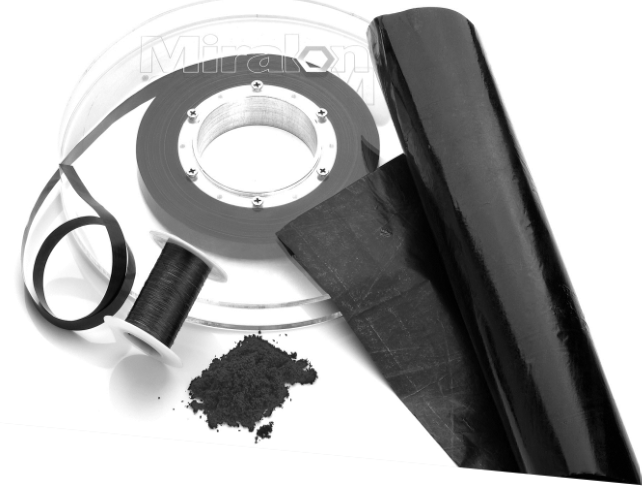
| Miralon Pulp | Dry multiwalled carbon nanotube additive, 1 g to 1000 g | Conductive resins and coatings, EMI shielding, thermal management, compounding feedstock |
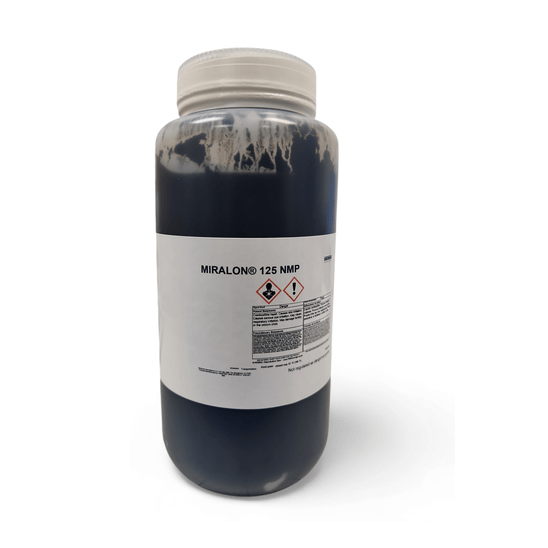
| Miralon D 125NMP Dispersion | MWCNT dispersion in NMP solvent, 1 kg to 5 kg | Battery cathode slurries, conductive coatings, wet-process formulation where dry handling is not practical |
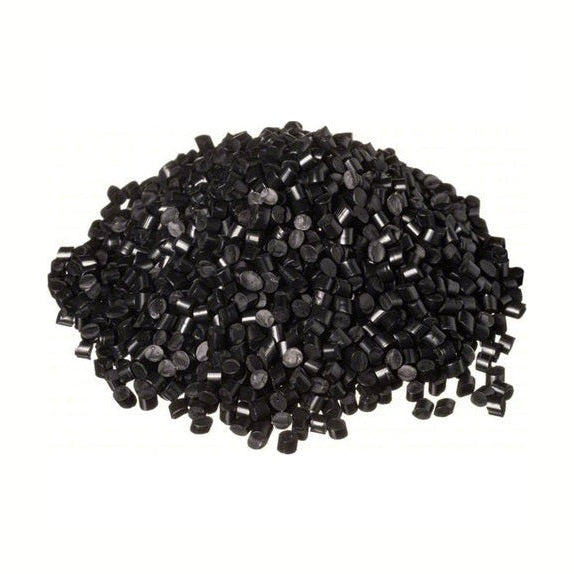
| Miralon 15S Conductive Masterbatch | 15% CNT in PA6, PA12, PETG, or PPS carriers | Injection molding and extrusion of conductive or ESD thermoplastic parts |
| Miralon Sheets | Multiwalled CNT non-woven, 4 in x 4 in sample up to 92 in x 42 in | ESD protection, EMI and RFI shielding, surface layers on composites, heaters |
| Miralon Tape | 5/16 in (8 mm) CNT tape strip, 1 ft to 40 ft spools | EMI seams, lightning strike protection, conductive bonding paths |
| Miralon Yarn | Carbon nanotube yarn, 2-ply and 4-ply, 1 ft to 328 ft spools | Lightweight conductors and cabling, fiber reinforcement, sensors |
Sizes run from evaluation quantities through production volume. Full size and pricing options are on the individual product pages below.
Formulated systems built on Miralon, including conductive epoxy resins, ESD adhesives, and aerospace-grade structural adhesives, are available on request. Tell us the application and we will get the right starting point in your hands.
+Where Miralon Gets Used
ESD and static control
- ESD floor coatings for data centers, semiconductor fabs, battery gigafactories, and electronics assembly
- Static-dissipative totes, trays, caster wheels, and material handling components
- Anti-static packaging for electronics
Electronics and EMI shielding
- EMI and RFI shielding in enclosures and along seams
- Conductive adhesives and potting compounds, including applications where Miralon replaces silver filler
- Thermal management where heat has to move away from a hot component
Aerospace, defense, and satellites
- Electrostatic discharge protection on composite structures. Miralon sheet was used on NASA’s Juno spacecraft for ESD protection, bonded directly into the composite in place of a traditional metallic layer
- Lightweight cabling and wiring harnesses where yarn replaces metal conductors, with major weight savings on satellites and drones
- Lightning strike protection on composite skins
- RF blocking and signal management
Thermoplastics and molded parts
- Conductive and ESD compounds in PA6, PA12, PETG, PPS, PEI, and PEEK
- Precision molded parts where shrinkage and dimensional stability matter
- 3D printing filament and pellets for conductive printed parts
Coatings, composites, and construction
- Epoxy, urethane, and silicone systems needing conductivity without a viscosity penalty
- UV-curable coatings, where Miralon can reduce photo-initiator load and allow thicker cured films
- Ultra-high-performance concrete for RF shielding, using waterborne dispersions
- Marine and general fiberglass composite reinforcement
Batteries and energy storage
- Conductive additive for lithium-ion cathodes. Long strands build conductive pathways at lower loading than carbon black
- Lower carbon loading leaves room for more active material, which Huntsman reports as 2% to 3% higher capacity per volume, with cell data past 700 cycles
- High current draw applications: EV, power tools, drones
+Performance Data
| Result | Loading | System |
|---|---|---|
| Molding shrinkage reduced 50% | 0.5% Miralon | PA12, customer testing |
| Modulus increased up to 142%, strain at break maintained | 4% Miralon | Thermoplastic compound |
| Conductivity equal to 15% to 20% carbon black or graphite | Under 2% Miralon | General formulation guidance |
| No settling at 24 months | Masterbatch loading | Bisphenol A epoxy masterbatch |
| Electrical performance matched a carbon black control at 20x to 100x lower loading | Per Huntsman data | ARALDITE GY 40100 conductive epoxy resin |
| 2% to 3% higher capacity per volume, data past 700 cycles | Dispersion loading | Lithium-ion cathode |
These are reported values from Huntsman technical material and customer trials, not a specification. Qualify against your own resin system, process, and target resistivity before locking a formulation.
+What Miralon Is and How It Is Made
Miralon is a carbon nanotube material produced by Huntsman Advanced Materials using a floating catalyst chemical vapor deposition (FC-CVD) process. Huntsman acquired the technology from NanoComp Technologies in 2018 and now produces it in San Antonio, Texas.
Three carbon nanotube structures matter when you are specifying a conductive filler:
- Single-wall CNT. Highly conductive, expensive, lower strength.
- Multi-wall CNT. Stronger and cheaper, lower conductivity.
- Miralon. A bundled, few-wall structure. The long interconnected bundles create multiple contact points, so you get high conductivity and high strength out of the same material instead of trading one for the other.
Individual tubes are thinner than a human hair and up to 25 times stronger than steel by weight. In practice you are not handling individual tubes. You are handling pulp, dispersions, masterbatch, sheet, tape, or yarn.
The process, and why US supply matters
FC-CVD splits natural gas or another hydrocarbon feedstock into two useful outputs: solid carbon nanotube material and clean hydrogen. It does not generate the large volumes of carbon dioxide associated with conventional steam methane reforming, so there is no carbon capture cost attached to it. An MIT environmental study conducted under an ARPA-E supported project found the Miralon process reduced the CO2 footprint of clean hydrogen production by as much as 95% compared to steam methane reforming.
On supply: most carbon nanotube material on the market today comes from China, Russia, and Korea. Miralon is made in the United States. For buyers dealing with onshoring requirements, defense content rules, or tariff exposure on offshore fillers, that is a practical reason to look at it, separate from the technical case. Huntsman’s San Antonio plant is running and scaling now, and pricing has come down significantly from historic CNT norms.
+Handling, Dispersion, and Safety
Dispersion is the job
Getting CNT performance out of any form starts with getting it properly dispersed. That is why masterbatch and pre-dispersed resin forms exist. If you are compounding or formulating from pulp, talk to us about equipment and method before you buy. A poor dispersion looks like a product failure when it is actually a process problem.
Airborne exposure
Miralon’s bundled morphology makes it far less likely to become airborne than conventional powder CNT. Pre-dispersed resin forms remove dry powder handling from the process entirely. In most end uses the material ends up encapsulated in a cured resin or bound into a thermoplastic.
Documentation
SDS and technical data are available for every form we supply. Send specific regulatory or EHS questions to us and we will route them to Huntsman’s technical team rather than guess at the answer.
+Miralon FAQ
What is Miralon?
Miralon is a carbon nanotube material made by Huntsman Advanced Materials in San Antonio, Texas. It has a bundled few-wall structure that combines the electrical conductivity of single-wall carbon nanotubes with the strength of multi-wall carbon nanotubes. It is supplied as pulp, dispersion, masterbatch, sheet, tape, and yarn, and it adds conductivity, ESD protection, EMI shielding, and mechanical reinforcement to resins, coatings, adhesives, and thermoplastics.
Is Miralon a replacement for carbon black?
In conductive and static-dissipative formulations, yes. Miralon typically delivers the same conductivity as 15% to 20% carbon black or graphite at under 2% loading. The lower loading is what buyers are actually after: less viscosity increase in the wet state, better mechanical properties in the cured state, lighter parts, and the ability to pigment the finished system. Carbon black remains the right choice where you only need black pigment or rubber reinforcement.
How much Miralon do I need compared to carbon black?
As a working figure, under 2% Miralon does the conductivity work of 15% to 20% carbon black or graphite. In Huntsman’s conductive epoxy resin work the gap was wider, matching a carbon black control at 20 to 100 times lower filler loading. Actual loading depends on your resin system, target resistivity, and dispersion method, so run a trial before you lock a formulation.
Can you make a colored conductive or ESD coating with Miralon?
Yes, and this is one of the main reasons formulators move off carbon black. A carbon black loaded system at 15% to 20% is black and cannot be anything else. Miralon works at under 2%, which leaves room in the formulation for pigment. That makes light gray, white, and colored ESD floor coatings, housings, totes, and packaging possible without giving up the static-dissipative spec.
What is the difference between Miralon and single-wall or multi-wall carbon nanotubes?
Single-wall CNT is highly conductive but expensive and lower in strength. Multi-wall CNT is stronger and cheaper but less conductive. Miralon is a bundled few-wall structure. The long interconnected bundles create multiple contact points, so it delivers high conductivity and high strength in the same material rather than forcing a trade between them.
Where is Miralon made?
Miralon is made in the United States by Huntsman Advanced Materials at its San Antonio, Texas plant, using a floating catalyst chemical vapor deposition process. Most carbon nanotube material on the market is produced in China, Russia, or Korea, so Miralon is the domestic option for buyers with onshoring, defense content, or tariff exposure concerns.
Which Miralon form should I use?
Pulp is the dry additive for formulating and compounding. Dispersion is for wet processes and battery slurries where dry powder handling is not practical. Masterbatch is for injection molding and extrusion in PA6, PA12, PETG, or PPS. Sheet is for surface ESD and EMI shielding layers on composites. Tape is for EMI seams, conductive bonding paths, and lightning strike protection. Yarn is for lightweight conductors and reinforcement. If you are not sure, send us the application and target resistivity and we will point you at the right form.
Will Miralon settle in a cartridge or a resin drum?
Settling is the standard complaint with carbon black filled systems. Miralon’s bundled morphology resists it. Huntsman has a Bisphenol A epoxy masterbatch with Miralon that showed no settling at 24 months. If cartridge settling or drum stratification is a current problem for you, that is worth a conversation.
Can Miralon be used in ESD flooring?
Yes. Miralon is used as the conductive additive in epoxy and urethane floor coating systems for data centers, semiconductor fabs, battery plants, and electronics assembly areas. The advantages over carbon black filled ESD floors are lower loading, better mechanical and wear performance in the cured film, and the ability to specify a color other than black or dark gray. We work with epoxy floor coating formulators looking to add an ESD line.
Does Miralon work in thermoplastics?
Yes. Miralon conductive masterbatch is available in PA6, PA12, PETG, and PPS carriers at 15% CNT for injection molding and extrusion, and Miralon has been evaluated in PEI and PEEK. Beyond conductivity, 4% loading increased modulus by up to 142% without sacrificing strain at break, and 0.5% in PA12 cut molding shrinkage by 50% in customer testing, which matters on precision parts.
Is Miralon safe to handle?
Miralon’s bundled structure makes it far less likely to become airborne than conventional powder carbon nanotubes, and pre-dispersed resin and masterbatch forms remove dry powder handling from the process. In most end uses the material is encapsulated in a cured resin or bound into a thermoplastic. SDS documentation is available for every form we supply, and specific regulatory questions go to Huntsman’s technical team.
Can I get a Miralon sample?
Yes. Evaluation quantities are stocked and listed on this page: pulp from 1 g, sheet from a 4 in x 4 in sample, yarn from 1 ft, tape from 1 ft. For formulated systems, masterbatch trials, or anything needing a technical recommendation, send us your application, current material, and target performance and we will coordinate the right sample and technical support.
Not sure which form fits your application?
Send us the application, the material you are running now, and the problem you are solving. Target resistivity, substrate, process, and volume all help. We will get you the right form, the data, and technical support from Huntsman where the application calls for it. Contact Chemical Concepts or call 800-220-1966.
|
Miralon: Conductivity at a Fraction of the Carbon Black LoadingMiralon is Huntsman’s line of carbon nanotube materials, made in San Antonio, Texas. It brings electrical conductivity, ESD protection, EMI shielding, and mechanical reinforcement to resins, coatings, adhesives, and thermoplastics at loading levels far below what carbon black or graphite need to do the same job. Under 2% Miralon typically does the work of 15% to 20% carbon black. That loading difference is the whole story. Less filler means you keep your viscosity, your mechanical properties, your part weight, and in most formulations, your color. Chemical Concepts supplies Miralon as pulp, sheet, tape, yarn, masterbatch, and dispersions for formulators, compounders, molders, and OEMs. Under 2% loadingColored ESD50% less shrinkage142% modulusMade in USA |
+Miralon vs Carbon Black
Carbon black and graphite work. Most formulators use them today. The reason to look at Miralon is what happens to the rest of your formulation once you stop loading 15% to 20% filler into it.
| Property | Miralon | Carbon Black / Graphite |
|---|---|---|
| Loading for conductive or ESD performance | Typically under 2% | Typically 15% to 20% |
| Finished color | Colored conductive systems are possible at low loading | Black or dark gray only |
| Wet-state viscosity | Low impact at working loadings | Significant increase, harder to pump, mix, and dispense |
| Mechanical properties | Up to 142% modulus increase at 4% in thermoplastics, strain at break maintained | High loading levels typically cost strength and toughness |
| Dispersion stability | No settling at 24 months in a Bisphenol A masterbatch | Settling in cartridges and drums is a common field complaint |
| Molding shrinkage | 0.5% in PA12 cut molding shrinkage by 50% in customer testing | No comparable effect |
| Part weight | Lower filler load, lighter finished part | Filler load adds weight |
| Supply | Made in the USA (San Antonio, TX) | Widely available, most competing CNT supply is offshore |
In Huntsman’s own conductive epoxy work, ARALDITE GY 40100 (a Bisphenol A resin with Miralon already dispersed into it) matched the electrical performance of a carbon black loaded control at 20 to 100 times lower filler concentration, with a much smaller viscosity penalty.
Carbon black is still the right call when you only need black pigment or rubber reinforcement. The switch makes sense when the loading itself is causing you problems: viscosity, brittleness, weight, settling, or a color spec you cannot hit.
+Conductive Without Going Black
This is the point that surprises most people, and it is worth its own section.
A carbon black loaded coating or compound is black. At 15% to 20% loading there is no other outcome. If the finished part, panel, or floor has to be light gray, white, safety yellow, or a customer’s brand color, carbon black takes that off the table and you end up choosing between the ESD spec and the appearance spec.
Because Miralon works at under 2%, there is room left in the formulation for pigment. That opens up:
- Light gray, white, and colored ESD floor coatings for data centers, semiconductor fabs, battery plants, and clean production areas
- Colored static-dissipative housings, totes, trays, and packaging where the part also has to look right
- Line marking, zoning, and safety color inside static-controlled areas without breaking the conductive network
- Conductive adhesives and potting compounds that do not have to read as black on a visible bond line
If you have ever been told a job has to be black because it has to be conductive, that is the conversation to have with us.
+Product Forms and Where They Fit
| Form | What It Is | Typical Use |
|---|---|---|
| Miralon Pulp | Dry multiwalled carbon nanotube additive, 1 g to 1000 g | Conductive resins and coatings, EMI shielding, thermal management, compounding feedstock |
| Miralon D 125NMP Dispersion | MWCNT dispersion in NMP solvent, 1 kg to 5 kg | Battery cathode slurries, conductive coatings, wet-process formulation where dry handling is not practical |
| Miralon 15S Conductive Masterbatch | 15% CNT in PA6, PA12, PETG, or PPS carriers | Injection molding and extrusion of conductive or ESD thermoplastic parts |
| Miralon Sheets | Multiwalled CNT non-woven, 4 in x 4 in sample up to 92 in x 42 in | ESD protection, EMI and RFI shielding, surface layers on composites, heaters |
| Miralon Tape | 5/16 in (8 mm) CNT tape strip, 1 ft to 40 ft spools | EMI seams, lightning strike protection, conductive bonding paths |
| Miralon Yarn | Carbon nanotube yarn, 2-ply and 4-ply, 1 ft to 328 ft spools | Lightweight conductors and cabling, fiber reinforcement, sensors |
Sizes run from evaluation quantities through production volume. Full size and pricing options are on the individual product pages below.
Formulated systems built on Miralon, including conductive epoxy resins, ESD adhesives, and aerospace-grade structural adhesives, are available on request. Tell us the application and we will get the right starting point in your hands.
+Where Miralon Gets Used
ESD and static control
- ESD floor coatings for data centers, semiconductor fabs, battery gigafactories, and electronics assembly
- Static-dissipative totes, trays, caster wheels, and material handling components
- Anti-static packaging for electronics
Electronics and EMI shielding
- EMI and RFI shielding in enclosures and along seams
- Conductive adhesives and potting compounds, including applications where Miralon replaces silver filler
- Thermal management where heat has to move away from a hot component
Aerospace, defense, and satellites
- Electrostatic discharge protection on composite structures. Miralon sheet was used on NASA’s Juno spacecraft for ESD protection, bonded directly into the composite in place of a traditional metallic layer
- Lightweight cabling and wiring harnesses where yarn replaces metal conductors, with major weight savings on satellites and drones
- Lightning strike protection on composite skins
- RF blocking and signal management
Thermoplastics and molded parts
- Conductive and ESD compounds in PA6, PA12, PETG, PPS, PEI, and PEEK
- Precision molded parts where shrinkage and dimensional stability matter
- 3D printing filament and pellets for conductive printed parts
Coatings, composites, and construction
- Epoxy, urethane, and silicone systems needing conductivity without a viscosity penalty
- UV-curable coatings, where Miralon can reduce photo-initiator load and allow thicker cured films
- Ultra-high-performance concrete for RF shielding, using waterborne dispersions
- Marine and general fiberglass composite reinforcement
Batteries and energy storage
- Conductive additive for lithium-ion cathodes. Long strands build conductive pathways at lower loading than carbon black
- Lower carbon loading leaves room for more active material, which Huntsman reports as 2% to 3% higher capacity per volume, with cell data past 700 cycles
- High current draw applications: EV, power tools, drones
+Performance Data
| Result | Loading | System |
|---|---|---|
| Molding shrinkage reduced 50% | 0.5% Miralon | PA12, customer testing |
| Modulus increased up to 142%, strain at break maintained | 4% Miralon | Thermoplastic compound |
| Conductivity equal to 15% to 20% carbon black or graphite | Under 2% Miralon | General formulation guidance |
| No settling at 24 months | Masterbatch loading | Bisphenol A epoxy masterbatch |
| Electrical performance matched a carbon black control at 20x to 100x lower loading | Per Huntsman data | ARALDITE GY 40100 conductive epoxy resin |
| 2% to 3% higher capacity per volume, data past 700 cycles | Dispersion loading | Lithium-ion cathode |
These are reported values from Huntsman technical material and customer trials, not a specification. Qualify against your own resin system, process, and target resistivity before locking a formulation.
+What Miralon Is and How It Is Made
Miralon is a carbon nanotube material produced by Huntsman Advanced Materials using a floating catalyst chemical vapor deposition (FC-CVD) process. Huntsman acquired the technology from NanoComp Technologies in 2018 and now produces it in San Antonio, Texas.
Three carbon nanotube structures matter when you are specifying a conductive filler:
- Single-wall CNT. Highly conductive, expensive, lower strength.
- Multi-wall CNT. Stronger and cheaper, lower conductivity.
- Miralon. A bundled, few-wall structure. The long interconnected bundles create multiple contact points, so you get high conductivity and high strength out of the same material instead of trading one for the other.
Individual tubes are thinner than a human hair and up to 25 times stronger than steel by weight. In practice you are not handling individual tubes. You are handling pulp, dispersions, masterbatch, sheet, tape, or yarn.
The process, and why US supply matters
FC-CVD splits natural gas or another hydrocarbon feedstock into two useful outputs: solid carbon nanotube material and clean hydrogen. It does not generate the large volumes of carbon dioxide associated with conventional steam methane reforming, so there is no carbon capture cost attached to it. An MIT environmental study conducted under an ARPA-E supported project found the Miralon process reduced the CO2 footprint of clean hydrogen production by as much as 95% compared to steam methane reforming.
On supply: most carbon nanotube material on the market today comes from China, Russia, and Korea. Miralon is made in the United States. For buyers dealing with onshoring requirements, defense content rules, or tariff exposure on offshore fillers, that is a practical reason to look at it, separate from the technical case. Huntsman’s San Antonio plant is running and scaling now, and pricing has come down significantly from historic CNT norms.
+Handling, Dispersion, and Safety
Dispersion is the job
Getting CNT performance out of any form starts with getting it properly dispersed. That is why masterbatch and pre-dispersed resin forms exist. If you are compounding or formulating from pulp, talk to us about equipment and method before you buy. A poor dispersion looks like a product failure when it is actually a process problem.
Airborne exposure
Miralon’s bundled morphology makes it far less likely to become airborne than conventional powder CNT. Pre-dispersed resin forms remove dry powder handling from the process entirely. In most end uses the material ends up encapsulated in a cured resin or bound into a thermoplastic.
Documentation
SDS and technical data are available for every form we supply. Send specific regulatory or EHS questions to us and we will route them to Huntsman’s technical team rather than guess at the answer.
+Miralon FAQ
What is Miralon?
Miralon is a carbon nanotube material made by Huntsman Advanced Materials in San Antonio, Texas. It has a bundled few-wall structure that combines the electrical conductivity of single-wall carbon nanotubes with the strength of multi-wall carbon nanotubes. It is supplied as pulp, dispersion, masterbatch, sheet, tape, and yarn, and it adds conductivity, ESD protection, EMI shielding, and mechanical reinforcement to resins, coatings, adhesives, and thermoplastics.
Is Miralon a replacement for carbon black?
In conductive and static-dissipative formulations, yes. Miralon typically delivers the same conductivity as 15% to 20% carbon black or graphite at under 2% loading. The lower loading is what buyers are actually after: less viscosity increase in the wet state, better mechanical properties in the cured state, lighter parts, and the ability to pigment the finished system. Carbon black remains the right choice where you only need black pigment or rubber reinforcement.
How much Miralon do I need compared to carbon black?
As a working figure, under 2% Miralon does the conductivity work of 15% to 20% carbon black or graphite. In Huntsman’s conductive epoxy resin work the gap was wider, matching a carbon black control at 20 to 100 times lower filler loading. Actual loading depends on your resin system, target resistivity, and dispersion method, so run a trial before you lock a formulation.
Can you make a colored conductive or ESD coating with Miralon?
Yes, and this is one of the main reasons formulators move off carbon black. A carbon black loaded system at 15% to 20% is black and cannot be anything else. Miralon works at under 2%, which leaves room in the formulation for pigment. That makes light gray, white, and colored ESD floor coatings, housings, totes, and packaging possible without giving up the static-dissipative spec.
What is the difference between Miralon and single-wall or multi-wall carbon nanotubes?
Single-wall CNT is highly conductive but expensive and lower in strength. Multi-wall CNT is stronger and cheaper but less conductive. Miralon is a bundled few-wall structure. The long interconnected bundles create multiple contact points, so it delivers high conductivity and high strength in the same material rather than forcing a trade between them.
Where is Miralon made?
Miralon is made in the United States by Huntsman Advanced Materials at its San Antonio, Texas plant, using a floating catalyst chemical vapor deposition process. Most carbon nanotube material on the market is produced in China, Russia, or Korea, so Miralon is the domestic option for buyers with onshoring, defense content, or tariff exposure concerns.
Which Miralon form should I use?
Pulp is the dry additive for formulating and compounding. Dispersion is for wet processes and battery slurries where dry powder handling is not practical. Masterbatch is for injection molding and extrusion in PA6, PA12, PETG, or PPS. Sheet is for surface ESD and EMI shielding layers on composites. Tape is for EMI seams, conductive bonding paths, and lightning strike protection. Yarn is for lightweight conductors and reinforcement. If you are not sure, send us the application and target resistivity and we will point you at the right form.
Will Miralon settle in a cartridge or a resin drum?
Settling is the standard complaint with carbon black filled systems. Miralon’s bundled morphology resists it. Huntsman has a Bisphenol A epoxy masterbatch with Miralon that showed no settling at 24 months. If cartridge settling or drum stratification is a current problem for you, that is worth a conversation.
Can Miralon be used in ESD flooring?
Yes. Miralon is used as the conductive additive in epoxy and urethane floor coating systems for data centers, semiconductor fabs, battery plants, and electronics assembly areas. The advantages over carbon black filled ESD floors are lower loading, better mechanical and wear performance in the cured film, and the ability to specify a color other than black or dark gray. We work with epoxy floor coating formulators looking to add an ESD line.
Does Miralon work in thermoplastics?
Yes. Miralon conductive masterbatch is available in PA6, PA12, PETG, and PPS carriers at 15% CNT for injection molding and extrusion, and Miralon has been evaluated in PEI and PEEK. Beyond conductivity, 4% loading increased modulus by up to 142% without sacrificing strain at break, and 0.5% in PA12 cut molding shrinkage by 50% in customer testing, which matters on precision parts.
Is Miralon safe to handle?
Miralon’s bundled structure makes it far less likely to become airborne than conventional powder carbon nanotubes, and pre-dispersed resin and masterbatch forms remove dry powder handling from the process. In most end uses the material is encapsulated in a cured resin or bound into a thermoplastic. SDS documentation is available for every form we supply, and specific regulatory questions go to Huntsman’s technical team.
Can I get a Miralon sample?
Yes. Evaluation quantities are stocked and listed on this page: pulp from 1 g, sheet from a 4 in x 4 in sample, yarn from 1 ft, tape from 1 ft. For formulated systems, masterbatch trials, or anything needing a technical recommendation, send us your application, current material, and target performance and we will coordinate the right sample and technical support.
Not sure which form fits your application?
Send us the application, the material you are running now, and the problem you are solving. Target resistivity, substrate, process, and volume all help. We will get you the right form, the data, and technical support from Huntsman where the application calls for it. Contact Chemical Concepts or call 800-220-1966.
Showing all 6 results
-

Miralon 15S Conductive Masterbatch – CNT Additive for Injection Molding and Extrusion
SKU HUN-MIRALON-15S-FAMILY Our Price Starting at $79.99 View ProductMiralon 15S Conductive Masterbatch – CNT Additive for Injection Molding and Extrusion
Miralon 15S masterbatch adds electrical conductivity to engineering plastics at low letdown. 15% MIRALON carbon nanotube pulp in PA6, PA12, PETG, or PPS carrier. Sold by the pound.
Our Price Starting at $79.99 -

Miralon D 125NMP – MWCNT Dispersion in NMP Solvent
SKU HUN-MIRALON-DISP-FAMILY Our Price Starting at $149.99 View ProductMiralon D 125NMP – MWCNT Dispersion in NMP Solvent
Ready-to-use multiwalled carbon nanotube dispersion in NMP solvent from Huntsman Advanced Materials. For lithium-ion battery cathode slurries and conductive electrode coatings. 1 kg and 5 kg bottles.
Our Price Starting at $149.99 -

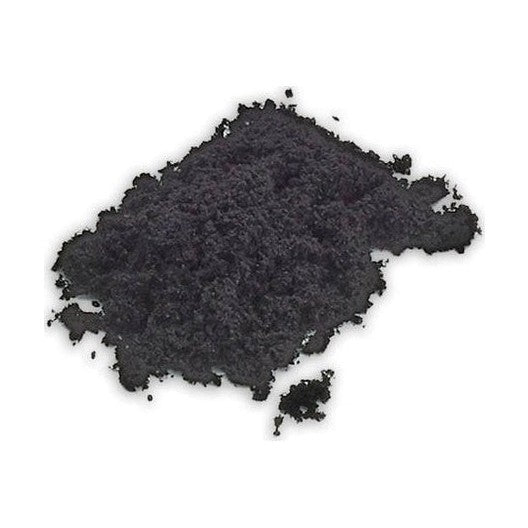
Miralon Pulp – Multiwalled Carbon Nanotube Additive
SKU HUN-MIRALON-PULP-FAMILY Our Price Starting at $9.99 View ProductMiralon Pulp – Multiwalled Carbon Nanotube Additive
Loose carbon nanotube pulp from Huntsman Advanced Materials for conductive resins, EMI shielding, thermal management, and electrode formulations. Available in 1g, 10g, 50g, 200g, and 1000g.
Our Price Starting at $9.99 -

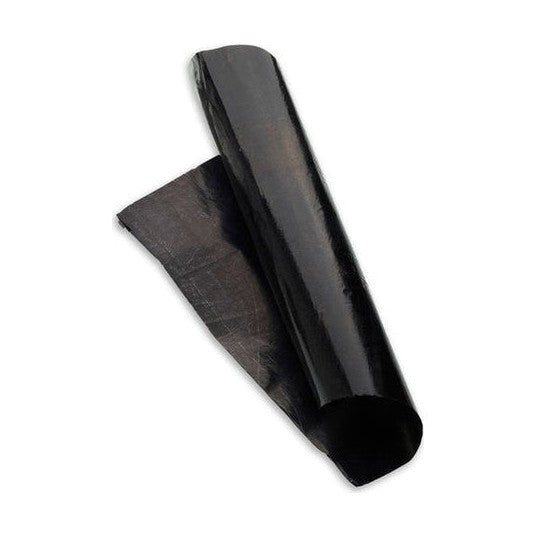
Miralon Sheets – Multiwalled Carbon Nanotube Non-Woven
SKU HUN-MIRALON-SHEET-FAMILY Our Price Starting at $19.99 View ProductMiralon Sheets – Multiwalled Carbon Nanotube Non-Woven
Carbon nanotube non-woven sheets from Huntsman Advanced Materials for structural reinforcement, EMI shielding, ESD, and lightweight conductive layering. Five sizes from 4×4 inch sample to 92×42 inch.
Our Price Starting at $19.99 -

Miralon Tape – 5/16 in (8mm) Carbon Nanotube Tape Strip
SKU HUN-MIRALON-TAPE-FAMILY Our Price Starting at $24.99 View ProductMiralon Tape – 5/16 in (8mm) Carbon Nanotube Tape Strip
Carbon nanotube non-woven tape strip from Huntsman Advanced Materials. 5/16 inch wide. For EMI shielding seams, lightning-strike protection, conductive bonding, and structural reinforcement. Lengths from 1 ft sample to 40 ft spool.
Our Price Starting at $24.99 -

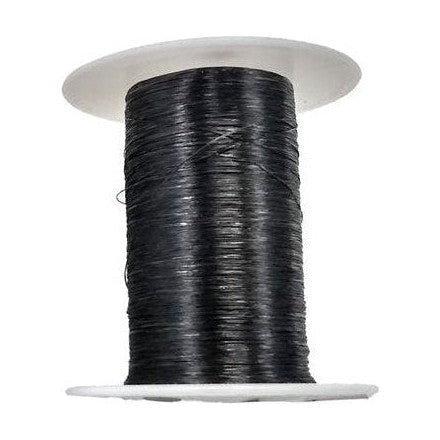
Miralon Yarn – Carbon Nanotube Yarn (2-Ply and 4-Ply)
SKU HUN-MIRALON-YARN-FAMILY Our Price Starting at $8.49 View ProductMiralon Yarn – Carbon Nanotube Yarn (2-Ply and 4-Ply)
Carbon nanotube fiber yarn from Huntsman Advanced Materials. Available in 2-Ply (base) and 4-Ply (high-strength), in lengths from 1 ft sample to 328 ft spool.
Our Price Starting at $8.49
Featured Products
-
UltraLok® 9102 A/B Panel Bonding Epoxy
Ultralok 9102 epoxy adhesive is engineered for strong, reliable honeycomb and composite panel bonding with fire safety and thermal resistance.
Our Price Starting at $90.16 -
CarbonBar Versatile Flat Stock
Cut and drill like wood. Support like steel. Replace heavy, expensive custom metal fabrication with aerospace-grade carbon fiber structural blanks.
- 4X stronger & 5X lighter than steel.
- Customize on-site with standard carbide tools.
- 100% weatherproof and corrosion-proof.
↑ Select your Bar Length and Profile above ↑
Our Price Starting at $25.00 -

Chem-Set VST M1V38 Male High Bond Tape Fastener – M1-V38-1/4-20×1″
SKU CCH-M1V38-1/4-20X1P Our Price Starting at $1.80
You save View ProductChem-Set VST M1V38 Male High Bond Tape Fastener – M1-V38-1/4-20×1″
Our Price Starting at $1.80
You save


-
 Expert Support.
 -
 Same-Day Shipping.
 -
 50+ Years of Service
 Expert Support.
  Same-Day Shipping.
  50+ Years of Service
 Chemical-Concepts is a leading supplier of adhesives, chemicals and hardware for nearly every market in the industrial, government and defense sectors. Whatever your industry, we have all the hardware and adhesives you need to hold things together and keep things in place.