



Description
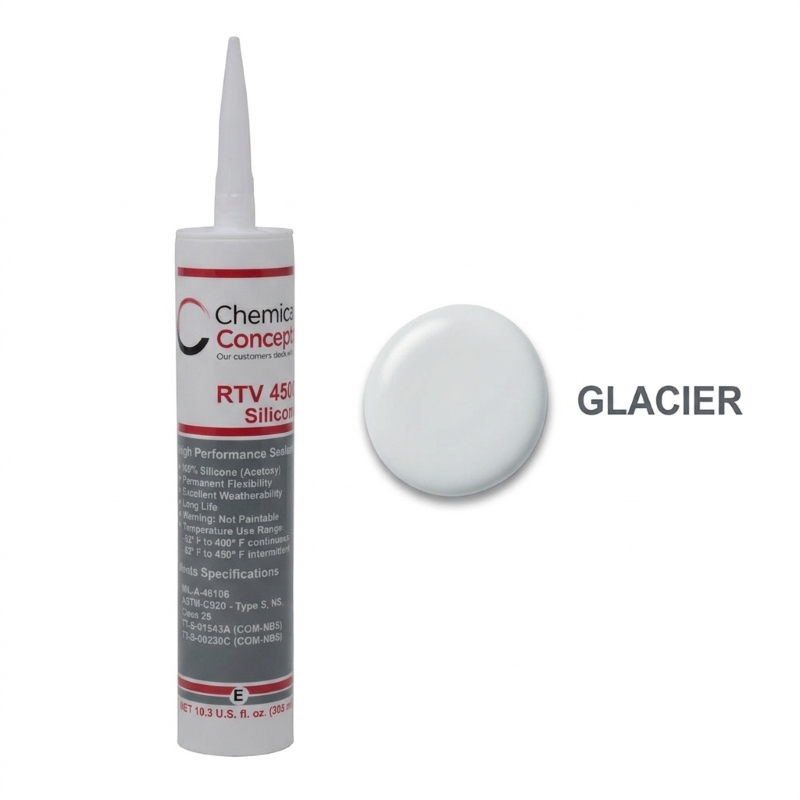
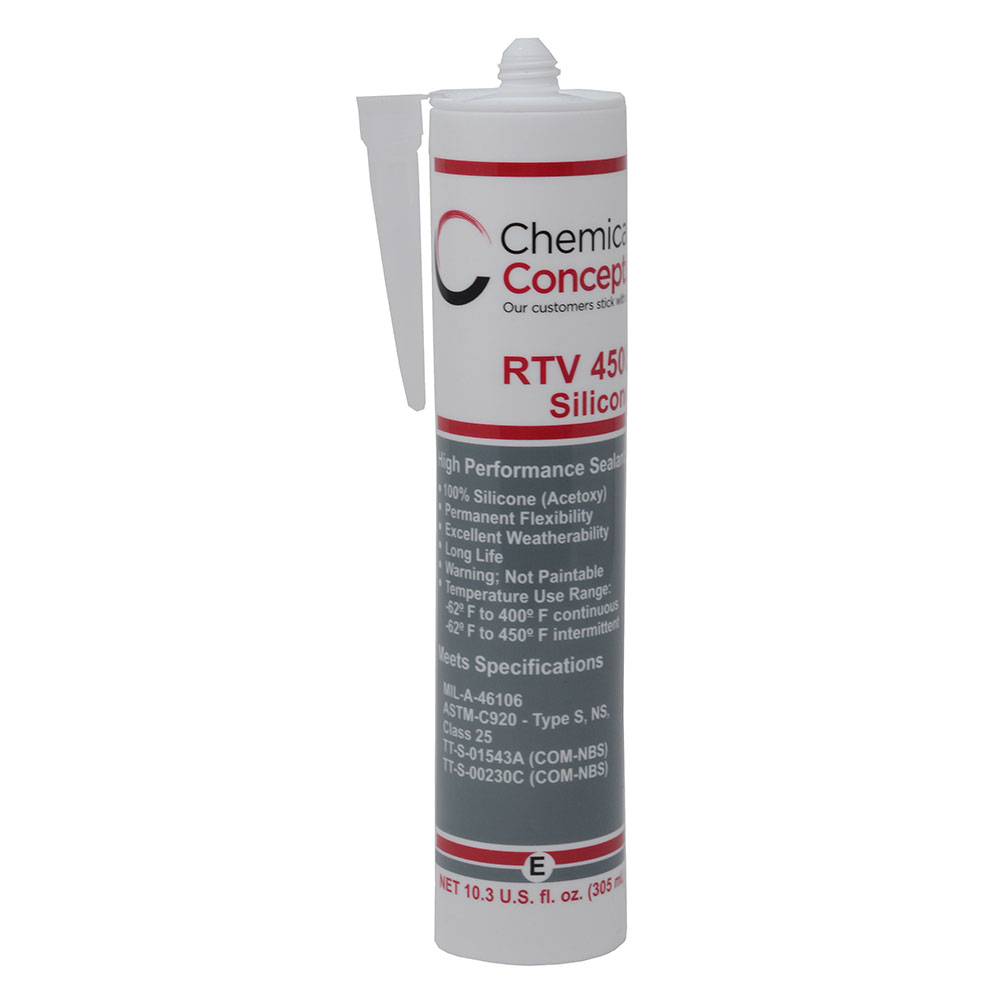
Glacier is a cool soft white RTV silicone in a 10.2 oz cartridge, part of the Chem-Set RTV4500 line. One-component 100% acetoxy silicone that cures with air moisture to a durable rubber. It was added to the line for light solid surface and quartz work, where a bright white bead reads too stark and a warm cream reads too yellow. Glacier splits the difference with no warmth in it at all. Made in the USA, NSF Standard 51 and FDA 21 CFR 177.2600 for incidental food contact.
Most light countertop material is cooler than pure white, and that is the gap Glacier fills. Against a cool white slab, White can look bright and separate from the surface while Cameo pulls yellow. Glacier sits closer to the material itself. It is opaque, so the joint is fully hidden, and the faint gray cast is what keeps it from standing out. Nine other colors are on the Chem-Set RTV4500 standard colors page, plus seven specialty translucent shades.
Key Product Details
| Property | Value |
|---|---|
| Color | Glacier, opaque cool soft white |
| Chemistry | 100% acetoxy RTV silicone, one component |
| Package | 10.2 oz cartridge, fits a standard 10 oz caulk gun |
| Case Quantity | 24 cartridges |
| Skin Formation Time | 10 minutes at 70°F, 50% RH |
| Typical Cure Rate | 24 hrs on a 1/8 in bead, full strength at 7 days |
| Joint Movement | 25%, ASTM C920 Class 25 |
| Service Temperature | -70°F to 400°F, intermittent to 450°F |
| Shelf Life | 12 months at 70°F, 50% RH |
| Paintable | No |
| Approvals | ASTM C920 Class 25, Type S, Grade NS, Use NT, G, O; TT-S-01543A; TT-S-00230-C; NSF Standard 51; FDA 21 CFR 177.2600 |
| Country of Manufacture | USA |
| Related Composite Product | Chem-Set RTV4500 100% Silicone Sealant, Standard Colors |
Full physical properties including viscosity, tensile, elongation, hardness, extrusion rate, and QUV data are on the RTV4500 standard colors page.
Glacier, White, Trans/White, or Cameo
Four whites in the line. The difference comes down to opacity and whether the white is cool or warm.
| Color | Character | Use it when |
|---|---|---|
| Glacier | Opaque, cool soft white, no warmth | Cool white solid surface and quartz, where bright white looks stark |
| White | Opaque, bright neutral white | True white tile, appliances, painted trim |
| Trans/White | Translucent, milky, picks up surrounding color | Light stone and off-white material where the bead should blend |
| Cameo | Opaque, warm ivory cream | Warm and creamy white material |
Quick way to sort it: hold the slab next to a sheet of printer paper. If the slab looks gray or blue against the paper, go Glacier. If it looks yellow or cream, go Cameo. If it looks the same, White. And if the seam is more about disappearing than matching, Trans/White. Bead a sample on an offcut before you commit on anything a customer will inspect.
Using the Cartridge
- Fits a standard 10 oz caulk gun. One component, no mixing, no additives, no static mixer.
- Clean both faces with 100% IPA or acetone. Never a petroleum based solvent, it leaves a film that kills adhesion.
- Tool inside 10 minutes at 70°F. Less in a hot humid shop, so work one joint at a time.
- Tape both sides of the joint and pull the tape while the bead is still wet. An opaque bead shows a ragged edge more than a translucent one does.
- Check the match under the lighting the job will live under. Cool and warm whites separate differently under LED, fluorescent, and daylight, and a shop fluorescent can hide a mismatch that a kitchen pendant will show.
- Uncured excess wipes away before it skins. Once cured it has to come off by cutting, scraping, or abrading.
- On polished marble or quartzite use a neutral cure silicone instead. See Sil-Flex RTV-7500.
Common Applications
- Solid surface countertop seams and sink deck sealing on cool white material
- White and light quartz countertop seams and backsplash sealing
- Undermount sink perimeter sealing
- Waterfall and mitered edge joints on light slabs
- Bathroom vanity and shower surround sealing
- Commercial kitchen and foodservice sanitary seals
- Casework, millwork, and fixture joints on cool white finishes
Documents
Related Products
- Chem-Set RTV4500 Standard Colors, all ten colors with full specifications
- Chem-Set RTV4500 Specialty Translucent Colors, 7 translucent shades for visible seams on darker and warmer material
- Sil-Flex RTV-7500 Neutral Cure Silicone, for polished marble, quartzite, and finished metal fixtures
Frequently Asked Questions
What color is Glacier silicone?
Glacier is an opaque cool soft white with a faint gray cast and no warmth in it. It is slightly deeper than a bright neutral white and clearly cooler than a cream or ivory. It was added to the line for light solid surface and quartz work, where White reads too bright against the slab and Cameo pulls too yellow.
What is the difference between Glacier and White silicone?
Both are opaque, and the difference is temperature. White is a bright neutral white that holds its own color and suits true white tile, appliances, and painted trim. Glacier is a cooler, slightly softer white that sits closer to most light countertop material. Against a cool white slab, a bright white bead tends to look separate from the surface, and that is the problem Glacier solves.
What silicone matches Glacier White Corian?
Chem-Set RTV4500 Glacier was developed to match Glacier White solid surface, and it is the color fabricators order for seams and sink perimeters on that material. Corian is a registered trademark of DuPont, and this is our own color match rather than a DuPont product. Bead a sample on an offcut before committing on a visible seam, since slab lots vary and shop lighting differs from the lighting the finished job lives under.
How do I tell whether my slab needs a cool or warm white silicone?
Hold a sheet of printer paper against the slab. If the slab reads gray or slightly blue next to the paper it is a cool white, so Glacier is the pick. If it reads yellow or cream it is a warm white, so Cameo fits better. If it looks about the same, White will match. Check it under the lighting the finished job will live under, since cool and warm whites separate differently under LED, fluorescent, and daylight.
Is Glacier RTV4500 food safe?
Yes, it meets NSF Standard 51 and FDA Regulation 21 CFR 177.2600 for incidental food contact, which covers sanitary seals in commercial kitchens, foodservice equipment, and countertop and sink joints in food prep areas. The approvals apply to the material, so every color in the RTV4500 line carries them.
Can Glacier silicone be painted?
No. Silicone is not paintable and paint will not bond to the cured bead. Pick the color that matches the joint instead, which is why the line runs seventeen shades across the standard and specialty ranges.
How many ounces are in the cartridge, and how many come in a case?
10.2 oz per cartridge and 24 cartridges per case. It fits a standard 10 oz caulk gun. Printed net fill has varied slightly between production runs, so read the tube in front of you if you are speccing an exact volume. Fill across the silicone category commonly runs 9 to 9.8 oz, so compare price per ounce rather than price per tube.
How long does it take to cure?
A 1/8 in bead is through in about 24 hours, and strength keeps building for 7 days. It skins in 10 minutes at 70°F and 50% RH, so tool inside that window. Heat and humidity speed both up, cold and dry air slow them down, and a confined or deep joint takes longer because the cure needs air moisture to reach the silicone.
Where is it made and how long does it keep?
Made in the USA. Shelf life is 24 months from date of shipment stored at 70°F and 50% RH, and a hot humid stockroom cuts that down. Chem-Set is the Chemical Concepts house label, and cartridges ship from our warehouse in Huntingdon Valley, Pennsylvania. In-stock items ordered by 2pm EST ship the same day.
Want a sample cartridge to check Glacier against your slab before you commit? Call (800) 220-1966 or email [email protected].



Reviews
There are no reviews yet.