



Description
Advanced Channel Letter Fabrication
Chem-Set™ TrimLok™ UV3206 LV
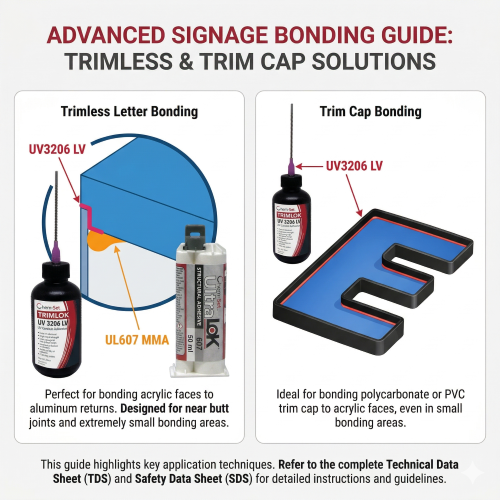
Structural, crystal-clear UV adhesive designed for exterior trim cap and trimless channel letters.
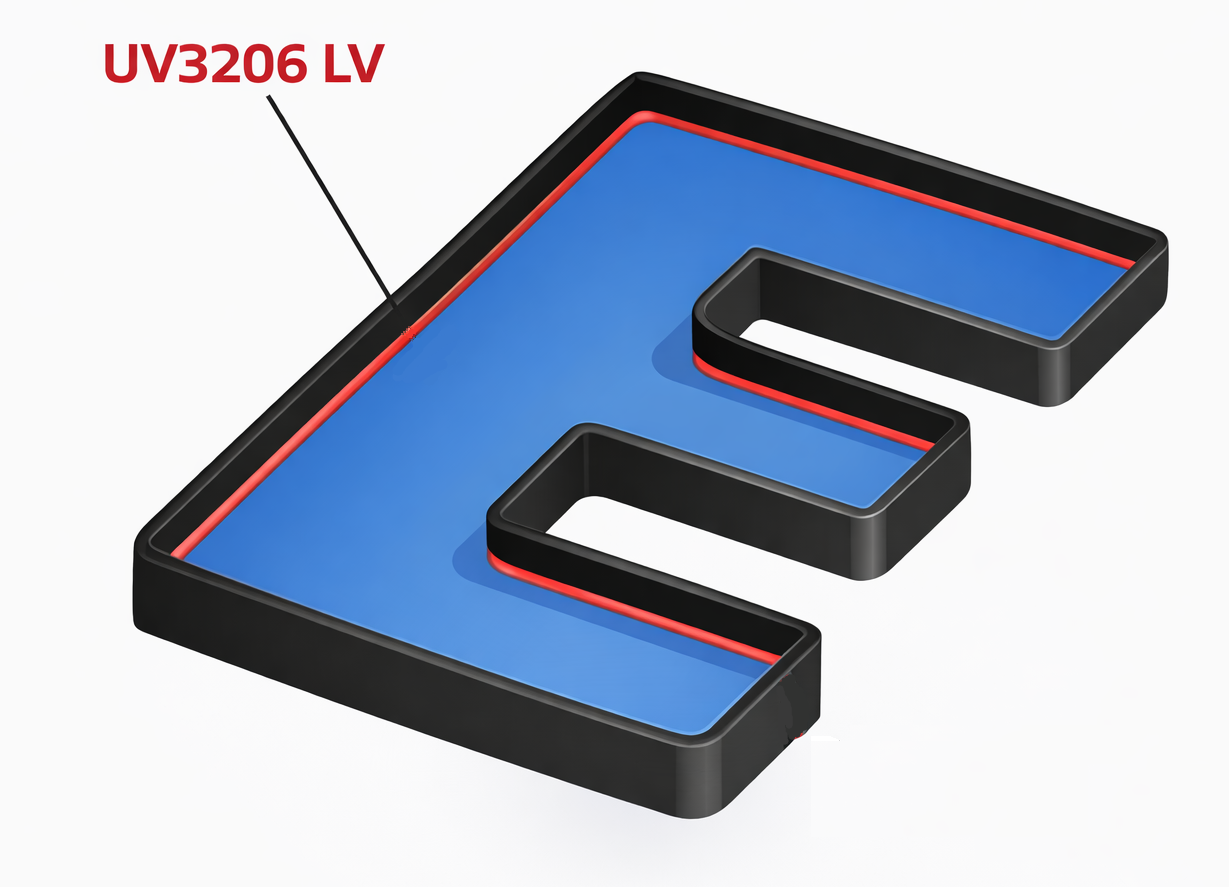
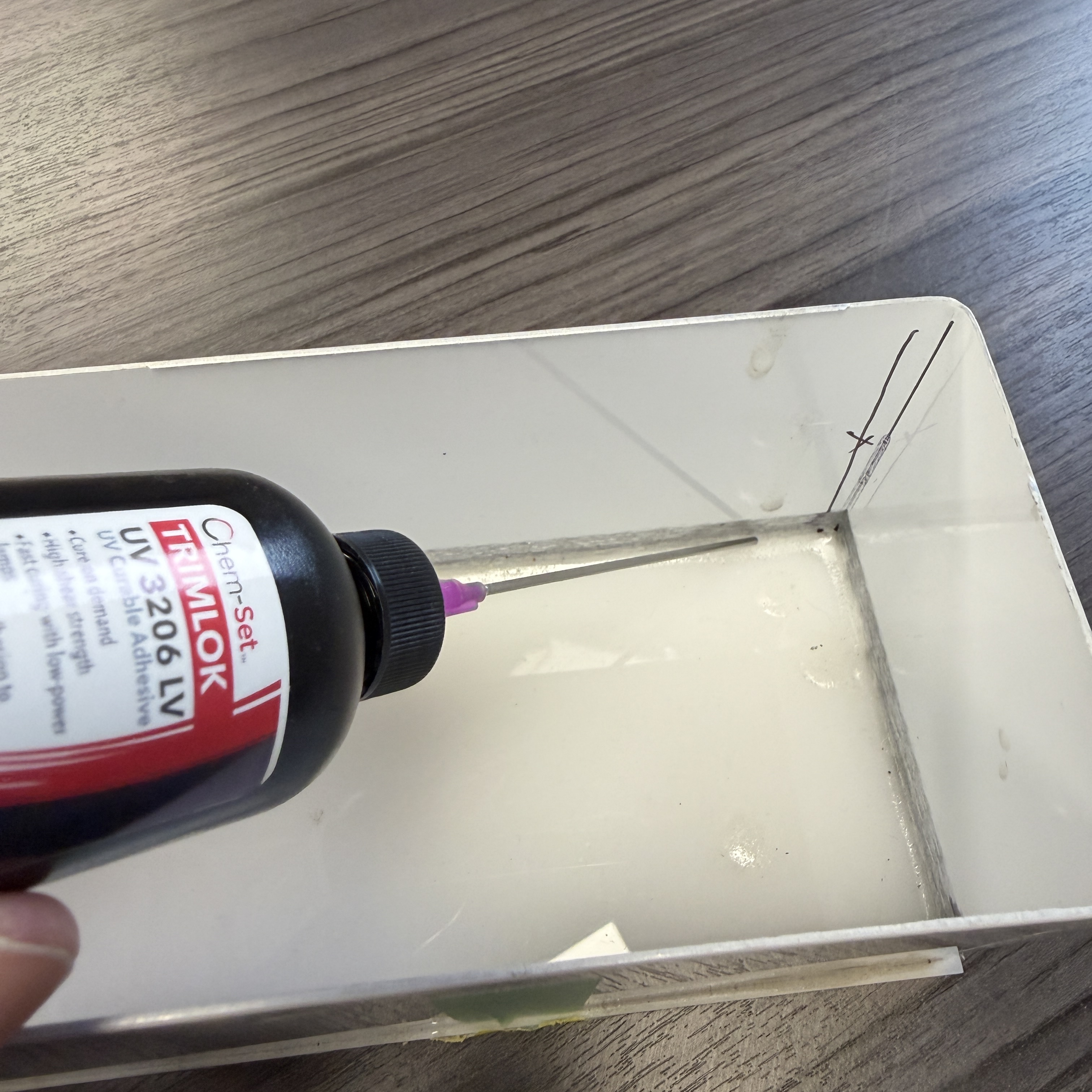
TrimLok™ UV3206 LV is an industrial-grade, UV-curable adhesive engineered specifically for the structural demands of modern sign fabrication. Its ultra-low viscosity allows it to aggressively wick into extremely tight bond lines and near-butt joints through capillary action.
This 100% solids, solvent-free formula cleanly fixtures acrylic faces to polycarbonate trim caps and aluminum extrusions. Delivering immense structural strength and an optically clear, shadow-free bond line, it is the ideal foundation for building large-format, exterior, and backlit channel letters built to withstand the elements.
The Problem with Traditional Glues
Older adhesives struggle with the tight tolerances and outdoor demands of modern channel letters.
- Cyanoacrylates (CA): Too brittle to handle thermal expansion, not rated for long-term outdoor exposure, and can yellow over time.
- Solvent Cements: Struggle to bond polycarbonate trim cap effectively and deliver inconsistent curing strength.
- Standard 2-Part Urethanes: Slow cure times reduce production speed and struggle to penetrate thin seams.
The TrimLok™ Advantage
UV3206 LV is engineered for structural outdoor performance and seamless finishes.
- Capillary Action: 50-100 cP viscosity wicks naturally into micro-gaps on trim caps and aluminum returns without messy squeeze-out.
- Invisible Bonds: High-clarity adhesive creates no shadowing, making it perfect for illuminated and backlit channel letters.
- Instant UV Fixture: Cures rapidly under UV light, completely eliminating long clamping times.
- Exterior Structural Strength: Serves as an aggressive standalone trim cap adhesive or the ultimate fixturing base for structural exterior MMA seams.
See TrimLok™ in Action
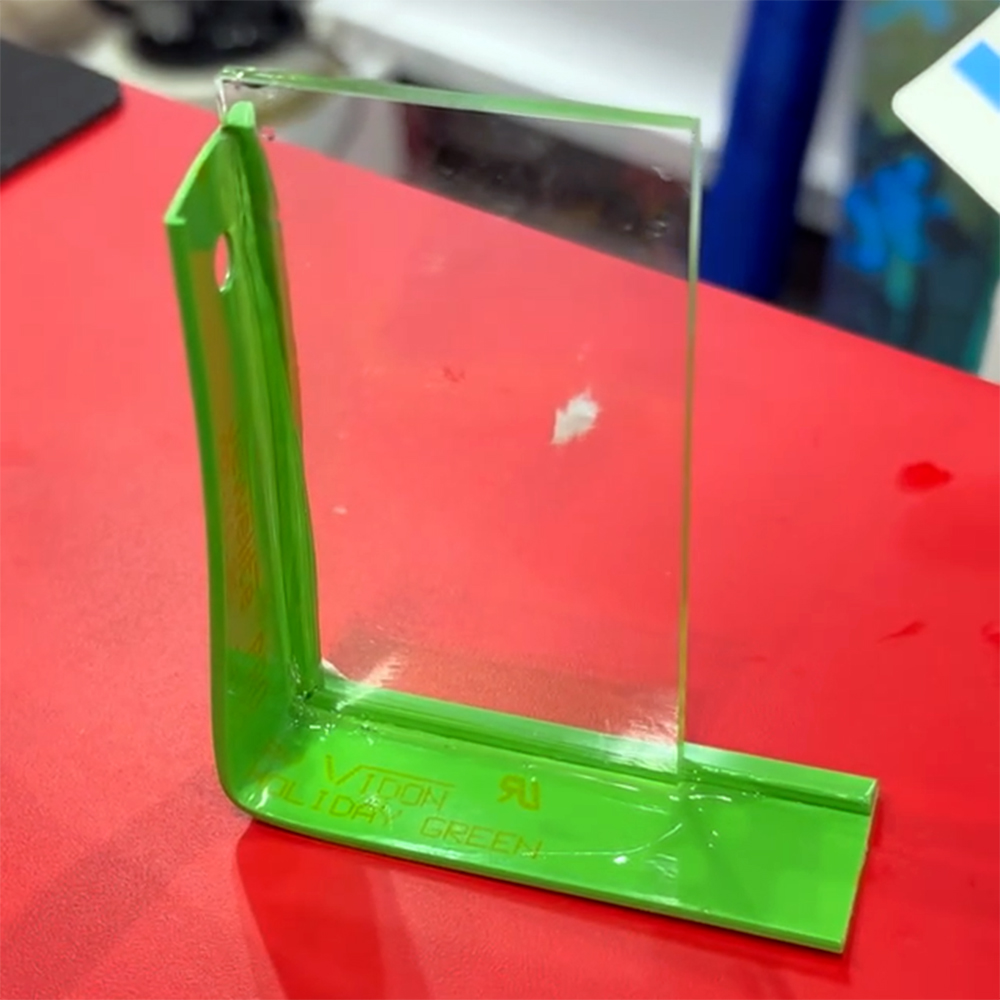
Watch how easily UV3206 LV wicks into tight channel letter seams and fixtures instantly under UV light.
Purpose-Built Channel Letter Workflows
UV Light Requirements
UV light quality directly dictates your cure speed, fixture time, and consistency.
- Required Wavelength: 365–420 nm.
- Recommended Wavelength: 395 nm LED Spot Cure systems provide the fastest, most consistent production results (often curing in 5-15 seconds).
- Shop Tip: If cure speed feels slow or inconsistent, check your UV light output and wavelength before changing the adhesive or process.
Compatible Substrates
UV3206 LV bonds aggressively to the core materials used in modern sign fabrication.
- Polycarbonate
- Acrylic and PMMA
- Butyrate trim cap (CAB)
- Aluminum Extrusions / Returns
- Steel and general metals
Technical Specifications
| Chemical Composition | Methacrylate Ester |
| Appearance | Clear, Colorless |
| Viscosity (@ 25°C) | 50 – 100 mPa s (cP) (Ultra-Low) |
| Cure Wavelength | 365 – 420 nm |
| Tensile Strength | 15 – 20 N/mm² (2200 psi) (DIN 53504) |
| Elongation | 100% – 150% (DIN 53504) |
| Storage Temperature | 5°C to 25°C (41°F to 77°F) |
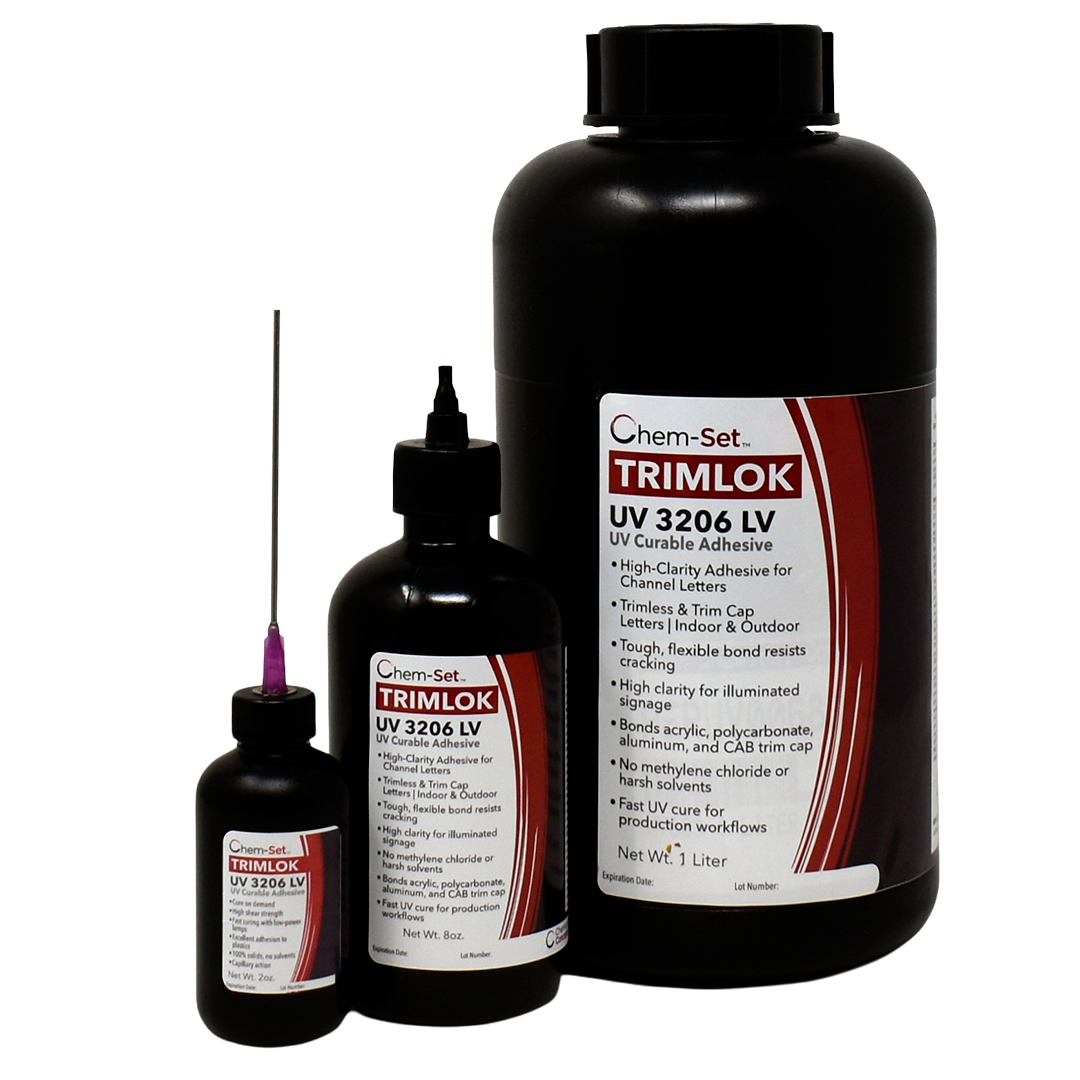
| Packaging Options | 2 oz, 4 oz, 8 oz, and 1 Liter Bulk Bottles |
Ready to Upgrade Your Channel Letter Fabrication?
Have questions about integrating UV3206 LV into your automated channel letter workflow, or need recommendations on UV lighting and secondary MMA adhesives?
Trim Cap & Trimless Letter Bonding FAQ
The questions sign fabricators actually ask before they switch adhesives, answered with published data from the UV3206 LV technical data sheet.
+Will it actually bond polycarbonate trim cap?
Yes, and polycarbonate is where it performs best. Overlap shear strength on polycarbonate is greater than 7 N/mm² (over 1000 psi) tested to ISO 4587. In testing the plastic failed before the bond did.
This is a substrate problem, not a brand problem. The common acrylic solvent cements, including Weld-On 3, 4, and 16, are rated for acrylic. Polycarbonate trim cap needs different chemistry, which is why shops that use an acrylic-grade cement on a polycarbonate face often find the trim lets go later with very little force.
We distribute Weld-On, so this is not a knock on the line. It is a question of matching the adhesive to the material in front of you. UV3206 LV is not solvent based at all, so its performance on polycarbonate does not depend on softening the plastic.
+What UV light do I need, and how long is the cure?
Stay in the 365 to 395 nm range. 395 nm is the sweet spot for this adhesive. Full cure wavelength range is 365 to 420 nm, and you are looking at 5 to 20 seconds per section on trim cap and 5 to 15 seconds per section on trimless letters, curing in sections as you apply.
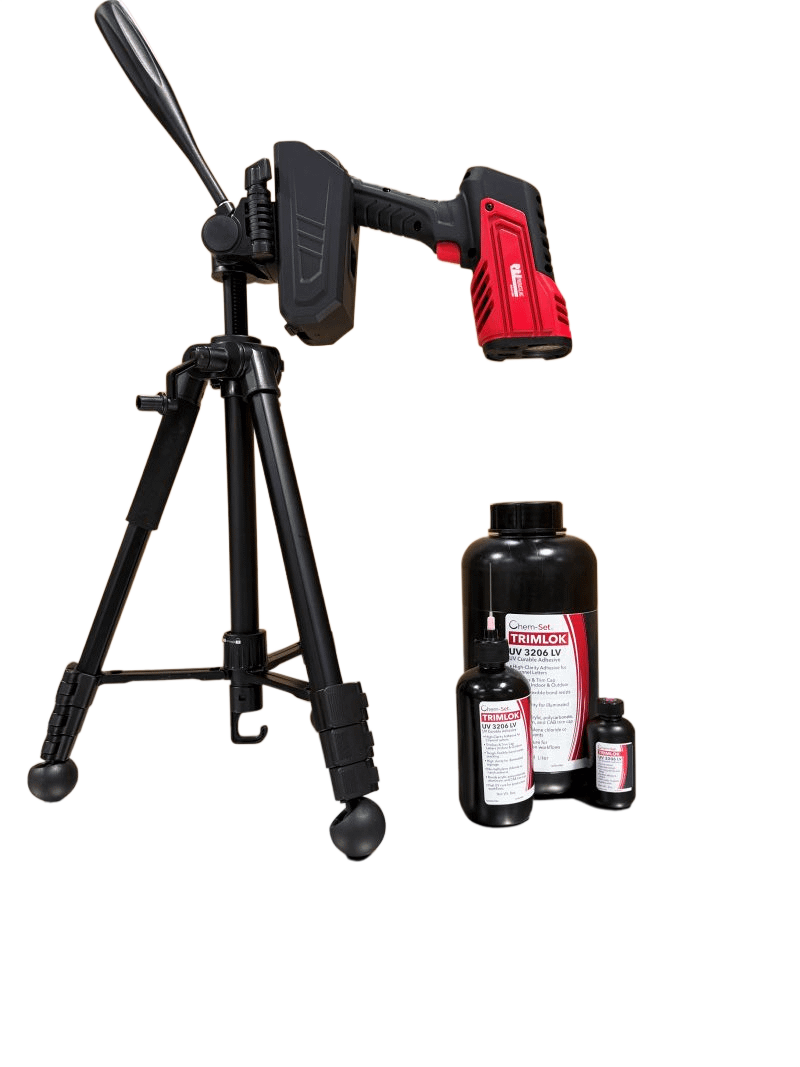
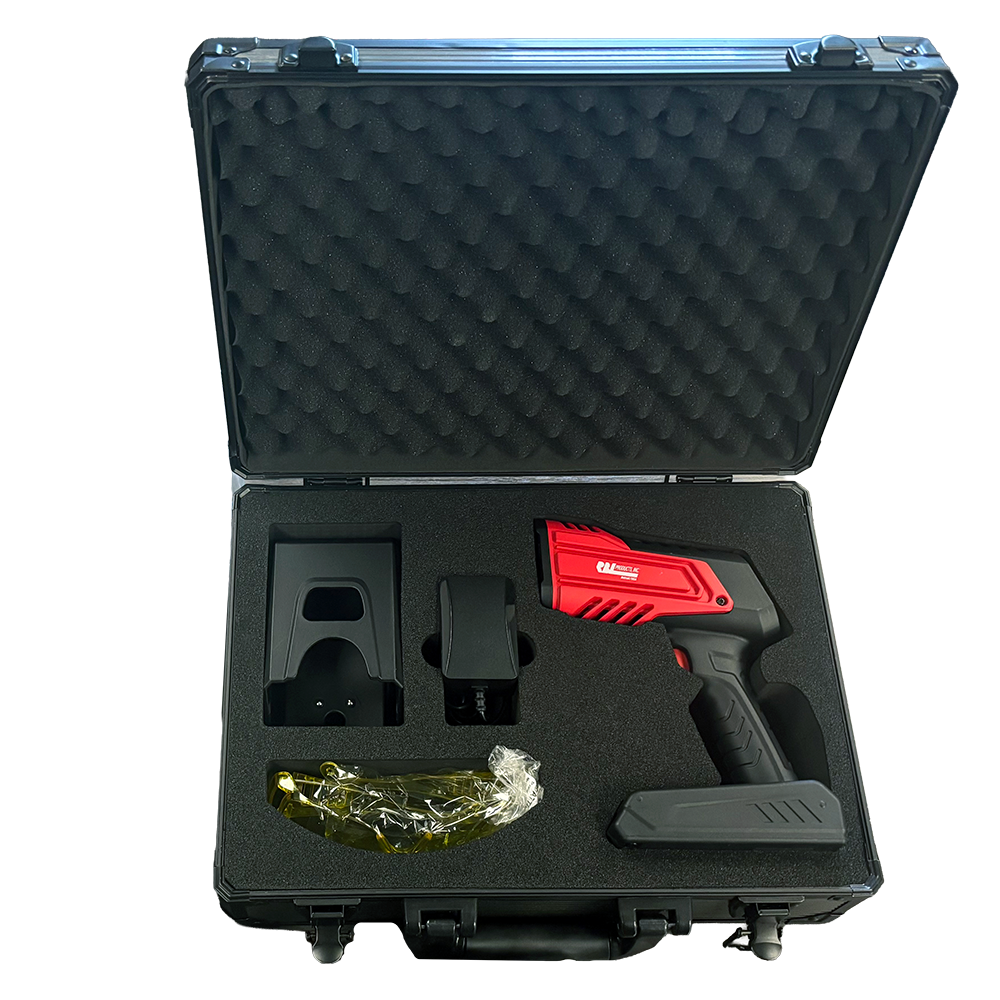
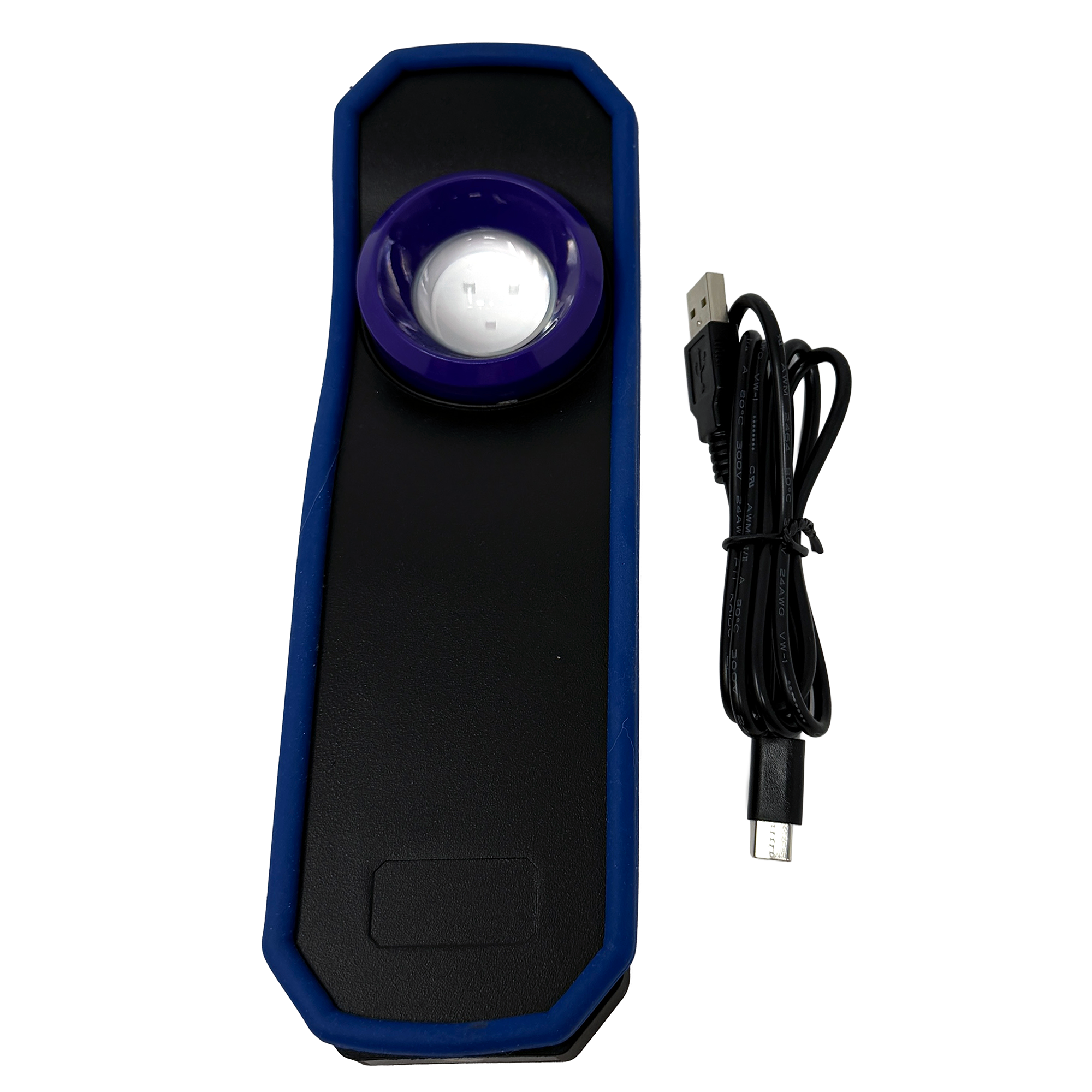
The light decides your cure speed as much as the adhesive does. Stronger, higher-quality UV output cures more adhesive, faster, over a wider area. A cheaper light means smaller sections and more passes for the same cure. Three options, depending on how much letter work you are running:
| Light | Part Number | Best Fit |
|---|---|---|
| Handheld UV Flashlight Entry |
CCH-TLUVLIGHT-HAND | Compact paddle light, single LED. Fine for spot work, touch-ups, and low-volume runs. |
| Gun-Style UV Light Production |
CCH-TLUVLIGHT-GUN | Pistol grip, tripod-mountable for a fixed distance and a wide cure radius. Built for steady production runs. |
| AUV Cool Cure 395 nm Spot Cure |
AUV-FLM1011 | Dialed-in 395 nm output for direct spot curing. Fastest cure of the three. |
Substrate moves fixture time more than most people expect. On a low power handheld lamp (3 to 5 mW/cm²), published fixture times are 4 to 5 seconds on acrylic, 5 to 7 seconds on rigid PVC, and 25 to 30 seconds on polycarbonate. That polycarbonate number is the clearest reason to step up to the gun light or the Cool Cure if you are running trim cap all day. Same adhesive, a fraction of the time per letter.
One caution on LEDs: they have a narrow spectral output, so check the lamp’s peak wavelength before you buy. And if cure feels slow or inconsistent, check the light before you change the adhesive or the process.
+Will it craze or stress-crack the face like solvent cement?
No. UV3206 LV flows like a thin solvent cement and wicks into the seam the same way, but there is no solvent in it to attack the face, so you do not get crazing or stress cracking.
It is also a 100 percent solids formula, so nothing flashes off and shrinks out of the joint as it cures.
+Does it yellow over time?
No. UV3206 LV cures clear with no yellowing. It is a clear, colorless methacrylate ester with a refractive index of 1.474, so the bond line stays invisible on clear and white faces and does not shadow behind LEDs.
Yellowing is a known drawback of cyanoacrylates in exterior sign work, and it shows up worst exactly where it matters most, on an illuminated face where the bond line is lit from behind.
+Is the UV bond structural, or is it just holding parts until something else cures?
It is a structural adhesive, in both applications. Cured tensile strength is 15 to 20 N/mm² (2200 psi) per DIN 53504, and overlap shear on polycarbonate runs over 1000 psi with the plastic failing before the bond does. If you have heard UV adhesive described as a temporary hold before mechanical fastening, that is not what this is.
On trim cap it is the whole job. One pass, structurally bonded and sealed, with a fully sealed perimeter and no visible squeeze-out.
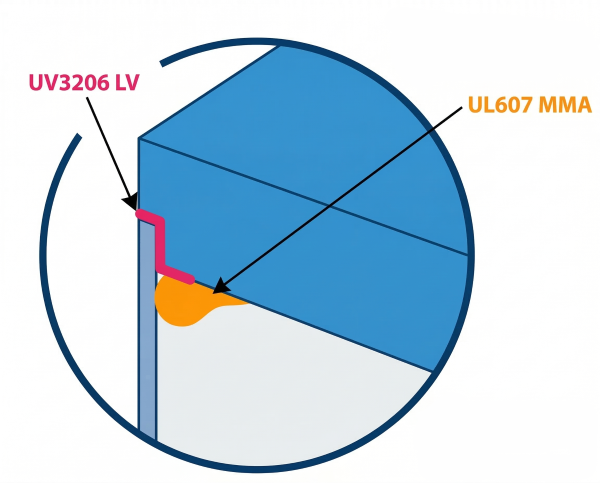
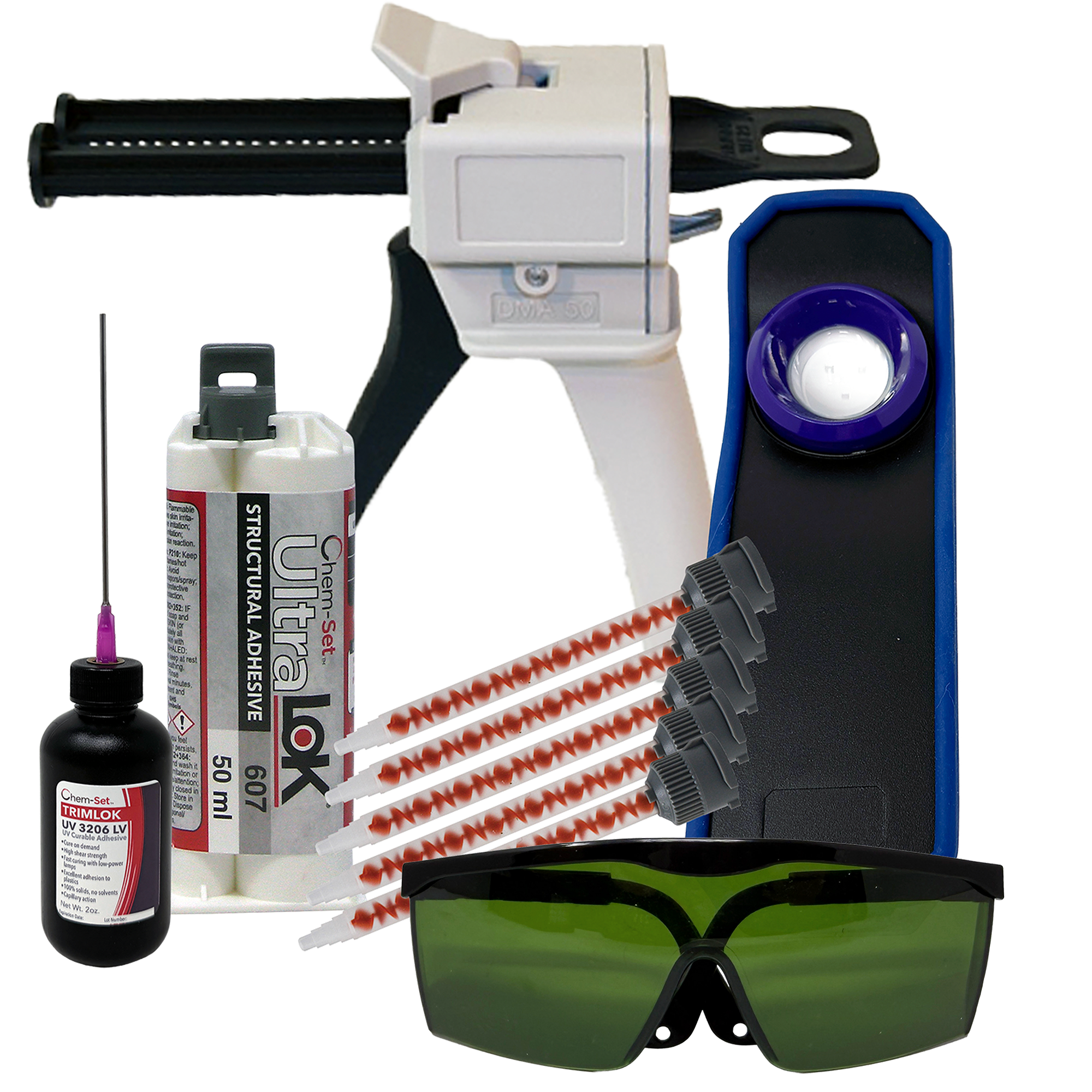
On trimless letters it is a structural bond that also fixtures in seconds, which is why you are not clamping a letter and waiting. UltraLok UL607 goes on the rear seam for a different reason: aluminum and acrylic move at different rates outdoors, and the rear seam is where you want a flexible structural bead absorbing that movement over the life of the sign. Two structural adhesives, two jobs, one letter.
+Why do trimless letters pop apart after a year or two, and what is different here?
Aluminum and acrylic expand and contract at different rates. On a trimless letter the bond area is tiny, close to a butt joint, so every cycle of heat and cold works that seam. A rigid, brittle adhesive has nowhere to put that movement and eventually the joint gives up. That is behind most field failures on CA-bonded trimless letters, and it usually shows up a year or more after install, on a sign that looked perfect the day it shipped.
The TrimLok system splits the job across two structural adhesives. UV3206 LV bonds the seam and cures with 100 to 150 percent elongation and 50 to 65 Shore D hardness, so it keeps some give instead of going glass-hard the way a CA does. UL607 on the rear seam adds a flexible structural bead built to absorb the thermal movement between the aluminum and the acrylic over the life of the sign.
Minimum service temperature of the cured adhesive is -55 °C (-67 °F) depending on the materials being bonded.
+Can I still use L-brackets or acrylic blocks on large trimless letters?
Yes. Mechanical L-brackets and bonded blocks work alongside the TrimLok system, and on large exterior letters plenty of shops use both. Nothing here asks you to stop doing something that has been holding your big work up.
On a trimless letter the bond line is very small, so what actually matters outdoors is short:
- It has to wick into a bond line that thin in the first place
- It cannot shadow behind a lit face
- It has to flex and hold through extreme temperature swings
- It has to still be holding years later
That is what the two-adhesive approach is built around. Call us with your letter sizes and coil and we will go through it with you.
+Which trim cap materials will it bond?
Bonding goes by material, not by brand. Published overlap shear values from the technical data sheet:
| Polycarbonate | >7 N/mm² (>1000 psi), substrate failure |
| Rigid PVC | >2 N/mm² (>300 psi), substrate failure |
| Acrylic (PMMA) | 1.5 to 2 N/mm² (200 to 300 psi) |
“Substrate failure” means the plastic gave out before the bond did, so those numbers are floors, not ceilings.
Butyrate trim cap (CAB) is running successfully in shops today, and formal test data is still in process, so we will tell you it is field-proven rather than spec’d. If you are running something outside this list, send us a length of it with a scrap face and we will bond it and tell you what we see. That is a faster answer than a spec sheet.
+Will it bond painted or pre-coated aluminum coil?
It bonds to coated coil well. The honest limit is that you are only as strong as the paint. UV3206 LV is a far more structural adhesive than a CA and activator system, so on a coated return the coating usually becomes the weak point in the stack rather than the adhesive.
Worth knowing if you have had a CA system fail on coil before: those failures are sometimes the activator’s solvents attacking the coil coating, not the glue letting go. There is no solvent and no activator here. If you are running a coating you have not bonded before, send us a piece and we will test it before you commit a job to it.
+How do I prep the surfaces?
Clean, dry, and free of dust, oil, and residue. Remove masking about one inch back from the bonding area and dry-fit first to confirm a tight seam with no gaps.
Two things that will cost you a bond: do not flame-polish the bonding edges, and keep silicone-based cleaners and release agents off the acrylic edge. Both reduce bond strength.
Hold the parts firmly and do not disturb them during cure. Try not to trap air in the joint, since that shows up in the finished bond line on a clear face.
+How do I store it, and how much working time do I get?
Store between 5 and 25 °C (41 to 77 °F), capped, out of direct sunlight, and protect the liquid adhesive from room lighting. Ambient light will start curing it in the bottle, so it does not belong sitting open on a sunny bench.
Working time is up to you, which is the point of a UV adhesive. Nothing cures until you put light on it. Apply along the seam, let capillary action pull it in, do not flood the joint, and cure section by section as you go. On the trimless side, UL607 gives you 6 to 9 minutes of working time with a 15 minute fixture.




Reviews
There are no reviews yet.