



Description
|
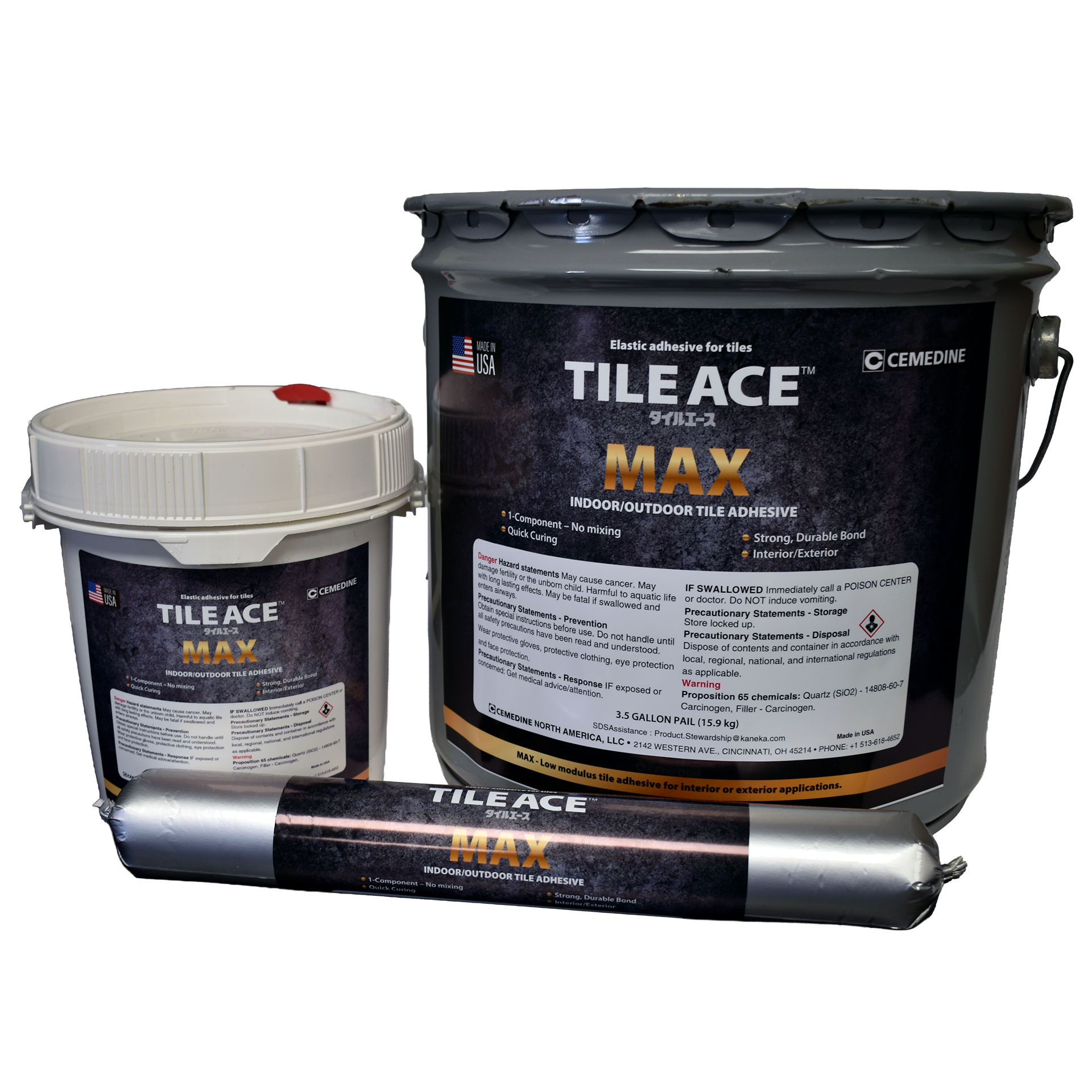
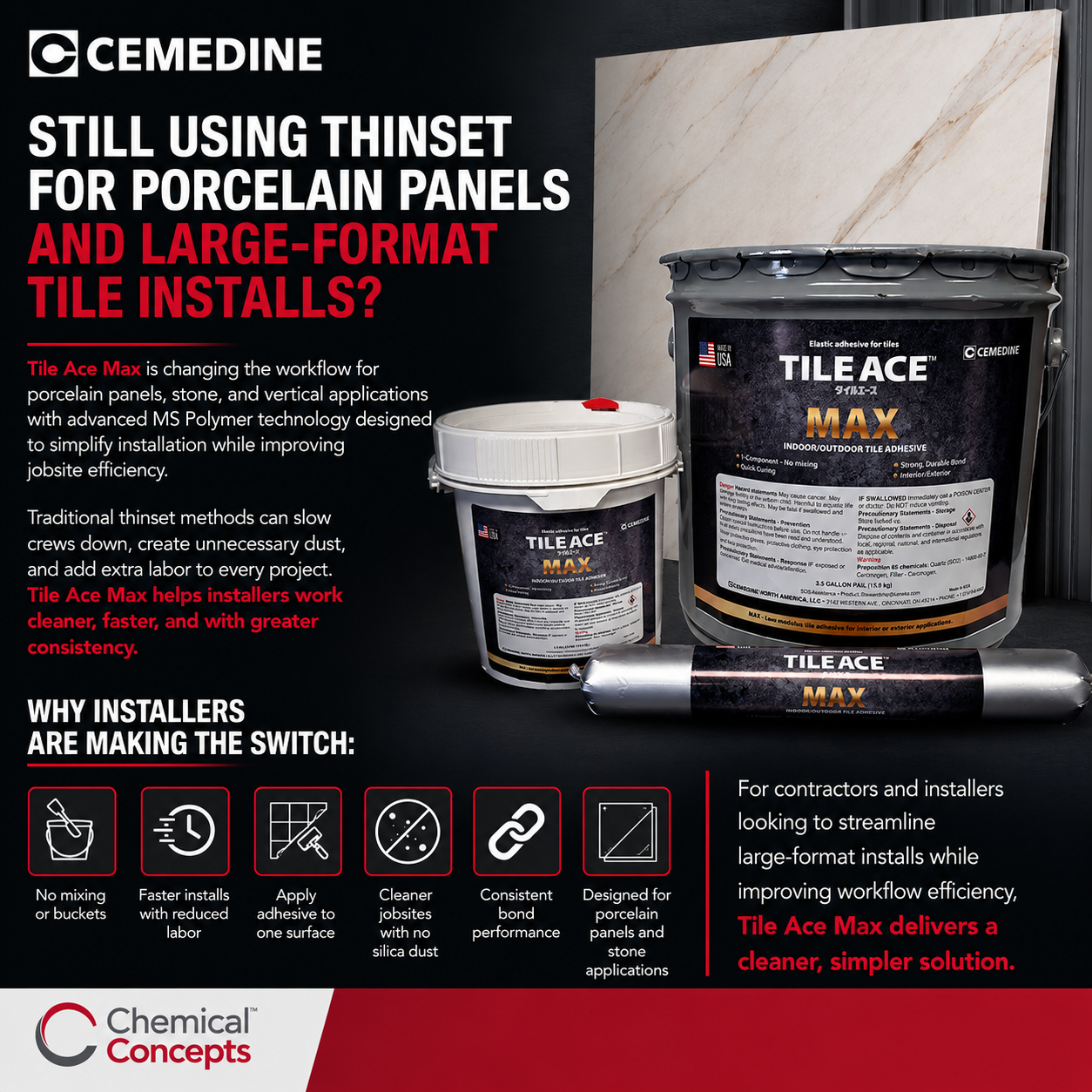
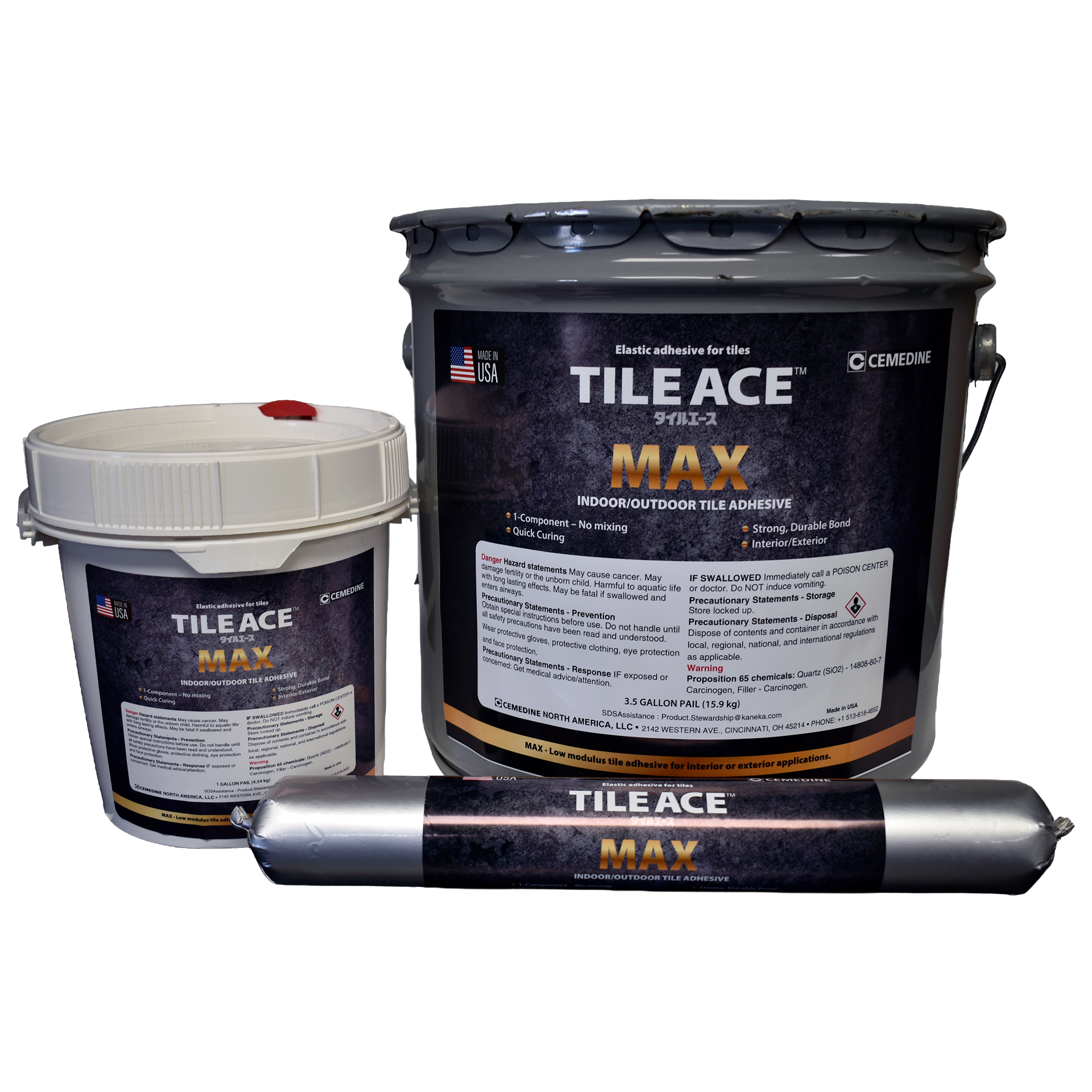
Kaneka MS Polymer Technology Built for Large Format Tile and Panel InstallationTile Ace MAX is a one-component large format tile adhesive that replaces a mixed cement bed with an elastomeric MS Polymer chemistry. It comes ready to use out of a pail or sausage, goes on one surface only with a square-notch trowel, and cures to a bond line that moves with the assembly instead of setting rigid. Designed for interior and exterior wall and ceiling work: gauged porcelain panels, shower and tub surround walls over foam core backer board, ceiling tile, and exterior wall tile. Made in the USA by Cemedine North America in Cincinnati, Ohio. |
 |
Low Modulus by Design: 80% Elongation at Shore A 50
Most large format tile failures come out of movement, not out of adhesion. A cement bed cures hard and transfers that movement straight into the tile. Tile Ace MAX stretches instead. Cemedine tested it to ISO 14448:2016, the standard for low modulus adhesives in exterior tile application.
What that means on the wall:
- 80% elongation (ASTM D412) lets the bond line take differential movement between a large panel and the substrate behind it.
- Shore A 50 (ASTM C661) is a flexible cured adhesive, not a rigid one, which is what keeps stress out of the tile.
- -40°F to 194°F service range covers exterior wall and facade tile through a full freeze-thaw cycle.
On initial hold: Cemedine describes immediate high-tack grab and non-sag performance on walls and ceilings, but no numeric green strength value is published for Tile Ace MAX. Full coverage and proper wet-out are required. Test the first panel on your own assembly and set your bracing from that result, particularly on heavier slabs, porous substrates, or cold conditions.
Substrate Range
Because Tile Ace MAX runs on Kaneka MS Polymer chemistry, it bonds to specialty substrates that a cementitious bed cannot handle, including foam core backer board and plastics.
Primary Applications
|
Substrates Cemedine Lists
|
Check compatibility with Cemedine on any siding board they have not specified.
How a Large Format Tile Wall Install Runs
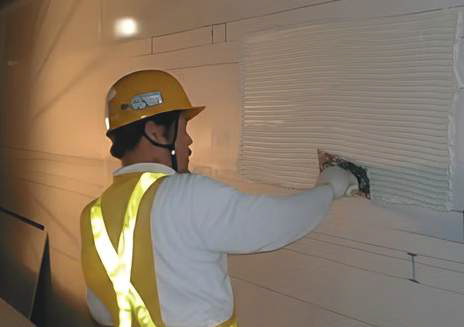
Cemedine’s directions run six steps. The short version is that the adhesive goes on the wall, not on the tile, and you get a full hour at room temperature to get the panel where you want it.
- Check the substrate. Flatness and contamination first. Clean off contamination and flatten rough areas mechanically, or fill them with Tile Ace MAX itself. Concrete and mortar need to be at 8% moisture content or less.
- Trowel the wall completely. One surface only, no back-buttering. Square-notch trowel to form ridges, 1/4 in (6 mm) for large tile and 1/8 in (3 mm) for small tile. Keep the wall between 41°F and 95°F.
- Set the tile. Press the tile into the adhesive with a vibration machine or firm, uniform hand pressure to get full wet-out on the back of the panel.
- Adjust. About 60 minutes at 72°F, about 30 minutes at 95°F. Break hot weather work into smaller sections.
- Clean up. Cured squeeze-out comes off with light sanding or solvent.
- Grout. Wait for full cure, normally overnight and longer in cold conditions. Cure runs 3.3 mm deep in 24 hours, so a thicker bed behind a heavy panel takes longer than a thin one behind small tile.
Technical Specifications
| Property | Value |
|---|---|
| Adhesive Type | One component Kaneka MS Polymer |
| Color | White |
| Viscosity at 73°F | 4,280,000 cP at 1 rpm, 2,396,000 cP at 2 rpm, 651,200 cP at 10 rpm |
| Specific Gravity | 1.2 g/mL |
| Open Time | 60 minutes at 73°F (23°C) |
| Skin Over Time | 60 minutes at 73°F (23°C) |
| Joint Adjustment Time | About 60 minutes at 72°F, about 30 minutes at 95°F |
| Cure in Depth | 3.3 mm after 1 day, 6.4 mm after 7 days |
| Hardness (ASTM C661) | Shore A 50 |
| Tensile Strength at Break (ASTM D412) | 1.0 MPa |
| Elongation at Break (ASTM D412) | 80% |
| Trowel and Coverage | 25 to 30 sq ft per gallon with a 1/4 in x 1/4 in x 1/4 in square-notch trowel |
| Application Temperature | 41°F to 95°F (5°C to 35°C) |
| Service Temperature | -40°F to 194°F (-40°C to 90°C) |
| Storage Condition | 50°F to 90°F (10°C to 32°C) |
| Shelf Life | 12 months from date of production, unopened packaging |
| Standard | Conforms to ISO 14448:2016 for low modulus adhesives in exterior tile application |
| Country of Manufacture | United States |
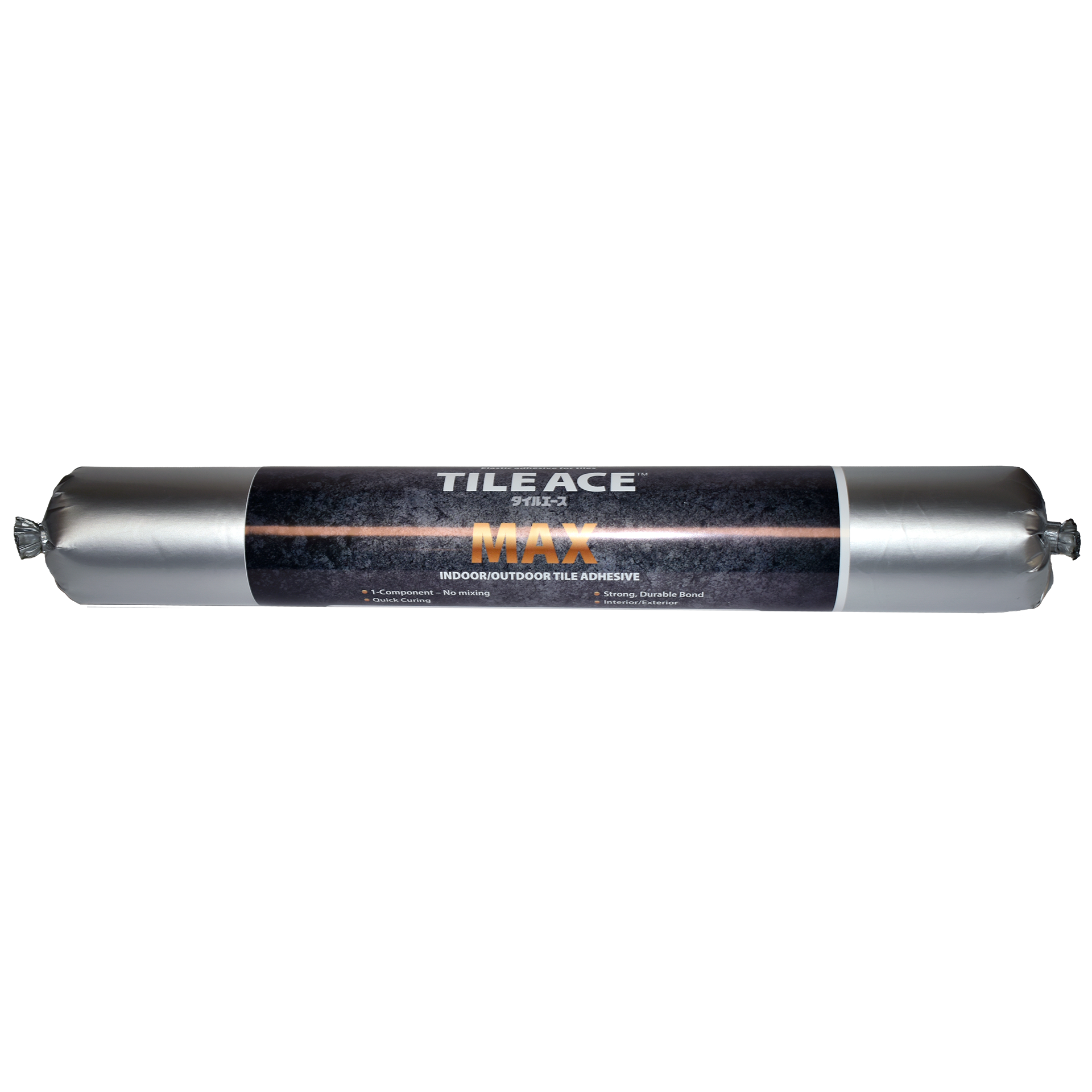
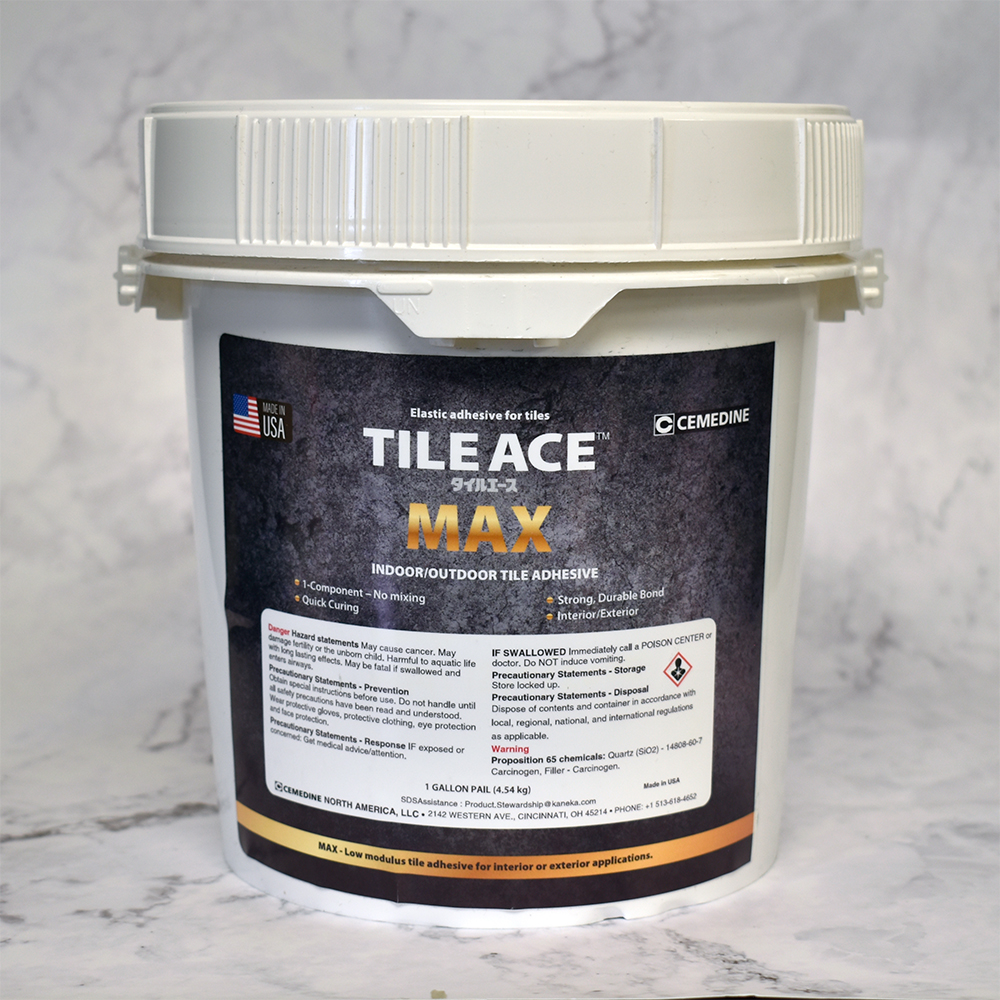
| Packaging | 20 oz sausage, 1 gallon pail, 3.5 gallon pail |
Hand Peel Test Results by Substrate
Cemedine ran hand peel tests on eleven substrates. CF is cohesion failure, meaning the adhesive tore inside itself before releasing the surface. MF is material failure, meaning the substrate gave up first. On foam core backer board the board failed before the bond did.
| Substrate | Type of Bonding Failure |
|---|---|
| Mortar | CF |
| Porcelain | CF |
| Ceramic | CF |
| Foam core backer board | MF |
| Pine wood | CF |
| Glass | CF |
| Stainless steel | CF |
| Anodized aluminum | CF |
| PVC | CF |
| Polycarbonate | CF |
| ABS | CF |
Where Tile Ace MAX Should Not Be Used
Cemedine’s application sheet lists specific exclusions. These matter most on wet area work, so read them before speccing a shower.
- Locations continuously immersed in water, such as the inside of a bathtub. Shower and tub surround walls are covered. Submerged surfaces are not.
- Locations continuously exposed to 176°F (80°C) or higher. The 194°F figure on the TDS is upper temperature resistance, not a continuous service rating.
- Locations exposed to direct flame
- Asphalt substrates
- Substrates treated with a water-absorbent adjuster
- Concrete or mortar above 8% moisture content
Cemedine’s directions cover wall and ceiling work. Floor tile is not addressed in the MAX TDS or application sheet, so call us before speccing it on a floor.
Available Sizes
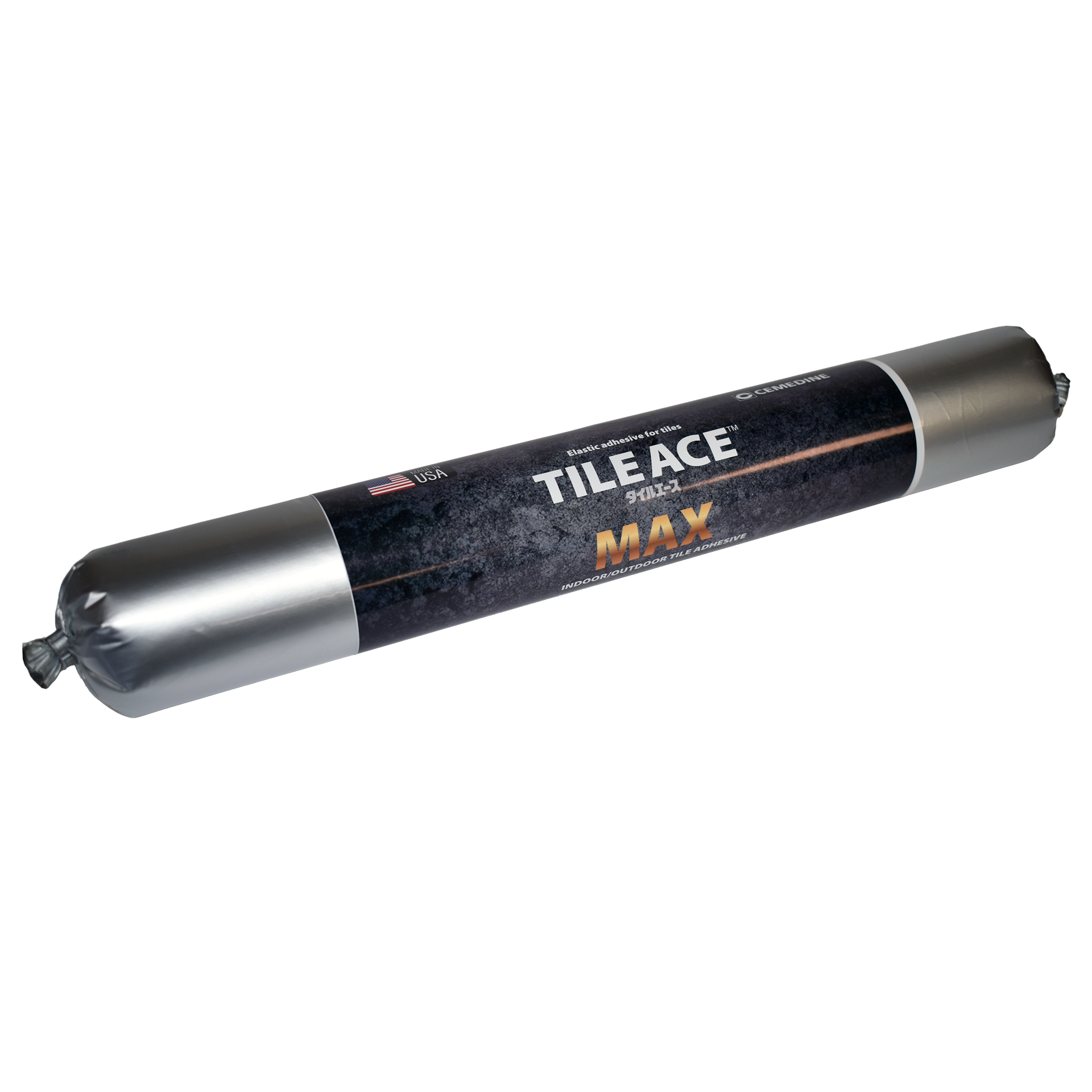 20 oz Sausage Small jobs, repairs, and detail work. Runs in a standard sausage gun and is the pack Cemedine built the MaxSpreader nozzle around. |
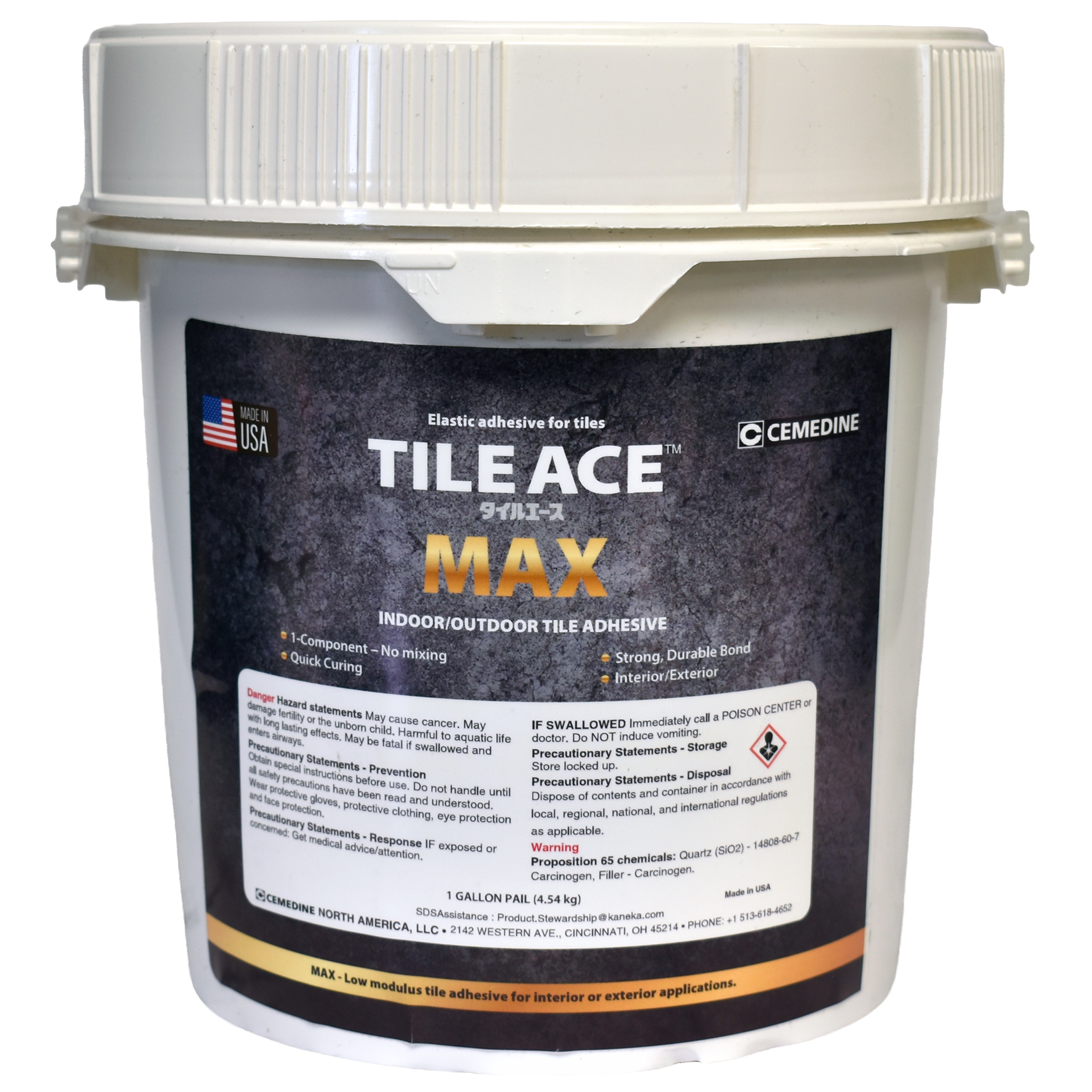 1 Gallon Pail Residential work and smaller crews. Covers 25 to 30 sq ft, which is roughly one large panel. |
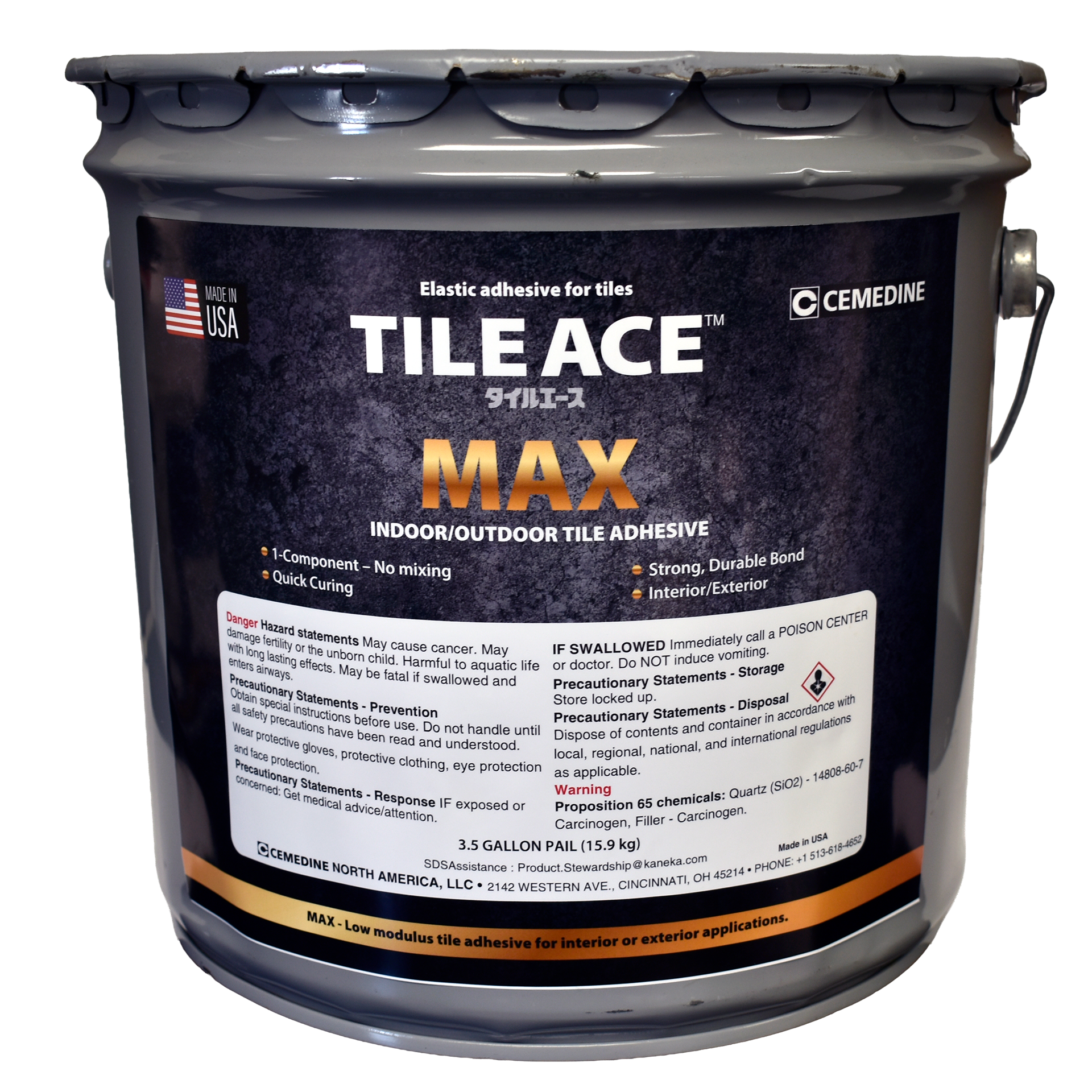 3.5 Gallon Pail Large format tile, panel, and commercial installs where a crew is running multiple walls in a day. |
The Rest of the Tile Ace System
|
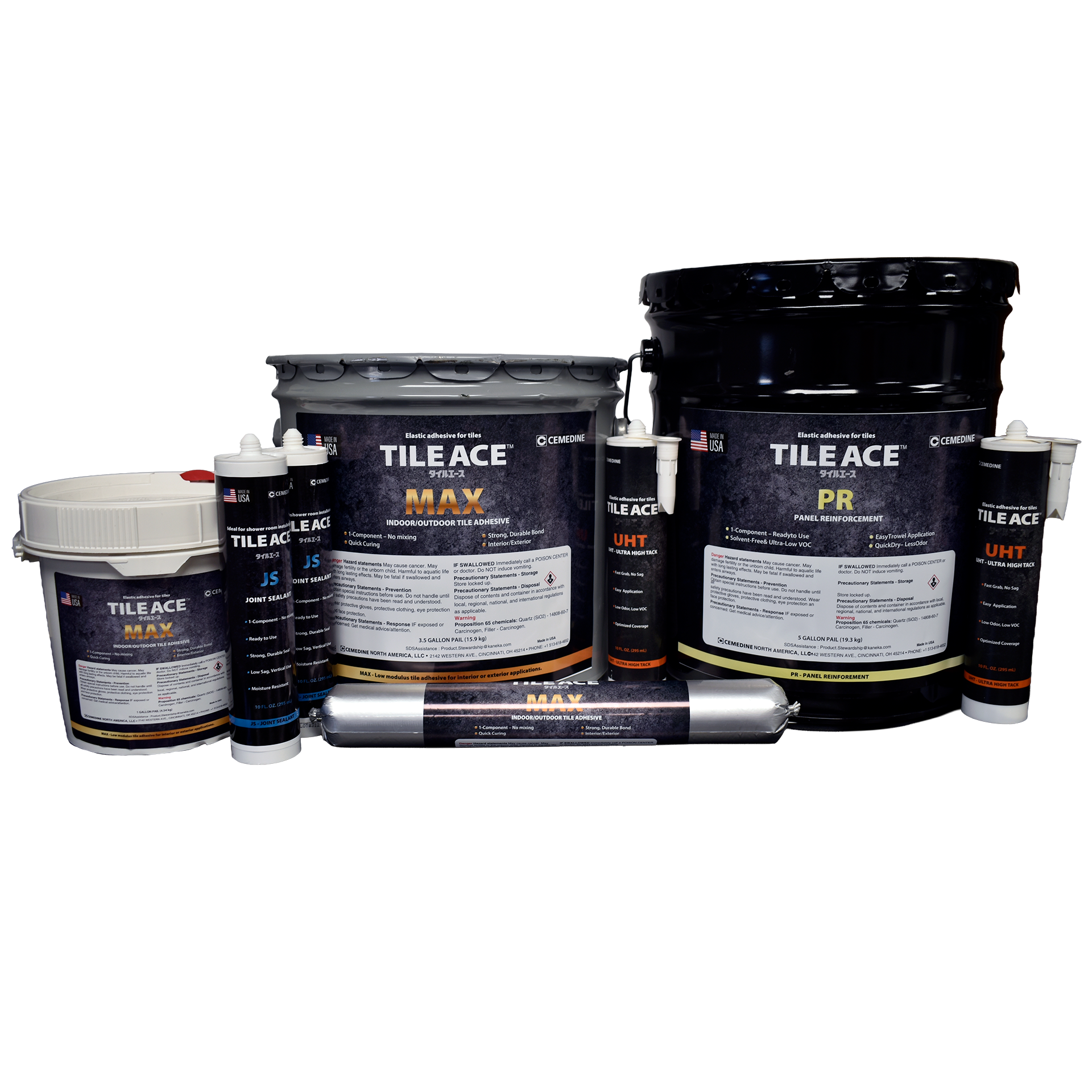
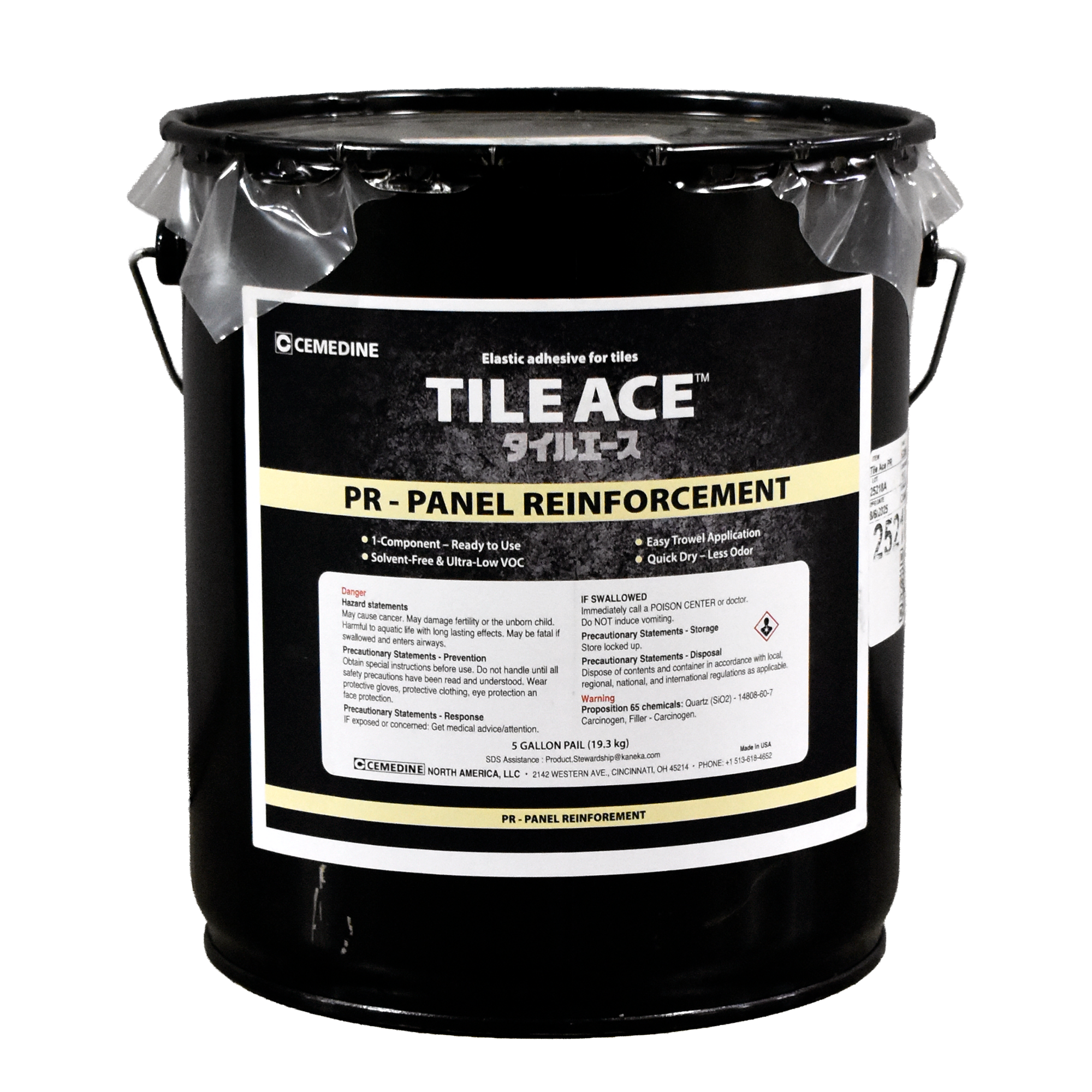
MAX handles the full-spread bonding. Three other grades cover the tasks around it, all on the same MS Polymer chemistry.
|
 |
Frequently Asked Questions
What is Tile Ace MAX used for?
Tile Ace MAX is a full-spread wall and ceiling tile adhesive for large format porcelain and ceramic tile, gauged porcelain panels, shower and tub surround walls, and exterior wall tile. It replaces a mixed cement bed with a one-component adhesive that comes ready to use out of a pail or sausage.
Is Tile Ace MAX a thinset alternative, or is it thinset?
It is an alternative, not a thinset. Thinset and thin-set mortar are cement based and mixed with water on site. Tile Ace MAX is a one-component MS polymer adhesive that ships ready to use. MS polymer tile adhesive, elastic tile adhesive, premixed tile adhesive, and one-component tile adhesive all describe this same category of product.
Can Tile Ace MAX be used in a shower?
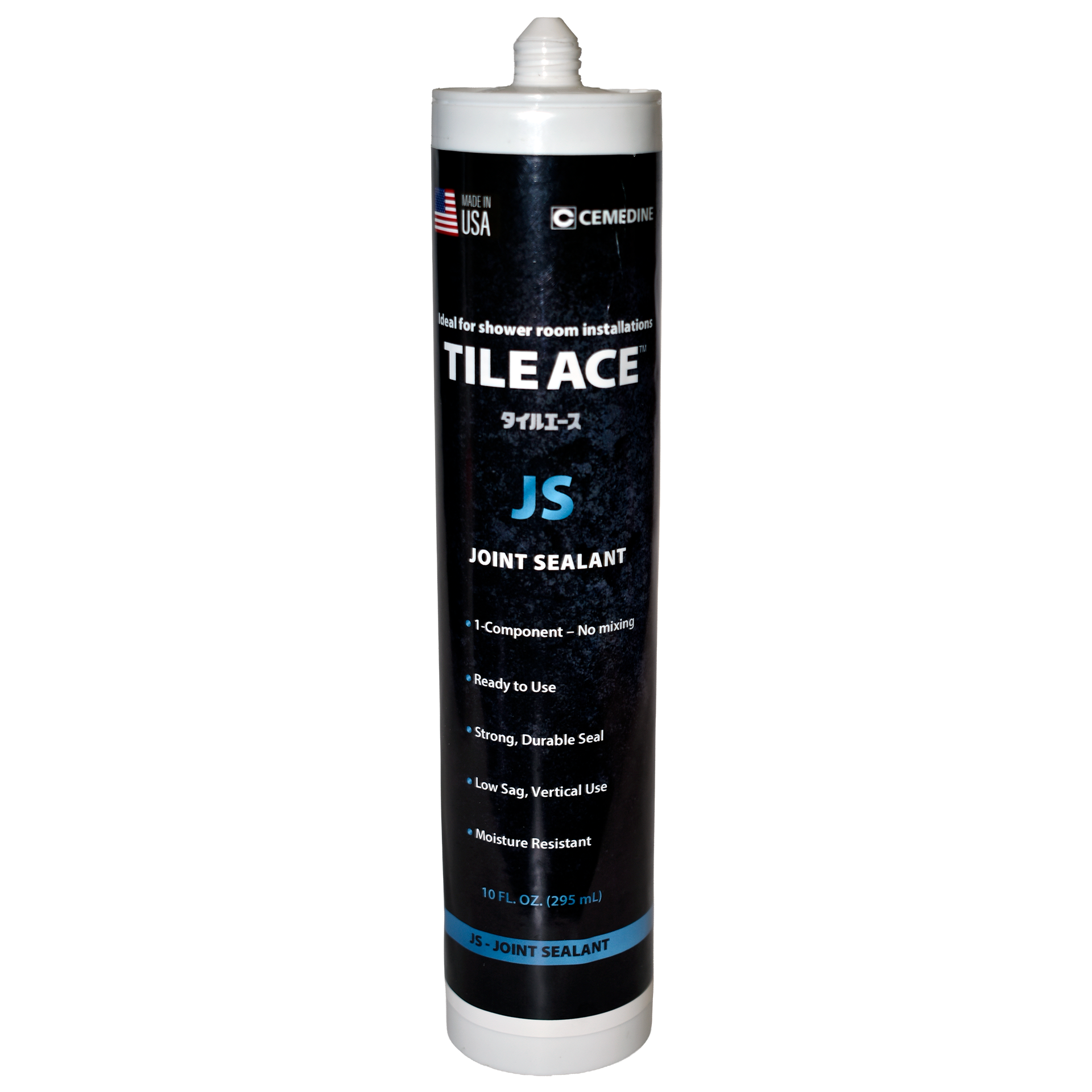
Yes on shower walls and tub surrounds, including tile over foam core waterproof backer board. No on continuously immersed surfaces, which Cemedine calls out specifically for the inside of a bathtub. Pair it with Tile Ace JS for the membrane seams, corners, and fastener penetrations.
What trowel size does Tile Ace MAX need, and how far does a gallon go?
A 1/4 in x 1/4 in x 1/4 in square-notch trowel covers 25 to 30 sq ft per gallon. Cemedine’s application sheet calls for a 1/4 in (6 mm) notch on large tile and a 1/8 in (3 mm) notch on small tile. The 20 oz sausage can also run through a sausage gun with the MaxSpreader nozzle instead of troweling.
Do you have to back-butter the tile with Tile Ace MAX?
No. Cemedine’s directions call for troweling the wall substrate completely, with no need to apply adhesive to the tile as well. Press the tile in with a vibration machine or firm, uniform pressure to get full wet-out on the back of the panel.
What substrates does Tile Ace MAX bond to?
Hand peel testing showed cohesion failure, meaning the adhesive itself tore before releasing, on mortar, porcelain, ceramic, pine wood, glass, stainless steel, anodized aluminum, PVC, polycarbonate, and ABS. On foam core backer board the board failed first. Cemedine’s substrate list also includes concrete at 8% moisture or less, extruded cement board, existing tile, type I plywood, calcium silicate board, coated ALC board, plaster board, autoclaved flexible board, and non-coated siding board.
How long before you can grout over Tile Ace MAX?
Wait for full cure, which Cemedine puts at normally overnight and longer in cold climates. Cure depth is 3.3 mm at 24 hours and 6.4 mm at 7 days, so a thicker bed behind a heavy panel needs more time than a thin one behind small tile.
Where is Tile Ace MAX made?
Tile Ace MAX is made in the USA by Cemedine North America in Cincinnati, Ohio, using Kaneka MS Polymer chemistry developed in Japan. Chemical Concepts distributes the full Tile Ace line in North America.
Questions on fit for your tile or panel installation? Call (800) 220-1966 or email [email protected]. Test on your own substrate and assembly before running production.





Reviews
There are no reviews yet.