





Description
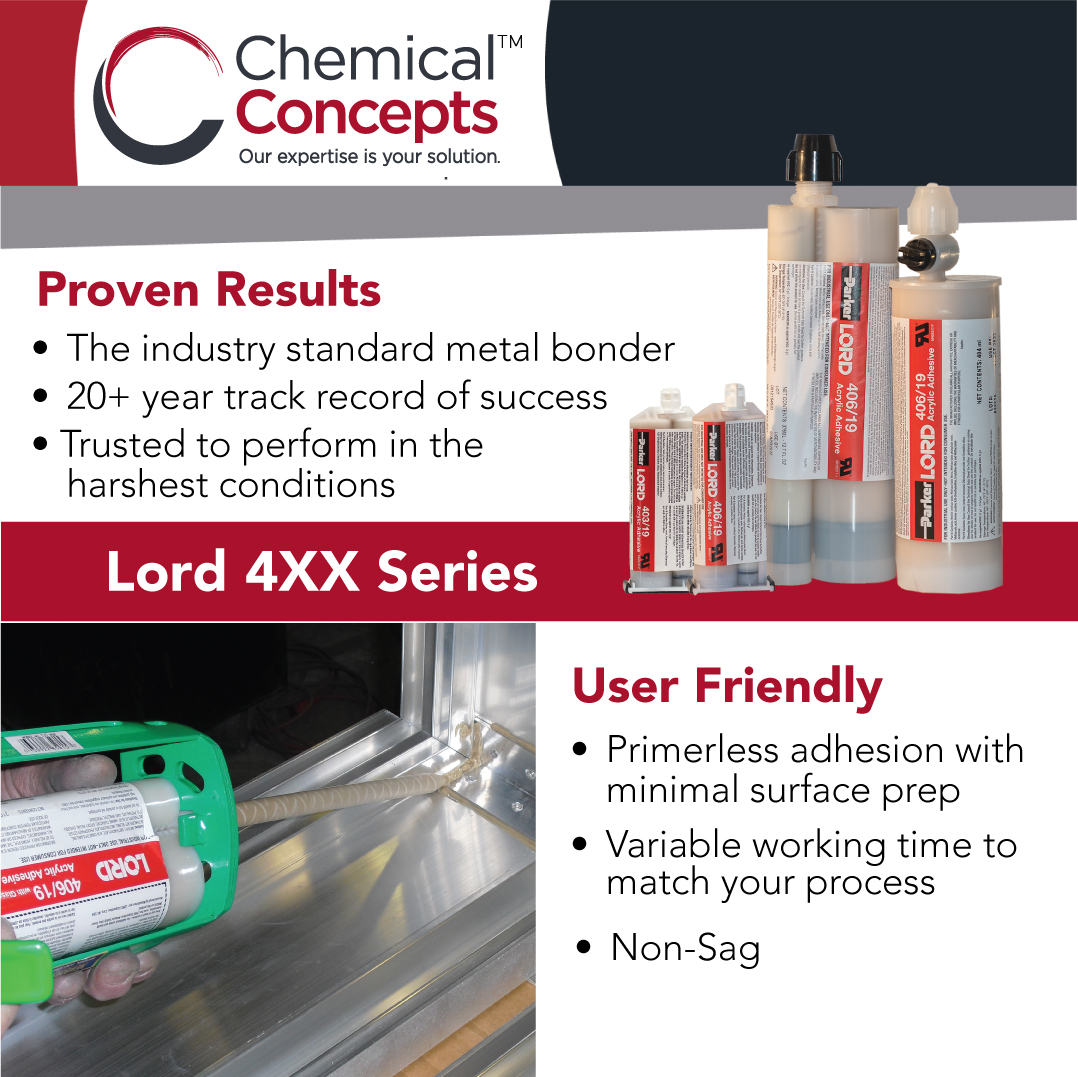
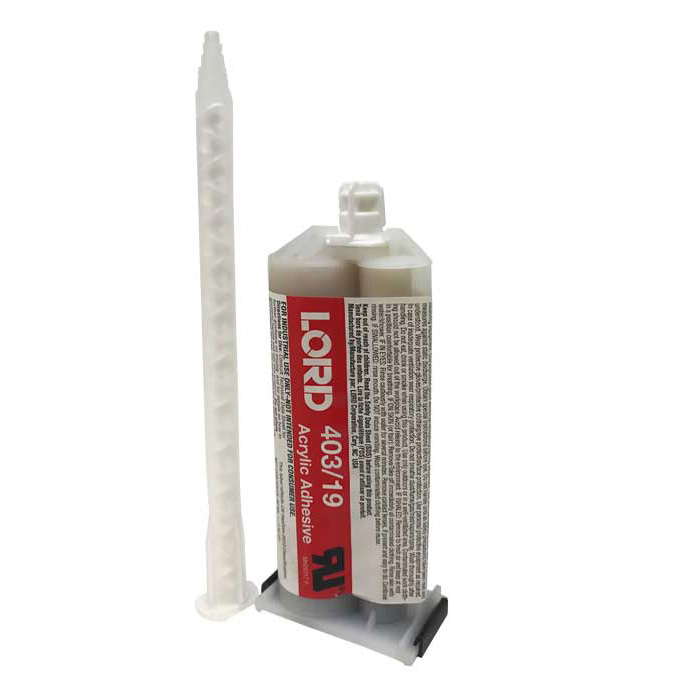
LORD 406/19 is a two-component structural acrylic adhesive used to join metal without welding, brazing, or riveting. It bonds prepared or unprepared metals and engineered thermoplastics including polycarbonate, ABS, and acrylics, with minimal surface preparation. LORD 406 is the mid work time grade in the 400 Series, giving 6 to 10 minutes to position parts before handling strength builds.
The system cures at room temperature and performs well in low temperature service and in assemblies exposed to impact, peel, and dynamic loads. Mixed with LORD Accelerator 19, the adhesive system is UL 746C certified.
Bonding Metal Without Welding, Brazing, or Riveting
Parker LORD formulated the 400 Series specifically to replace welding, brazing, riveting, and other mechanical fastening methods. Parker LORD describes these systems as providing the highest impact and peel strengths available in a room temperature curing adhesive.
- Aluminum to aluminum, steel to steel, aluminum to steel. The same adhesive handles similar and dissimilar metal pairs. Tested lap shear runs 3,000 psi on 6061T6 aluminum and 2,500 psi on galvanized steel with nothing more than a dry rag wipe.
- Metal to plastic. Bonds engineered thermoplastics including polycarbonate, ABS, and acrylic to metal, which welding and riveting cannot do cleanly.
- Minimal prep. Remove grease, loose contamination, and poorly adhering oxides. Normal mill oils and drawing compounds usually do not present an adhesion problem. No blasting or chemical etch step required.
- Room temperature cure. Handling strength in 12 to 17 minutes, full cure in 24 hours. No oven, no post-weld grinding, no filler.
- Coated and prefinished metal. Bonds galvanized and powder coated steel directly, so finished parts do not have to be masked, stripped, or refinished after joining.
Not sure the work time fits your process? Compare the 400 Series grades below, or call 800-220-1966 and describe the joint.
Key Product Details
| Property | Value |
|---|---|
| Chemistry | Two-component structural acrylic |
| Mix Ratio by Volume (with Accelerator 19) | 4:1 |
| Mix Ratio by Weight (with Accelerator 19) | 3.02:1 |
| Appearance | Off-white to tan paste |
| Mixed Appearance | Tan paste |
| Cured Appearance | Tan to green |
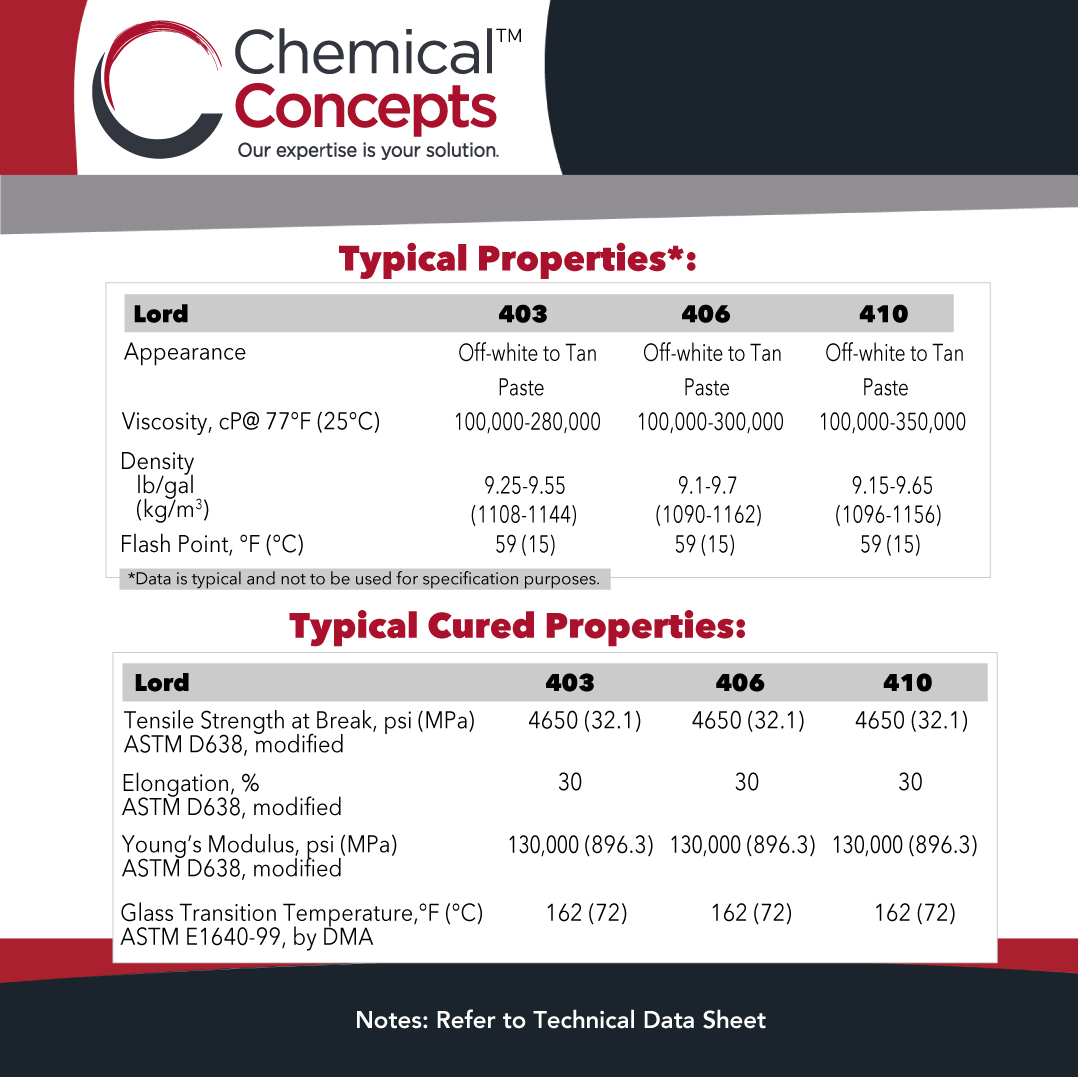
| Viscosity @ 77°F, Brookfield | 100,000 to 300,000 cP |
| Density | 9.10 to 9.70 lb/gal |
| Solids Content | 100% |
| Flash Point | 59°F (15°C) |
| Working Time @ 75°F | 6 to 10 minutes |
| Time to Handling Strength @ 75°F (60 psi shear) | 12 to 17 minutes |
| Full Cure @ 75°F | 24 hours |
| Tensile Strength at Break | 2,700 psi (18.6 MPa) |
| Elongation | 30% |
| Young’s Modulus | 130,000 psi (896.3 MPa) |
| Glass Transition Temperature (Tg) | 162°F (72°C) |
| Service Temperature Range | -40°F to 300°F (-40°C to 149°C) |
| Certification | UL 746C, when mixed with LORD Accelerator 19 |
| Shelf Life | 9 months below 80°F (27°C) in original unopened container. Storage at 40 to 50°F recommended. |
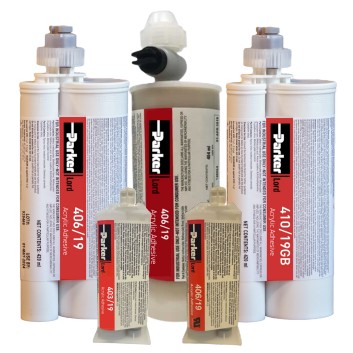
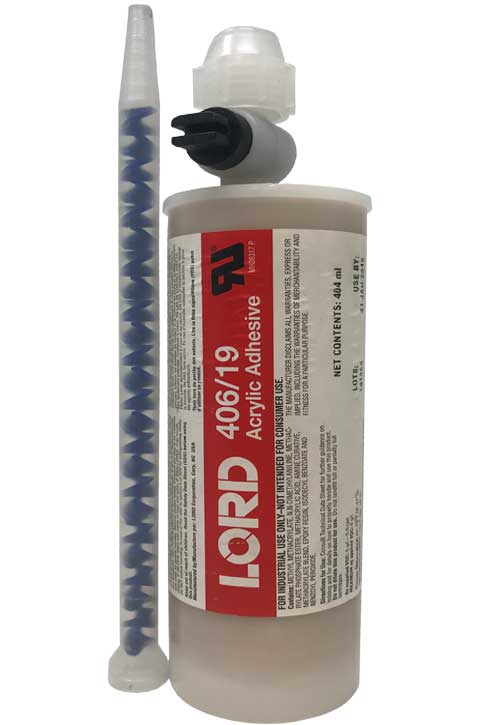
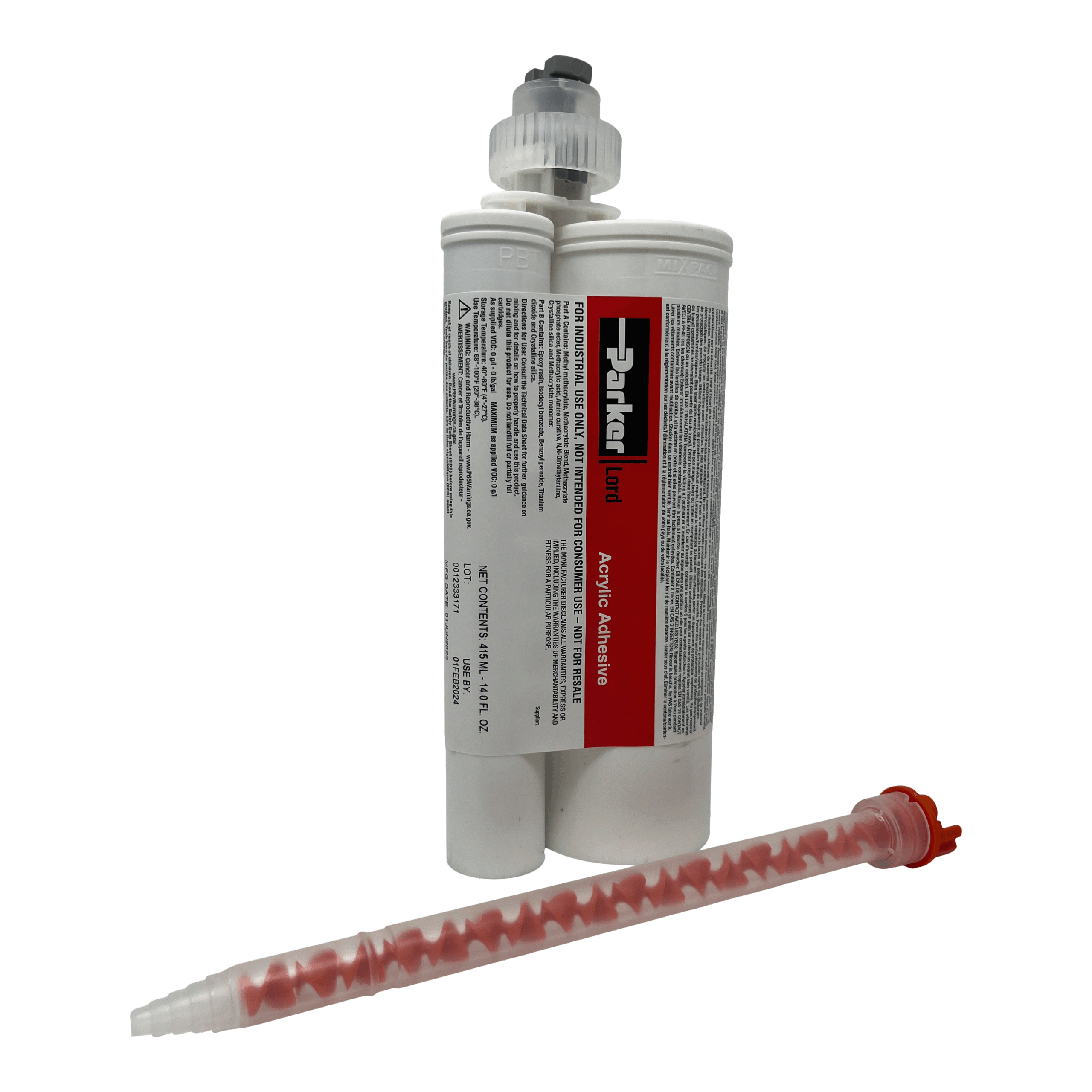
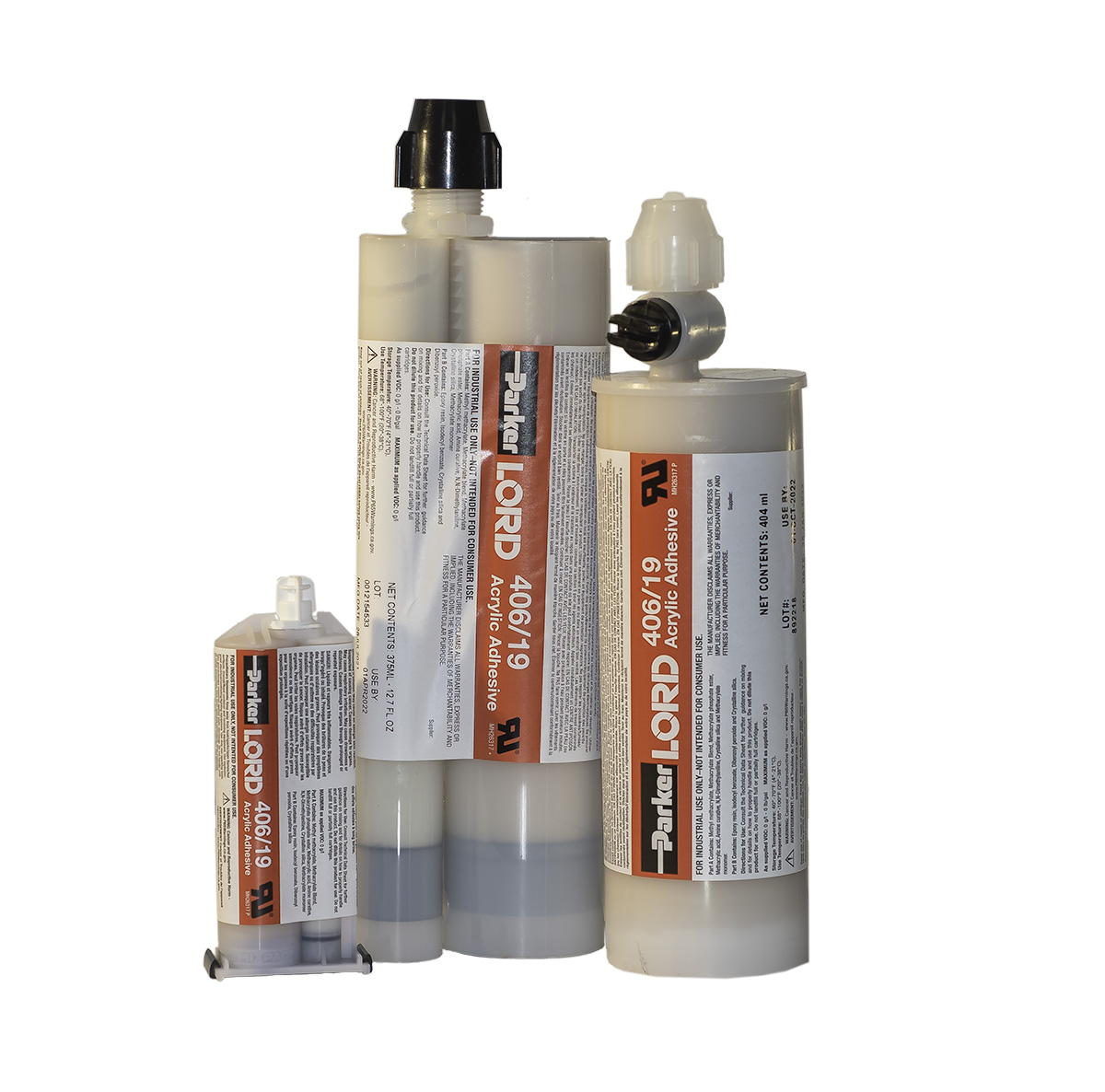
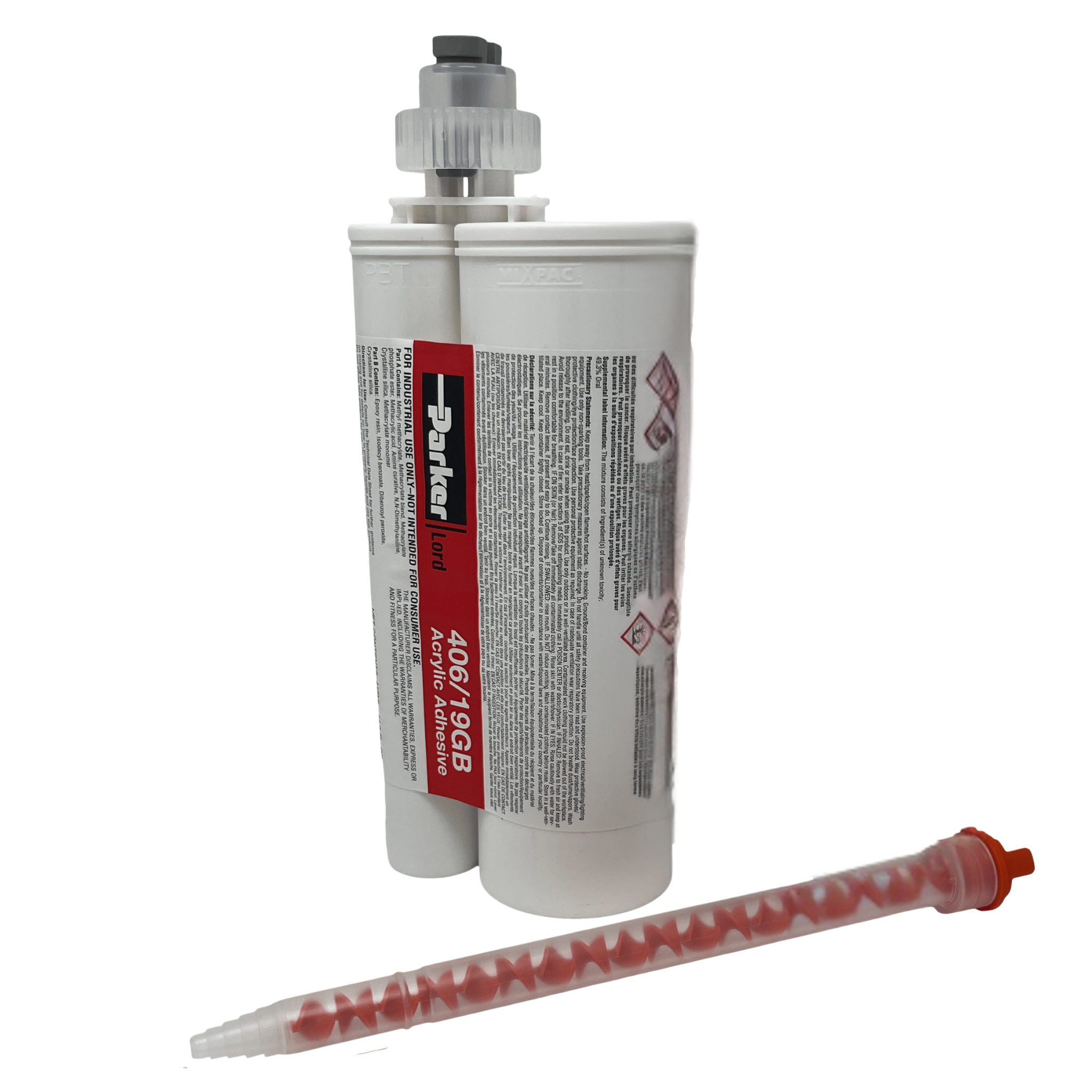
| Packaging | 50ml cartridge, 404ml CX cartridge, 415ml cartridge |
Choosing Between LORD 403, 406, and 410
All three adhesives share the same cured physical properties. The difference is work time, so pick the grade that matches how long your operator needs to place and fixture the part.
| Adhesive | Working Time @ 75°F | Handling Strength @ 75°F | Best Fit |
|---|---|---|---|
| LORD 403 | 2 to 4 minutes | 4 to 6 minutes | Short beads, high throughput cells, fast fixture |
| LORD 406 (this product) | 6 to 10 minutes | 12 to 17 minutes | Most general fabrication, letters, panels, brackets |
| LORD 410/19GB | 20 to 30 minutes | 60 to 120 minutes | Large bond areas, long assemblies, warm shops |
LORD 410 is supplied as 410/19GB, which carries glass beads for bondline control. The plain 410/19 combination is no longer available.
Accelerator Options for LORD 406
The number after the slash is the accelerator. It sets the mix ratio, the cured color, and in one case the bondline control. This page covers the 406/19 combination.
| Accelerator | Mix Ratio by Volume | Cured Color | Why You Would Pick It |
|---|---|---|---|
| Accelerator 17 | 10:1 | Light green | Runs on 10:1 dispensing equipment |
| Accelerator 19 (this product) | 4:1 | Tan to green | Improves high temperature resistance. UL 746C certified system. |
| Accelerator 19 Black | 4:1 | Black | Dark bondline where the glue line is visible |
| Accelerator 19GB | 4:1 | Tan to green | Contains glass beads for precise bondline thickness control |
| Accelerator 19GB Grey | 4:1 | Grey | Bondline control plus a neutral grey glue line |
Bond performance data below was generated with LORD 406 adhesive and Accelerator 19. Contact Parker LORD before substituting a different accelerator combination.
Bond Performance
Lap shear per ASTM D1002, T-peel per modified ASTM D1876. Substrates were dry rag wiped only, with a 0.010 in bond line and 4:1 mix by volume.
| Test | Aluminum 6061T6 | Galvanized Steel | Powder Coated Steel |
|---|---|---|---|
| Lap shear at room temperature | 3,000 psi | 2,500 psi | 2,800 psi |
| Lap shear at 180°F | 1,500 psi | 1,830 psi | 1,050 psi |
| Lap shear at -30°F | 3,000 psi | 2,800 psi | 3,300 psi |
| Lap shear after 500 hours salt spray | 2,650 psi | 2,500 psi | 1,470 psi |
| Lap shear after 14 days at 100°F, 100% RH | 2,900 psi | 2,450 psi | 2,400 psi |
| T-peel | 37 pli | 22 pli | 26 pli |
Powder Coating, E-Coat, and Post-Bake
Shops that bond first and finish second ask about this constantly. Parker LORD tested the 406/19 system on 1010 cold rolled steel per ASTM D1002, exposed it to 400°F (204°C), then cooled the coupons to room temperature before pulling them. Individual replicate values are shown.
| Exposure | Lap Shear, psi (MPa) | Appearance |
|---|---|---|
| Room temperature control | 1,774 (12.2), 1,802 (12.4), 1,988 (13.7) | Normal cured color |
| 2 hours at 400°F (204°C) | 1,638 (11.3), 2,456 (16.9), 2,470 (17.0) | Adhesive turned orange |
| 100 hours at 400°F (204°C) | 1,118 (7.7), 1,458 (10.1), 1,968 (13.6) | Adhesive turned brown |
What this means on the line
- Bond integrity holds through a typical powder coat cycle and returns to full strength once the assembly cools back to room temperature.
- Hot tear strength is very low while the part is at bake temperature. Fixture the assembly, block it, or add spot welds so heavy parts cannot slip in the oven. This is the single most common failure in bond-then-bake processes.
- Expect a color change. Cured adhesive that normally reads light green or tan to green will come out of the oven orange or tan, and brown after long exposure. Parker LORD states the bond integrity is unchanged. The same color shift happens with E-coat.
- The 406/19GB system is separately rated by Parker LORD for post bake temperature resistance up to 400°F for 90 minutes.
- Run a functional trial on your own substrates and oven schedule before committing a production process.
Performance in Production
- Bonds unprepared metals with minimal prep. Normal mill oils and drawing compounds usually do not cause adhesion problems.
- Non-sag paste stays in position on vertical and overhead surfaces.
- 6 to 10 minute working time gives operators room to place and align parts before fixture.
- Handling strength at 12 to 17 minutes moves assemblies off the fixture faster than most structural epoxies.
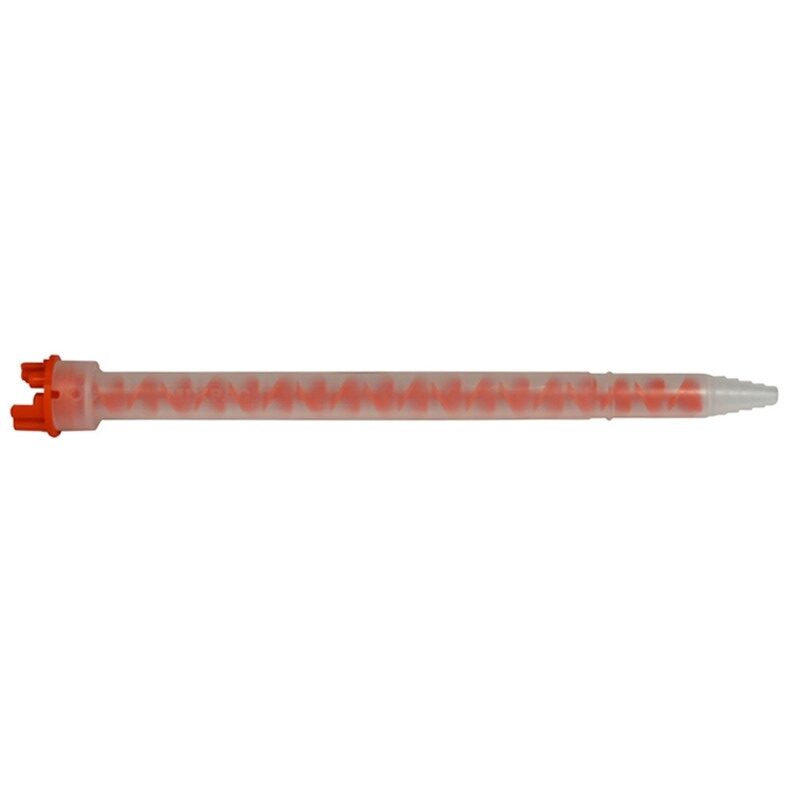
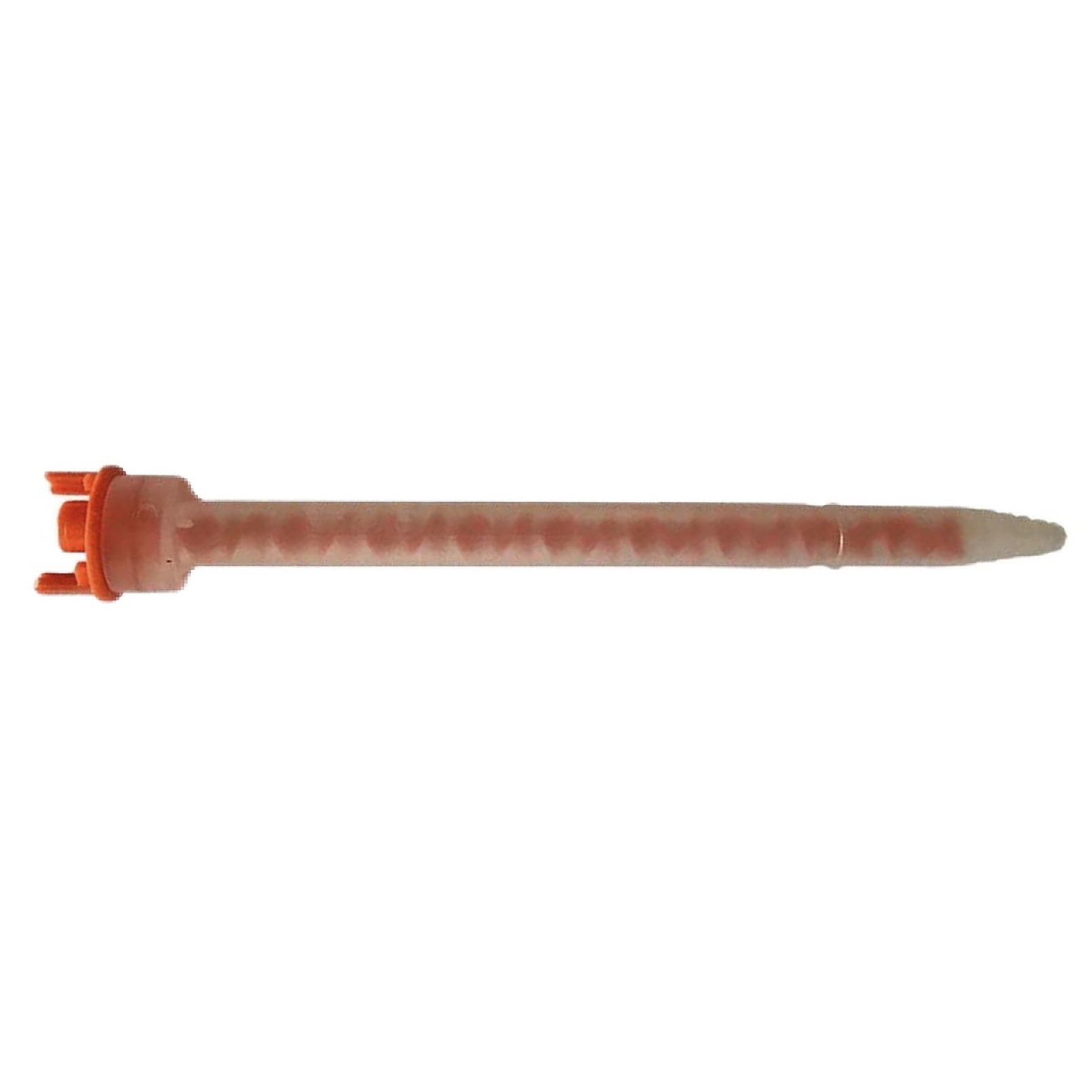
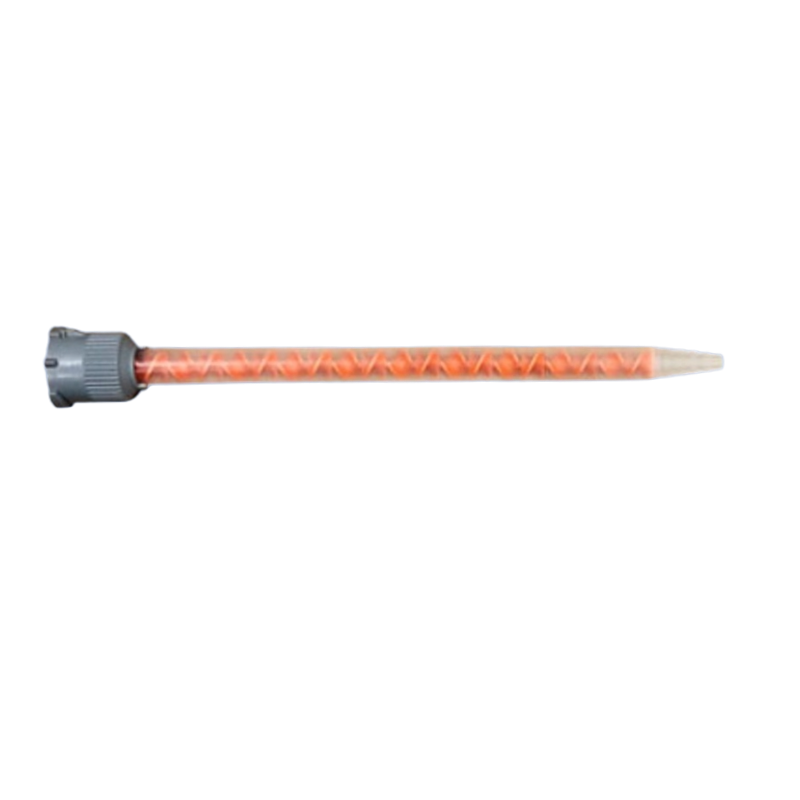
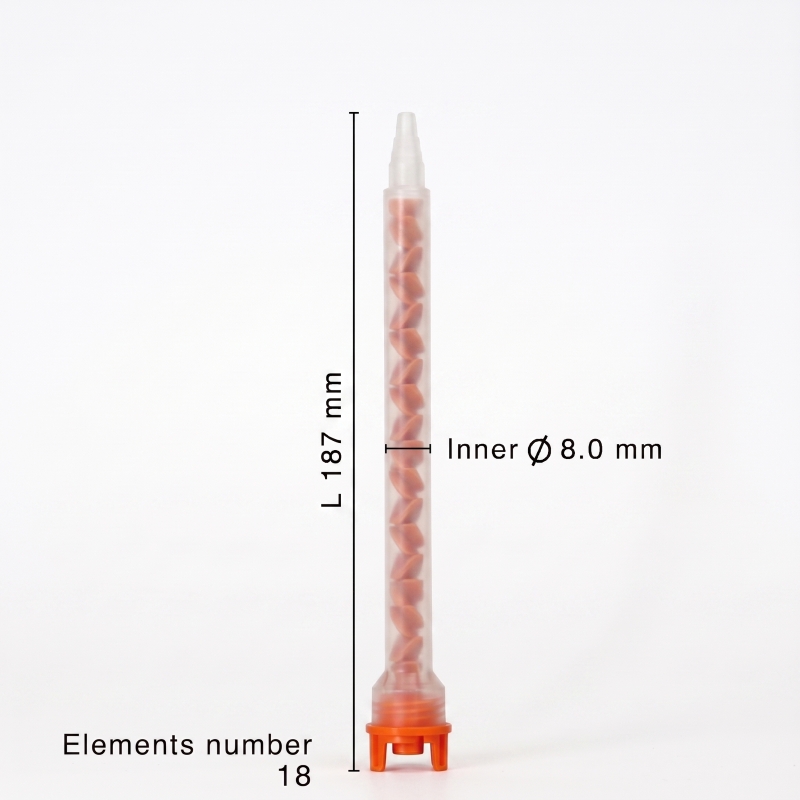
- Even color distribution through the static mixer is the visual check for a proper mix.
- Cured adhesive changes color to visually confirm cure. The color depends on which accelerator is used.
- Cure can be sped up with modest heat below 150°F. Run a functional trial before committing a heated process.
- Resists dilute acids, alkalis, solvents, greases, oils, moisture, salt spray, and weathering, with good resistance to indirect UV.
- Do not re-expose the adhesive to air once parts are mated. Reposition by sliding, not by lifting and re-setting.
- Clean tools before cure with isopropyl alcohol, acetone, or MEK.
Common Applications
- Replacing welding, brazing, and riveting in metal assemblies
- Aluminum to aluminum and steel to steel bonding
- Aluminum to steel and other dissimilar metal joints
- Bonding galvanized steel, powder coated steel, and cold rolled steel
- Metal to plastic bonding on polycarbonate, ABS, and acrylic
- Channel letter and sign box fabrication
- Architectural panel and cladding assembly
- Truck, trailer, and specialty vehicle assembly and repair
- Electrical enclosure bonding
- Bonded assemblies that go on to powder coating or E-coat
- Assemblies exposed to vibration, impact, peel, and dynamic loads
Available Sizes and Part Numbers
| Package | Product | Mix Ratio | LORD Part Number |
|---|---|---|---|
| 50ml cartridge | LORD 406/19 | 4:1 | 3021024 |
| 404ml CX cartridge | LORD 406/19 | 4:1 | 3021011 |
| 415ml cartridge | LORD 406/19 | 4:1 | 3032029 |
Other LORD 406 Combinations
| Package | Product | Mix Ratio | LORD Part Number |
|---|---|---|---|
| 11 gram A-Pak | LORD 406/17 A-Pak | 10:1 | 3021007 |
| 50ml cartridge | LORD 406/17 | 10:1 | 3031908 |
| 50ml cartridge | LORD 406/19GB Grey | 4:1 | 3021067 |
| 404ml CX cartridge | LORD 406/17 | 10:1 | 3021009 |
| 415ml cartridge | LORD 406/19 Black | 4:1 | 3032033 |
| 415ml cartridge | LORD 406/19GB | 4:1 | 3032003 |
| 415ml cartridge | LORD 406/19GB Grey | 4:1 | 3032004 |
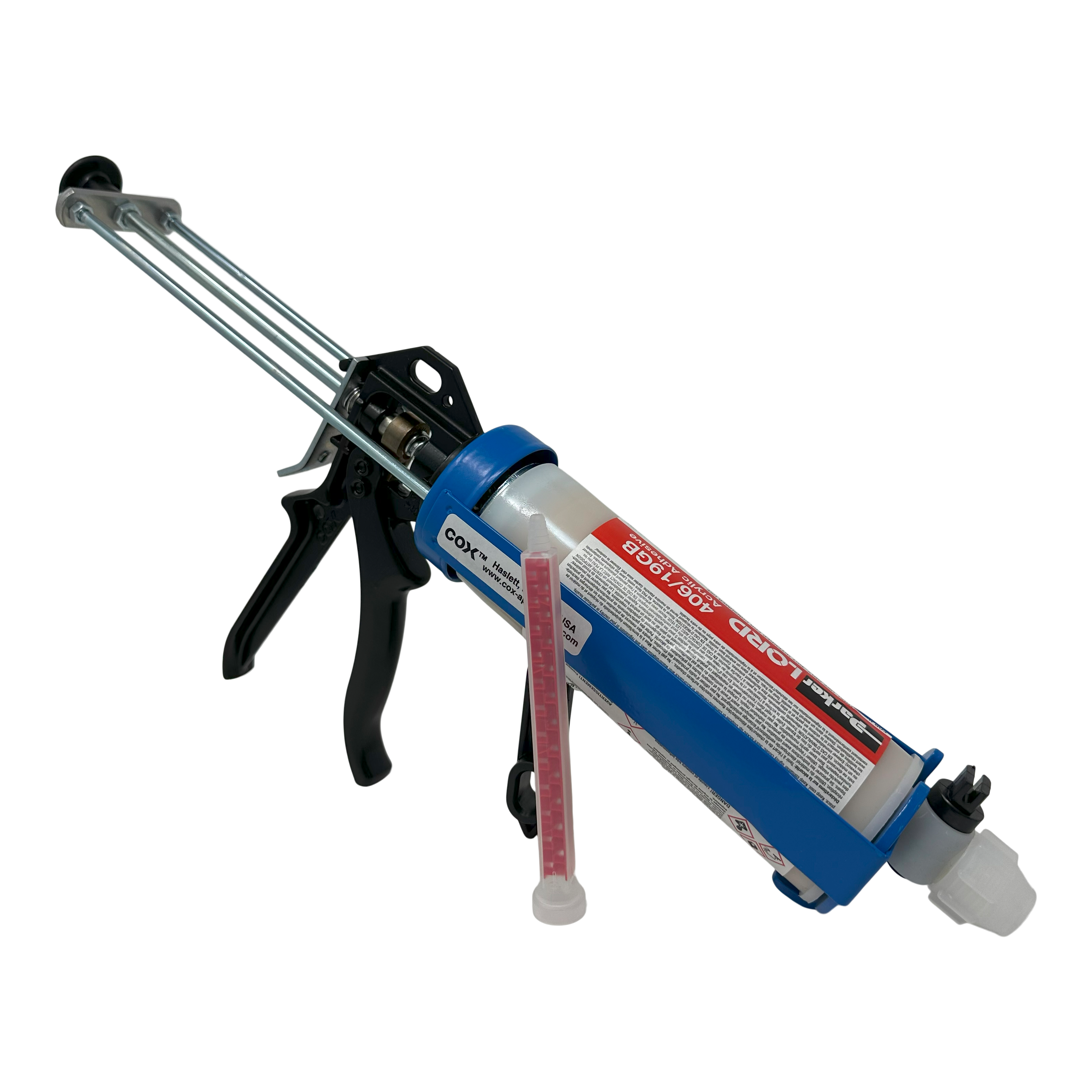
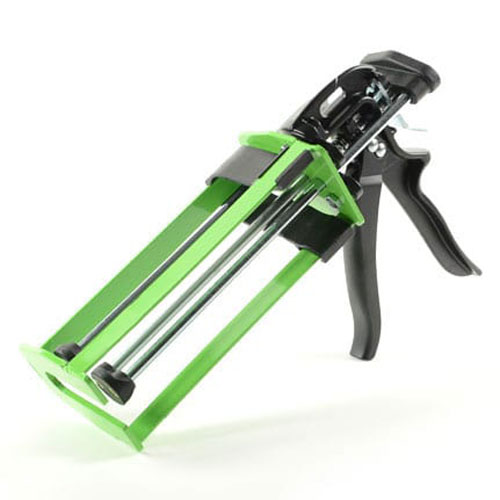
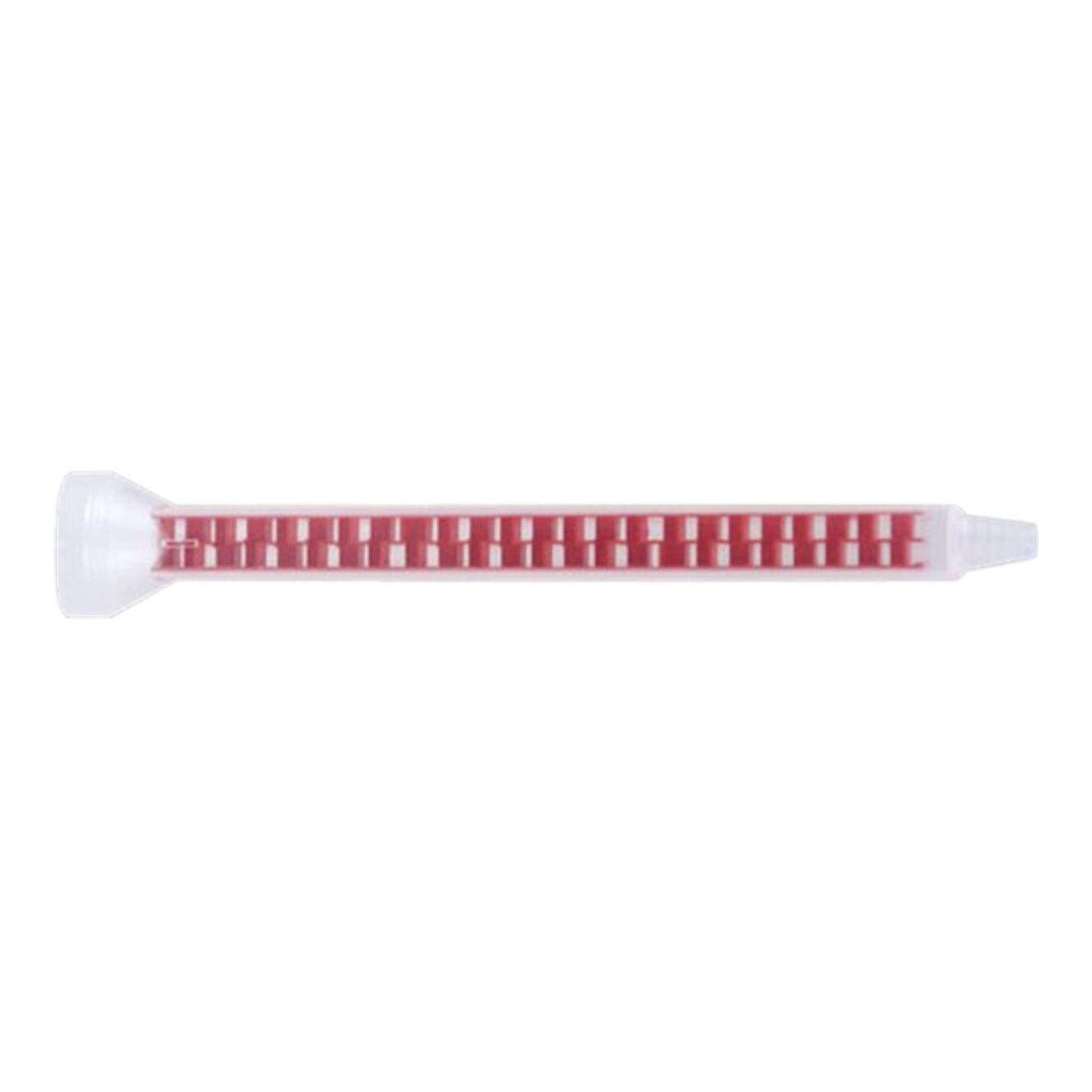
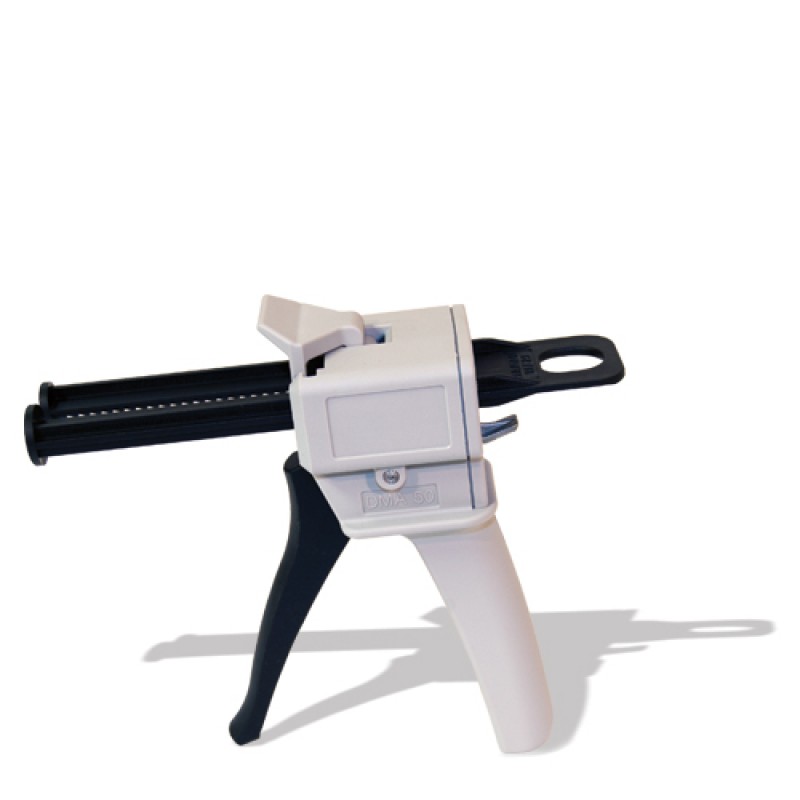
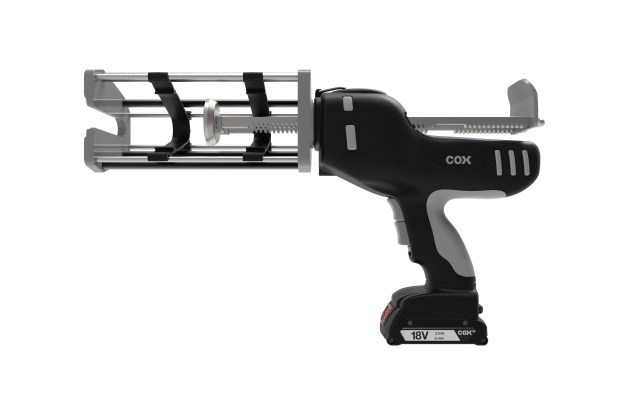
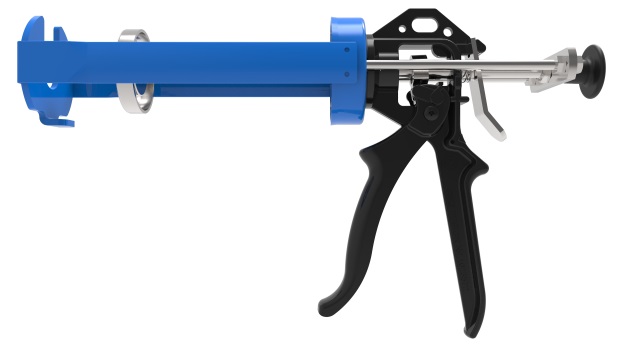
LORD 406/17 runs at a 10:1 mix ratio and needs 10:1 dispensing equipment. It will not run in the 4:1 guns shown below.
Dispensing Guns and Static Mixers
| 50ml Cartridge | 404ml CX Cartridge (co-axial) | 415ml Cartridge (side by side) |
|---|---|---|
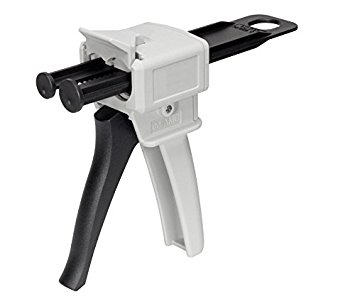 4:1 B-style, 50ml
|
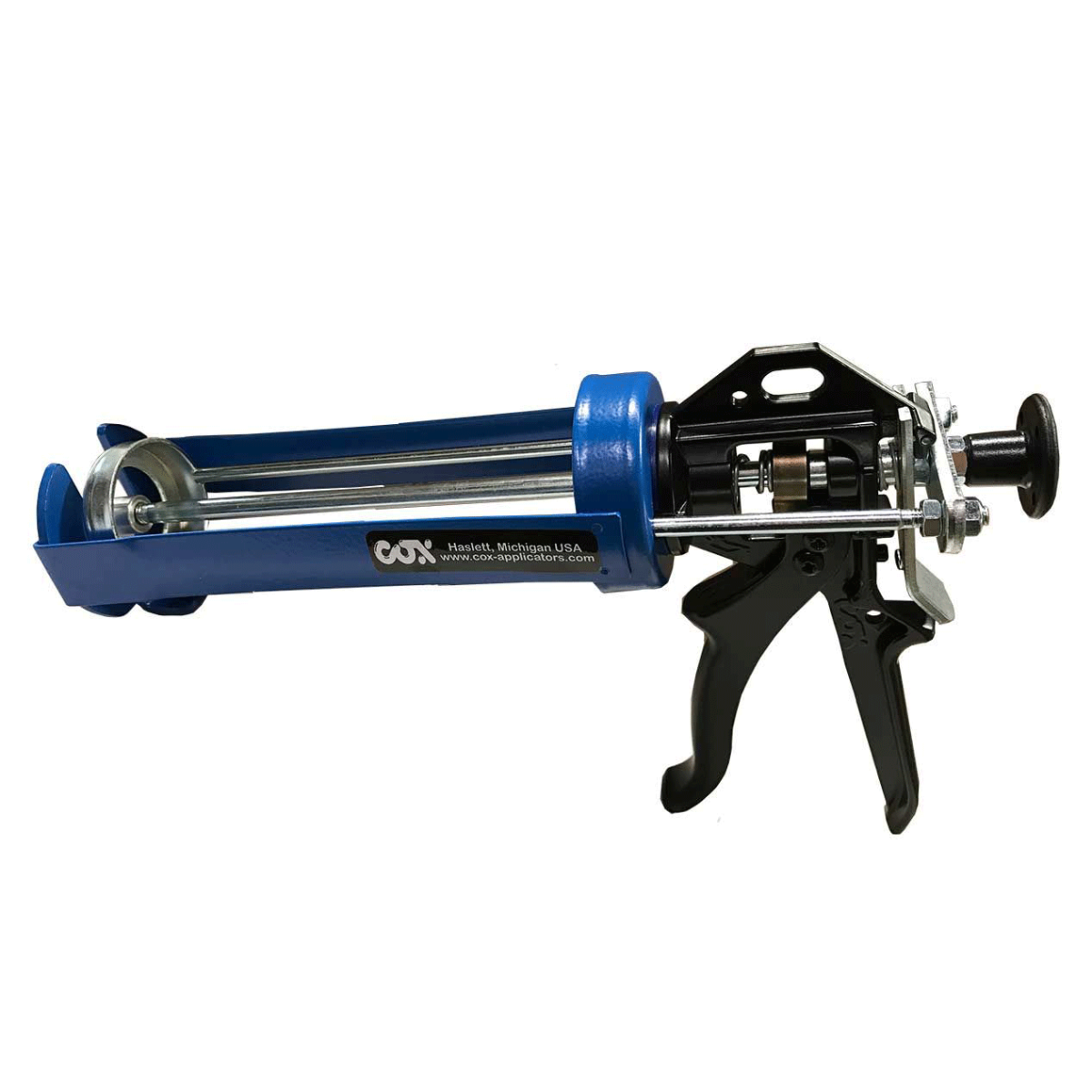 Set to the 4:1 mix ratio
|
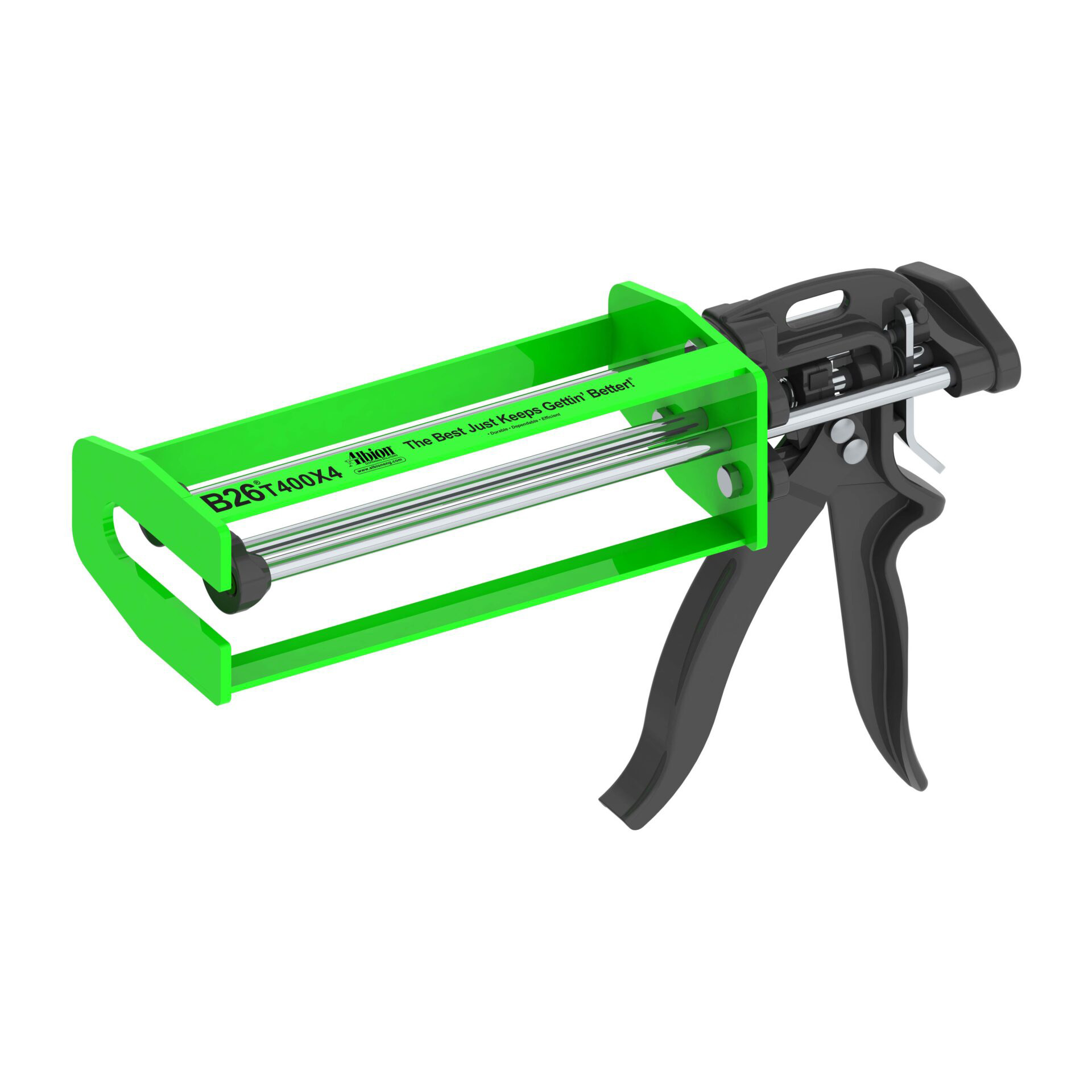 4:1, 415ml side by side
|
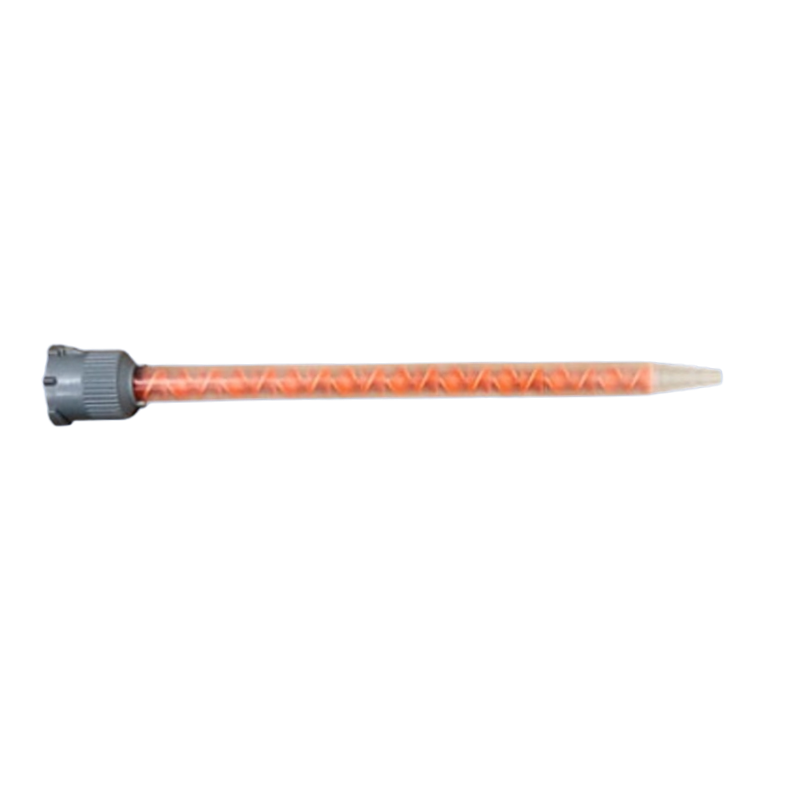 |
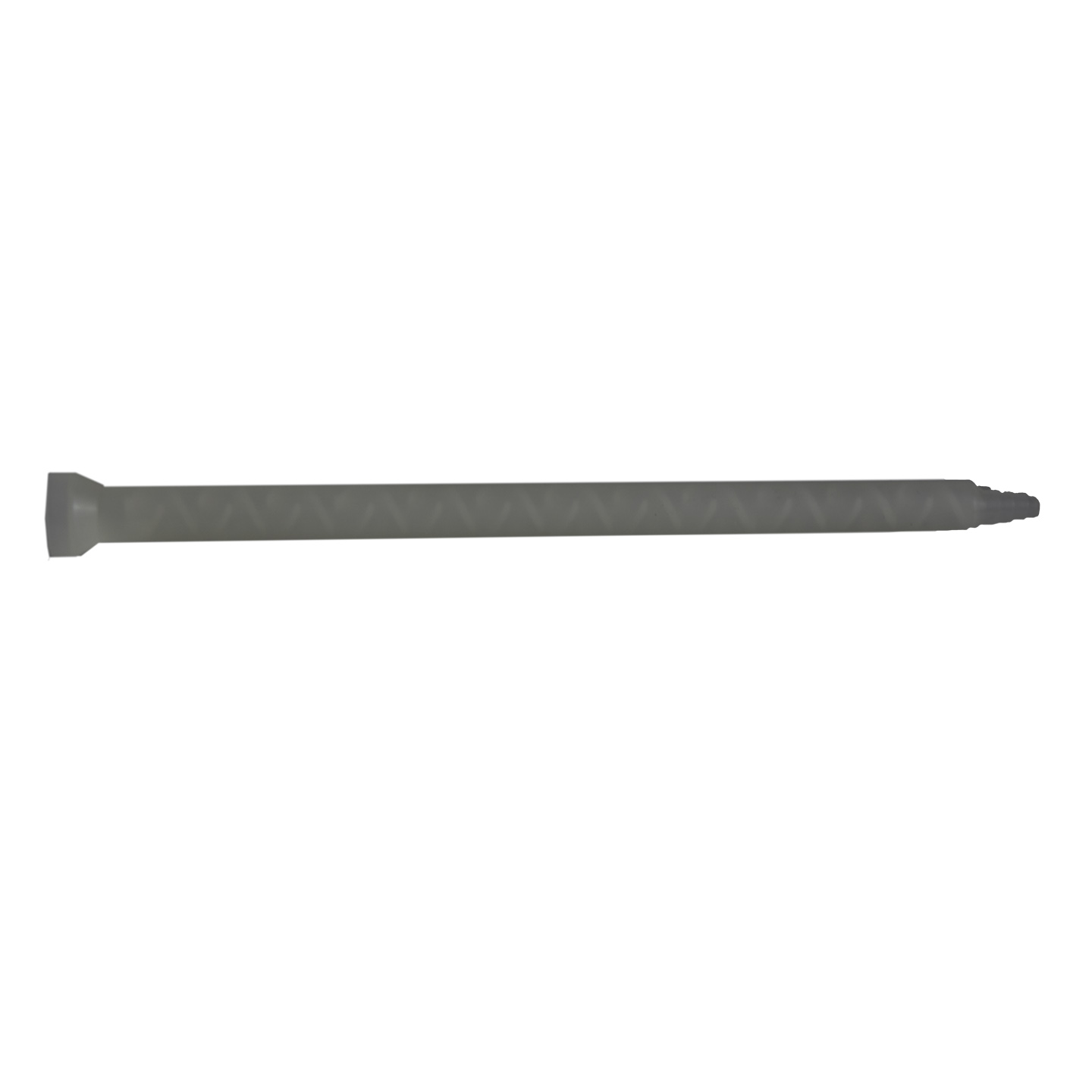 |
 |
Frequently Asked Questions
How do you bond metal without welding?
A two-part structural acrylic like LORD 406/19 is the standard answer for production metal joining without heat. Clean the surfaces of grease and loose oxides, dispense the 4:1 adhesive through a static mixer, mate the parts within the 6 to 10 minute working time, and clamp until handling strength at 12 to 17 minutes. Full cure is 24 hours at room temperature. No welder, no oven, no post-weld grinding.
Can you bond aluminum to steel?
Yes. Dissimilar metal joints are one of the main reasons shops move to structural acrylic. Welding aluminum to steel is impractical, but an adhesive bonds them directly. Parker LORD tested 406/19 at 3,000 psi lap shear on 6061T6 aluminum and 2,500 psi on galvanized steel, both with a dry rag wipe as the only surface prep.
Will LORD 406 survive powder coating?
Yes. Parker LORD ran 406/19 coupons on 1010 cold rolled steel through 400°F for 2 hours and again for 100 hours. Lap shear after cooling to room temperature was comparable to the room temperature control, and Parker LORD notes bond integrity increases once the assembly cools. The catch is that hot tear strength is very low at bake temperature, so heavy assemblies need to be fixtured, blocked, or spot welded so nothing slips in the oven.
Why did the adhesive turn orange or brown after the oven?
That is normal. Cured 406 reads light green or tan to green after a room temperature cure. Paint bake and E-coat temperatures shift it to orange or tan, and long exposure takes it to brown. Parker LORD states the bond integrity is unchanged and increases once the assembly returns to room temperature.
Can LORD 406 replace rivets?
Parker LORD formulated the 400 Series to replace welding, brazing, riveting, and other mechanical fastening. It also bonds prefinished and coated metal, so parts do not have to be drilled, masked, or refinished. Verify the joint design and load case against your own application before removing mechanical fasteners from a structural assembly.
Does LORD 406 bond plastic to metal?
Yes. It bonds engineered thermoplastics including polycarbonate, ABS, and acrylic. Most plastics need only a simple cleaning before bonding, though some benefit from light abrading.
What is the difference between LORD 406/19, 406/17, and 406/19GB?
The adhesive is the same. The accelerator changes the mix ratio and the cured bondline. 406/19 mixes 4:1 and cures tan to green, and that system carries the UL 746C certification. 406/17 mixes 10:1 and needs 10:1 dispensing equipment. 406/19GB mixes 4:1 and contains glass beads that hold a controlled bondline thickness. 406/19 Black mixes 4:1 and cures black where the glue line shows.
How long does LORD 406/19 take to cure?
At 75°F you get 6 to 10 minutes of working time, handling strength at 12 to 17 minutes, and full cure in 24 hours. Parts have to stay clamped in contact the whole time. Modest heat below 150°F speeds the cure.
Does LORD 406 need surface prep?
Minimal. Remove grease, loose contamination, and poorly adhering oxides from metal. Normal mill oils and drawing compounds usually do not cause a problem. Most plastics just need a simple cleaning, though some benefit from abrading.
What is the shelf life of LORD 406?
Nine months stored below 80°F in the original unopened container. Parker LORD recommends 40 to 50°F storage. If it is stored cold, let it come back to room temperature before dispensing, and keep it out of direct sunlight.
Which mix ratio and gun does LORD 406/19 use?
4:1 by volume, 3.02:1 by weight. The 50ml runs in a 4:1 B-style gun, the 404ml CX runs in a co-axial gun set to 4:1, and the 415ml runs in a 4:1 side by side 400 series gun. Handheld cartridges meter the ratio for you.
How do you remove cured LORD 406?
Clean uncured adhesive off tools with isopropyl alcohol, acetone, or MEK. Once it is cured, heat it to 400°F or above to soften the bond so parts can be separated and the adhesive scraped off.
Related Products
- LORD 403/19 Structural Acrylic Adhesive (4:1) for a 2 to 4 minute work time
- LORD 410/19GB Structural Acrylic Adhesive (4:1) for a 20 to 30 minute work time
- LORD 406/19GB Structural Acrylic Adhesive with Glass Beads for controlled bondline thickness
- LORD 406/19 Black for a black glue line
- LORD 406/17 Structural Acrylic Adhesive (10:1) for shops running 10:1 equipment
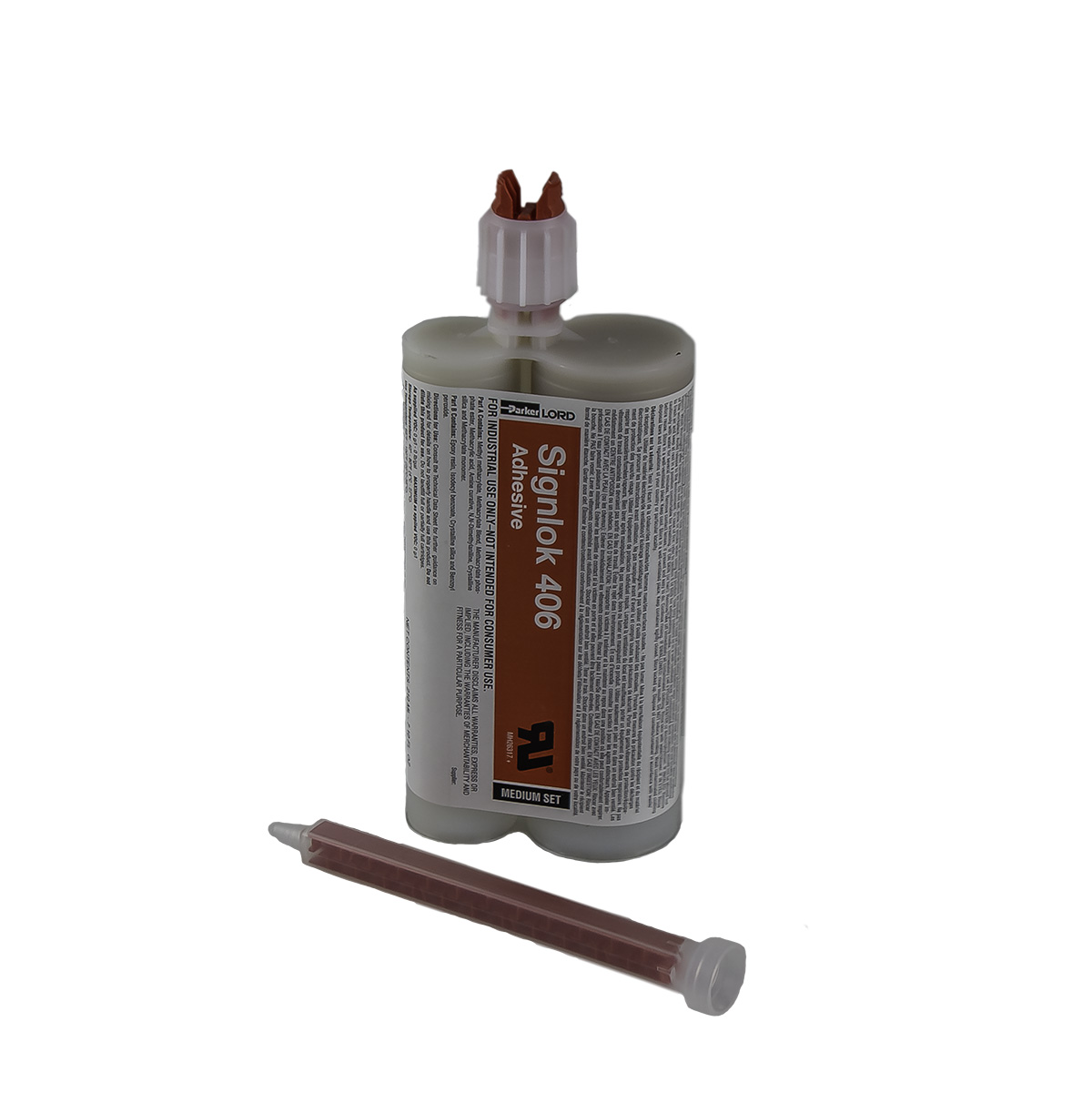
- LORD Signlok 406 in the 210ml sign shop cartridge
- Metal Bonding Adhesives
- LORD Signlok Adhesives for Sign Fabrication
- Reverse Channel Letter Bonding System


Reviews
There are no reviews yet.