

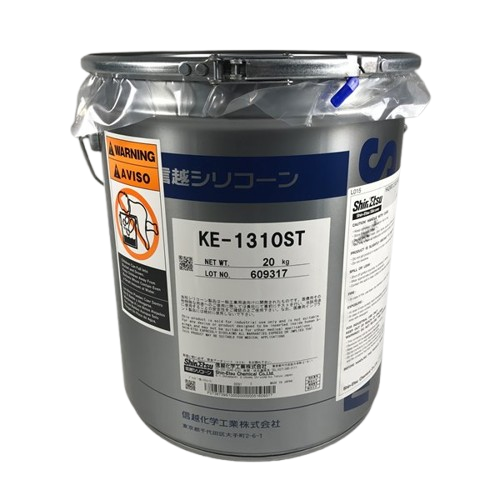


Description
Shin-Etsu KE-1310ST Silicone is a translucent, two-component addition-cure material for strong, dimensionally stable molds and selected potting work. The base is combined with CAT-1310 catalyst at a 100:10 ratio by weight. Once cured, the rubber offers high tensile and tear strength, low shrinkage, and easy release, making it useful for molds that must hold detail through repeated casting cycles.
Where This Moldmaking Silicone Works
KE-1310ST is suited to complex molds used with epoxy and urethane casting resins. Its translucent appearance can help a fabricator see a master through the mold when planning split lines or checking fill around detailed geometry. The cured material combines a Shore A hardness near 40 with elongation around 380 percent, giving the mold enough body to maintain shape while still flexing during demolding. Low shrinkage supports dimensional consistency when reproducing patterns, prototypes, decorative parts, tooling details, and production components.
Shin-Etsu KE-1310ST Silicone Processing
Measure the base and CAT-1310 by weight, then mix thoroughly while scraping the sides and bottom of the vessel. The uncured base is high viscosity, so vacuum deaeration is recommended before pouring over the prepared master. Addition-cure silicones can be inhibited by certain contaminants on masters, tooling, or nearby materials. Run a small compatibility test when the surface history is unknown, and use release agents only after confirming they do not interfere with cure.
Typical Properties
| Property | Typical value |
|---|---|
| SKU | SHI-KE1310ST |
| Product type | Addition-cure moldmaking silicone base |
| Appearance | Translucent |
| Catalyst | CAT-1310 |
| Mix ratio by weight | 100:10 |
| Working time | About 2 hours |
| Cure condition | 24 hours at 23 C |
| Shore A hardness | 40 |
| Tensile strength | 5.9 MPa |
| Tear strength | 23 kN/m |
| Elongation | 380 percent |
| Usable temperature range | -40 C to 175 C |
Condition the components and master at a stable shop temperature before mixing. Prepare enough material to fill the mold without introducing a cold joint, but stay within the working time. Pour in a thin stream at the lowest point and let the silicone rise around the master. Keep the mold undisturbed through the stated cure interval. Published properties are typical values rather than acceptance specifications, so production users should qualify the complete process with their resin, master surface, geometry, and cure conditions.
Explore related molding materials for casting and potting. For the manufacturer’s broader silicone portfolio, visit Shin-Etsu Silicone Global.
Need Help?
Need help matching catalyst quantity, mold size, or casting resin? Call (800) 220-1966 or email [email protected].



Reviews
There are no reviews yet.