


Description
|
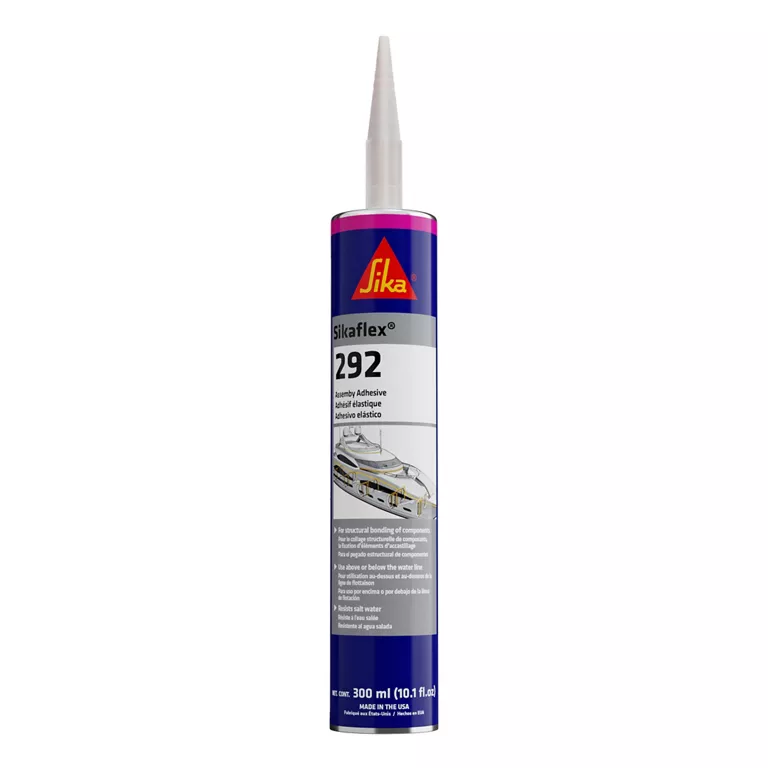
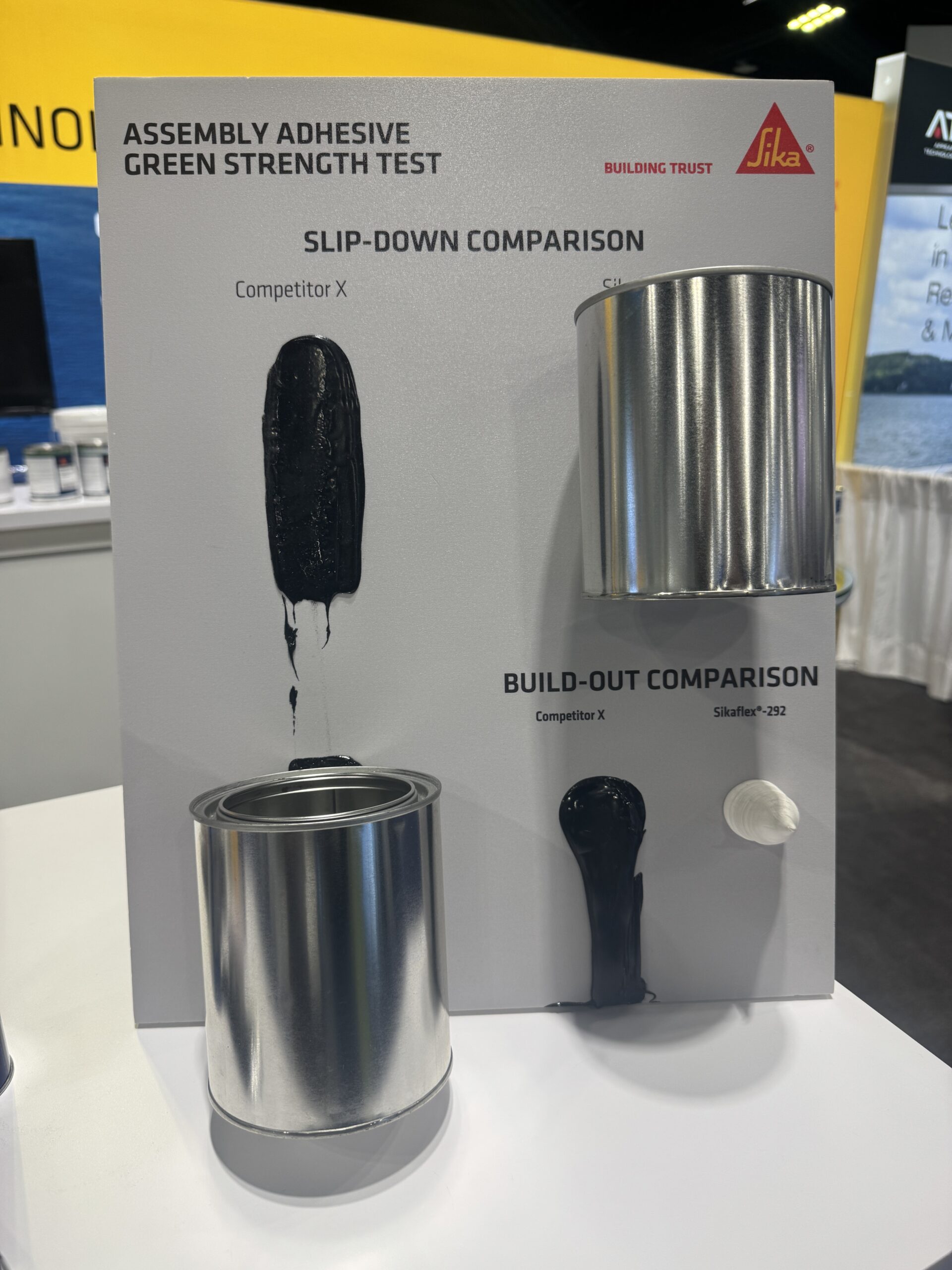
Structural Bonding • Marine Adhesive Sikaflex 292 marine adhesive from Sika is a non-sag, 1-component, moisture-curing polyurethane for structural joints that see high dynamic stress. Boat builders and repair yards use it to bond aluminum (including anodized finishes), fiberglass (GRP), ABS, and ceramic parts, plus metal primers and 2-component paint coatings. The thixotropic paste holds its shape once applied and cures from moisture in the air, so there is nothing to mix. Made in the USA and supplied in a 300 ml cartridge. Sika positions it as the structural alternative to 3M® 5200™ for shops that want a bond they can service later. The comparison is covered below. |
 |
Key Product Details
| Property | Value |
|---|---|
| Chemical Base | 1-component polyurethane |
| Color | White |
| Cure Mechanism | Moisture-curing |
| Density (uncured) | 1.20 kg/l |
| Non-sag Properties | Good |
| Application Temperature | 10 to 35 °C (50 to 95 °F) |
| Skin Time | 40 minutes (A) |
| Open Time | 35 minutes (A) |
| Curing Speed | See Diagram 1 in the TDS |
| Shrinkage | 6 % |
| Shore A Hardness (ISO 48-4) | 50 |
| Tensile Strength (ISO 527) | 3 MPa (430 psi) |
| Elongation at Break (ISO 527) | 400 % |
| Tear Propagation Resistance (ISO 34) | 7 N/mm (40 pli) |
| Tensile Lap-Shear Strength (ISO 4587) | 2 MPa (290 psi) |
| Service Temperature | -40 to 90 °C (-40 to 194 °F). Exposure up to 130 °C (266 °F) for 4 hours or 150 °C (302 °F) for 1 hour. |
| Shelf Life | 9 months (B) |
| Packaging | 300 ml cartridge |
| Country of Manufacture | USA |
(A) 23 °C (73 °F) / 50 % r.h. (B) Storage below 25 °C (77 °F). Typical values from the Sika product data sheet, version 03.01 (04-2023).
Seek manufacturer’s advice and perform tests on original substrates before using Sikaflex 292 on materials prone to stress cracking. Suitable for experienced professional users only.
Downloads: Sikaflex 292 TDS (PDF) | Sikaflex 292 SDS (PDF)
Performance in Production
- A Good non-sag rating means the bead holds its shape on vertical joints instead of slumping before the part is set.
- A 35 minute open time and 40 minute skin time at 23 °C and 50 % relative humidity leave time to set and align parts. In hot, humid weather the open time drops significantly, so plan the work so every part is installed inside it.
- Shore A 50 with 400 % elongation at break gives a cured bond line that flexes with the joint. That is why Sika specifies 292 for structural joints under high dynamic stress.
- Good gap-filling lets the bead take up uneven bond lines. A triangular bead, as drawn in the TDS, keeps the bondline thickness uniform when the part is pressed in.
- One component means no mixing and no meter-mix equipment. It cures from moisture in the air and runs through manual, pneumatic, or electric piston guns.
- Cold slows the cure because cold air holds less moisture, and the paste gets stiffer. Let the cartridge come up to ambient temperature before use. Substrate and adhesive between 15 and 25 °C (59 to 77 °F) is the optimum.
Common Applications
- Structural joints in boat building and marine repair that see high dynamic stress
- Marine joints above and below the waterline
- Bonding aluminum, including anodized finishes
- Bonding to metal primers and 2-component paint coatings
- Bonding fiberglass (GRP, unsaturated polyester resin) parts
- Bonding ABS plastic parts (test first on any plastic prone to stress cracking)
- Bonding ceramic materials
- Deck-to-hull joints
Available Sizes
| Size | Package | Color | SKU |
|---|---|---|---|
| 300 ml | Cartridge | White | SIK696275 |
Sikaflex 292 as an Alternative to 3M 5200
Related Products
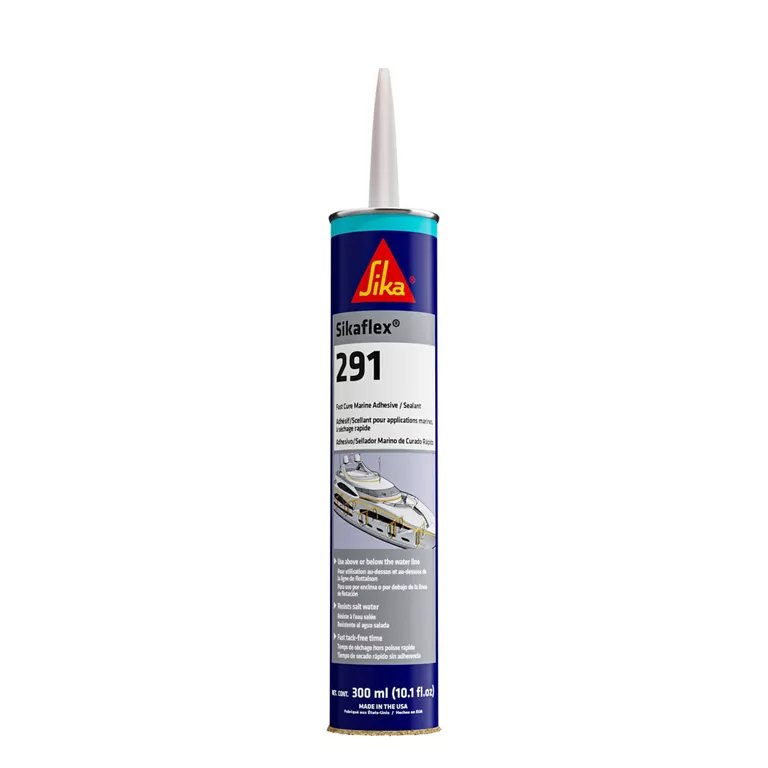
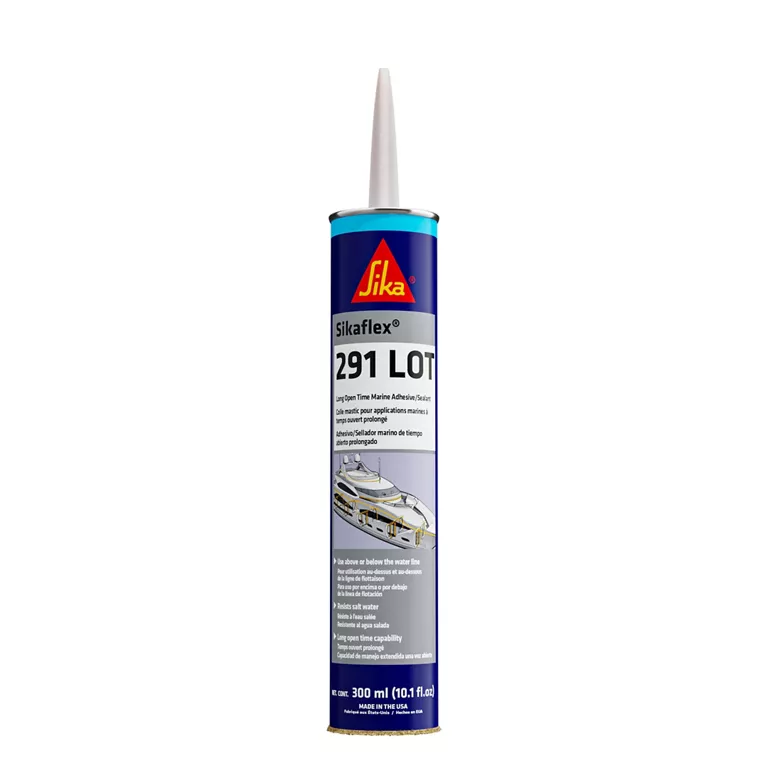
- Sika Sikaflex-291 Marine Adhesive / Sealant – 300ml Cartridge: Sika’s general-purpose marine sealant for bedding hardware, sealing, and light-duty bonding
How to Apply Sikaflex 292 for Structural Marine Bonding
These steps follow the Sika TDS. Run them on a test joint with your own substrates before production.
- Prep the surfaces. They must be clean, dry, and free of grease, oil, dust, and contaminants. Pre-treatment depends on the substrate, so check Sika’s Pre-treatment Chart for 1-component polyurethanes and verify on your original substrates.
- Condition the cartridge. Viscosity rises at low temperature, so let the cartridge sit at ambient temperature before use.
- Apply a triangular bead. The TDS drawing shows a bead about twice the finished bondline height. It presses down to a uniform thickness when the part goes in. Use a manual, pneumatic, or electric piston gun.
- Join the parts inside the open time. Hot, humid weather shortens it significantly. Never join parts once the adhesive has skinned.
- Tool and finish inside the skin time. Sika recommends Sika® Slick as the finishing agent. Test any other finishing agent for compatibility first.
- Let it cure. Cure comes from atmospheric moisture and moves inward from the surface. It runs slower at low temperatures.
- Clean up. Uncured adhesive comes off tools and equipment with Sika® Remover-208 or another suitable solvent. Cured material can only be removed mechanically. Wash hands and exposed skin right away with an industrial hand cleaner and water, and keep solvents off skin.
Substrates covered by the TDS: aluminum (including anodized finishes), metal primers and 2-component paint coatings, ceramic materials, and plastics such as GRP (unsaturated polyester resin) and ABS. Test on original substrates before using it on any material prone to stress cracking.
Frequently Asked Questions
What is Sikaflex 292 used for?
Sikaflex 292 (also called Sika 292 and Sikaflex-292) is a 1-component polyurethane marine adhesive for structural joints that see high dynamic stress. It bonds aluminum, including anodized finishes, metal primers and 2-component paint coatings, ceramic materials, and plastics such as GRP and ABS. This listing is the white 300 ml cartridge, and it is made in the USA.
Is Sikaflex 292 an alternative to 3M 5200?
Yes. Sika positions Sikaflex 292 as its structural alternative to 3M 5200 for marine bonding. Sika’s team describes a cured 292 bead as pliable enough to cut through when a joint has to be serviced. Check your joint against the TDS values above and test on your own substrates. Call us if a customer spec names 5200 and you want to talk through the swap.
What is the difference between Sikaflex 291 and Sikaflex 292?
Sikaflex 291 is Sika’s general-purpose marine sealant, used for bedding hardware, sealing, and light-duty bonding. Sikaflex 292 is the one Sika specifies for structural joints under high dynamic stress. If the joint only needs sealing, ask us about 291.
Can Sikaflex 292 be used below the waterline?
Yes. Sikaflex 292 is rated for use above and below the waterline, and the TDS lists resistance to fresh water and seawater. Surface prep still depends on the substrate and has to be verified by testing, so call us with your joint design if the bond is structural.
How long does Sikaflex 292 take to skin over and cure?
At 23 °C (73 °F) and 50 % relative humidity, Sikaflex 292 has a 35 minute open time and a 40 minute skin time. Join parts inside the open time and finish tooling inside the skin time. Cure comes from moisture in the air. The TDS cure diagram plots cured thickness against days at 23 °C and 10 °C, and cure runs slower at the lower temperature.
Can you paint over Sikaflex 292?
Yes, the TDS lists Sikaflex 292 as paintable. The TDS does not cover specific paint systems, so test your paint on a cured sample before production. Call us with your paint spec and we will help you plan the test.
Does Sikaflex 292 need a primer or surface treatment?
It depends on the substrate. Surfaces must be clean, dry, and free of grease, oil, dust, and contaminants. Sika publishes a Pre-treatment Chart for 1-component polyurethanes, and the TDS says its suggestions must be verified by tests on the original substrates. Call us with your substrate and we can point you to the right prep.
Is Sikaflex 292 resistant to fuel, oil, and seawater?
Per the TDS, cured Sikaflex 292 is generally resistant to fresh water, seawater, diluted acids, and diluted caustic solutions. It is temporarily resistant to fuels, mineral oils, and vegetable and animal fats and oils. It is not resistant to organic acids, glycolic alcohol, concentrated mineral acids and caustic solutions, or solvents.
Questions on fit for your marine bonding application? Call (800) 220-1966 or email [email protected].
3M and 5200 are trademarks of 3M Company. Sikaflex is a registered trademark of Sika Corporation. Chemical Concepts is not affiliated with 3M. Product names are used for reference only.


Reviews
There are no reviews yet.