



Description
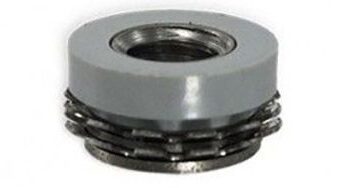
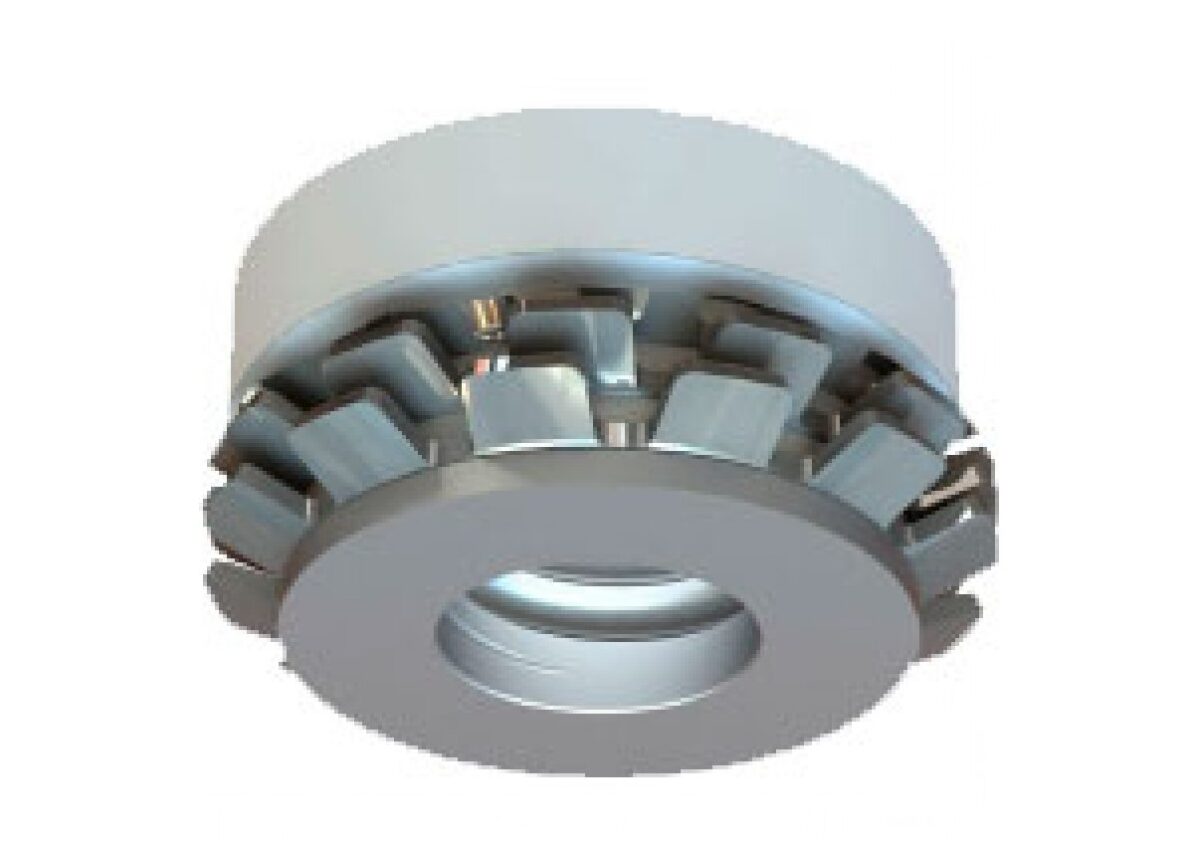
Select Your Insert
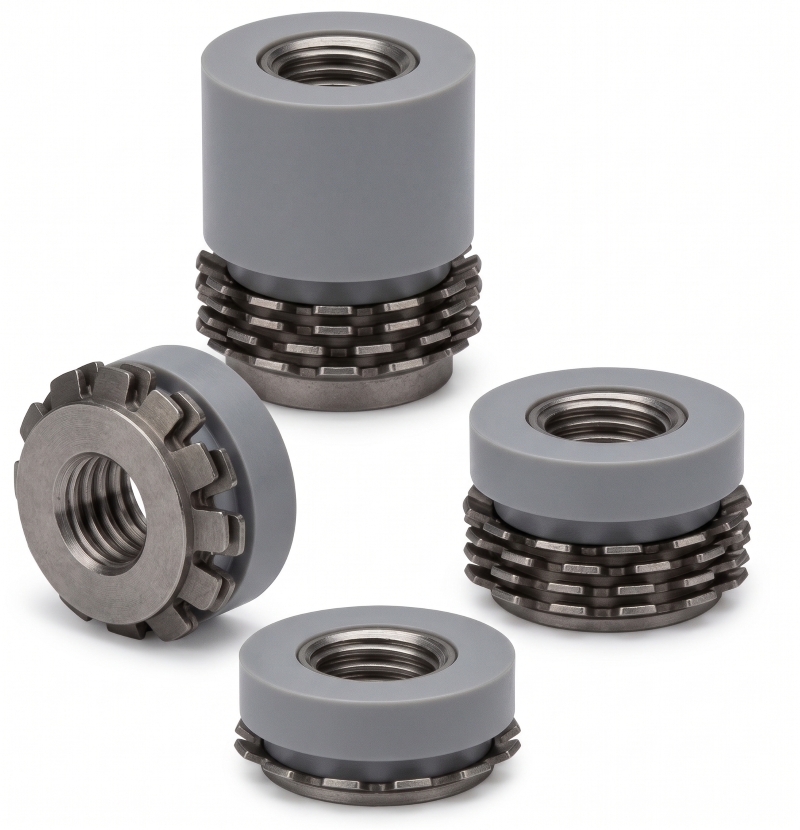
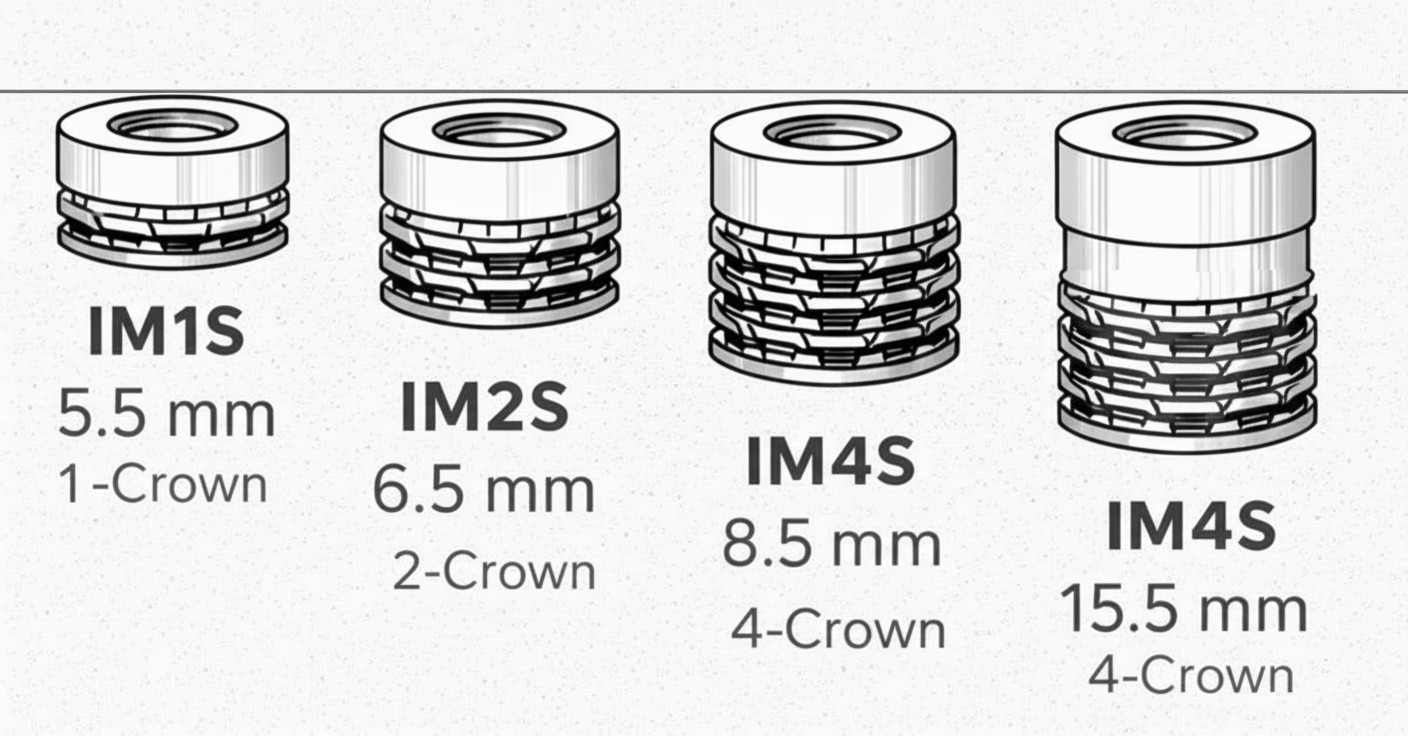
Every option below drops into the same 12 mm hole. Crown count sets the holding strength and the minimum panel thickness. Pick the deepest anchor your material will take.
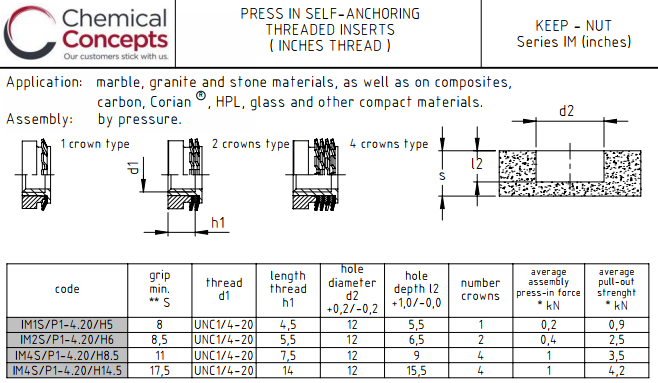
| Part | SKU | Crowns | Min. Panel | Hole Depth | Rated Pull-Out | Where It Fits |
|---|---|---|---|---|---|---|
| IM1S/P1/4-20/H5 | SPE-IM1S/P1.4-20/H5 | 1 | 8 mm (0.31 in) | 5.5 mm (0.22 in) | 0.9 kN (202 lbf) | Thin porcelain, light panels, furniture |
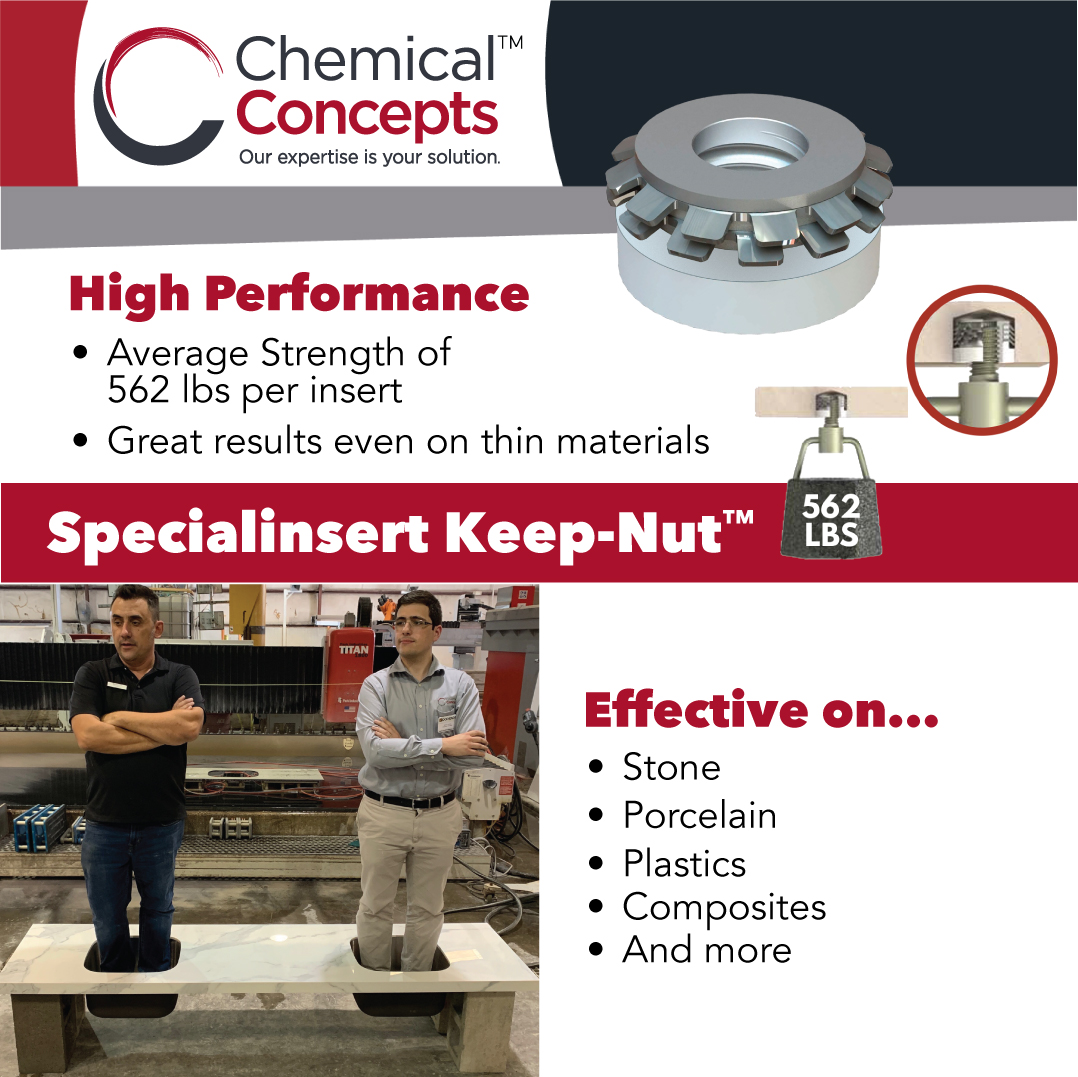
| IM2S/P1/4-20/H6 | SPE-IM2S/P1.4-20/H6 | 2 | 8.5 mm (0.33 in) | 6.5 mm (0.26 in) | 2.5 kN (562 lbf) | Undermount sinks, 10 to 12 mm panels. Most common starting point. |
| IM4S/P1/4-20/H8.5 | SPE-IM4S/P1.4-20/H8 | 4 | 11 mm (0.43 in) | 8.5 mm (0.33 in) | 3.5 kN (787 lbf) | Stone and heavier panels, 12 to 20 mm. Cladding. |
| IM2X2S/P1/4-20/H11.5 | SPE-IM2X2S/P1.4-20/H11.5 | 2 x 2 | 15 mm (0.59 in) | 11.5 mm (0.45 in) | Pending | Mid-thickness panels between the 8.5 and 15 mm inserts |
| IM4S/P1/4-20/H15 | SPE-IM4S/P1.4-20/H15 | 4 | 17.5 mm (0.69 in) | 15.5 mm (0.61 in) | 4.2 kN (944 lbf) | 20 mm and up. High-load and structural installs. |
Rated pull-out is the manufacturer’s indicative laboratory average and is not binding. Minimum panel thickness varies with the receiving material; Specialinsert recommends an assembly test on an offcut to establish the correct figure for your substrate. Hole diameter is 12 mm (+0.2 / -0.2 mm) for every part above.
Performance in Production
Common Applications
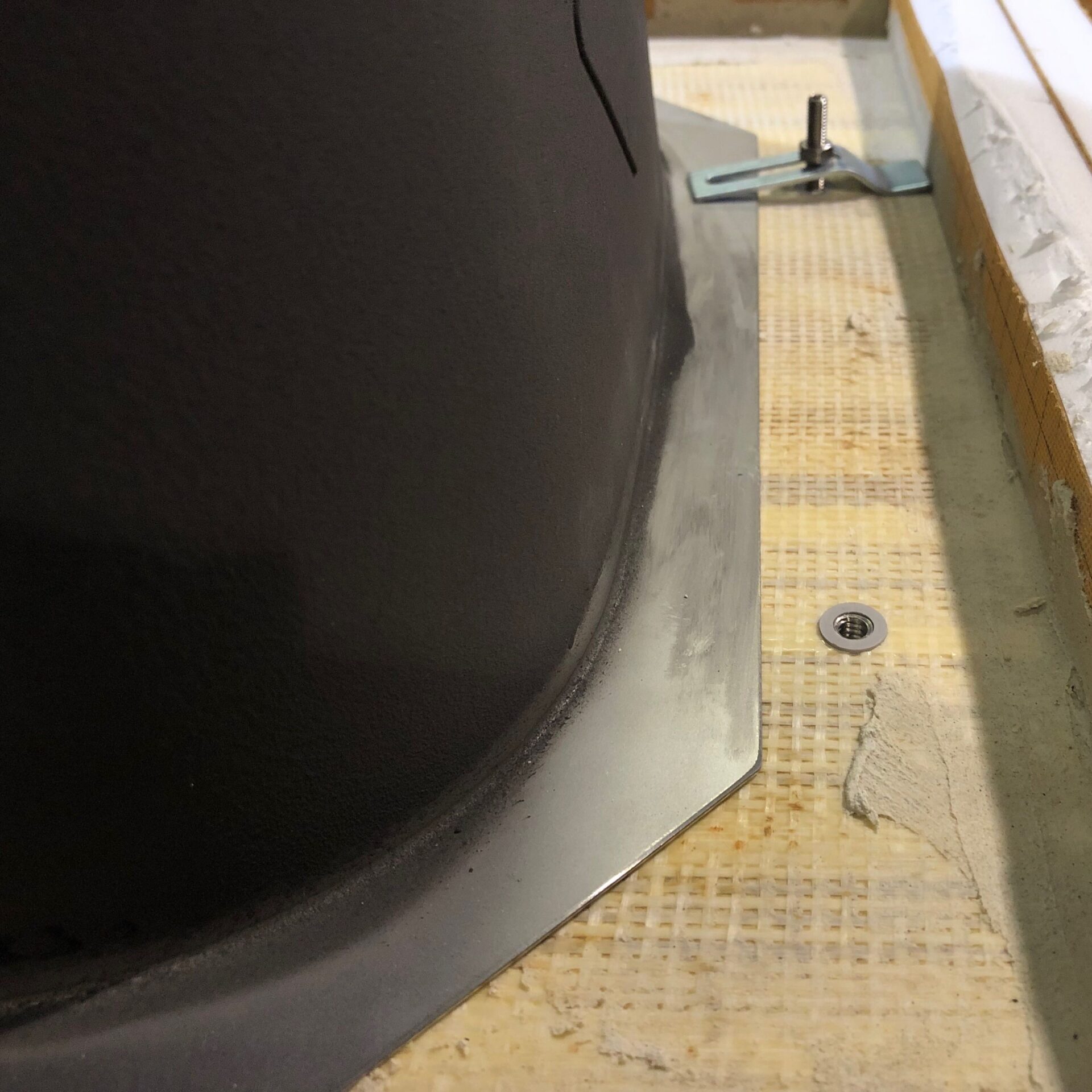
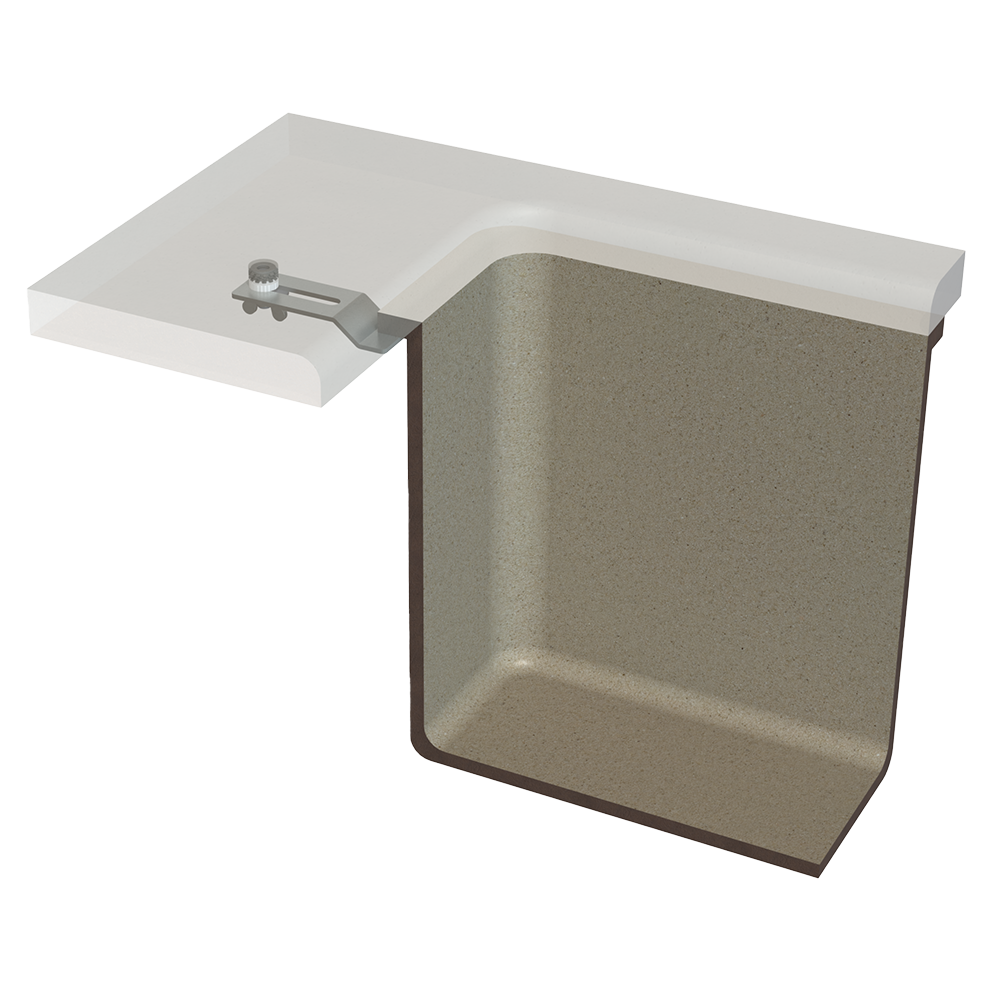
- Undermount sink mounting in granite, quartz, porcelain, and solid surface countertops
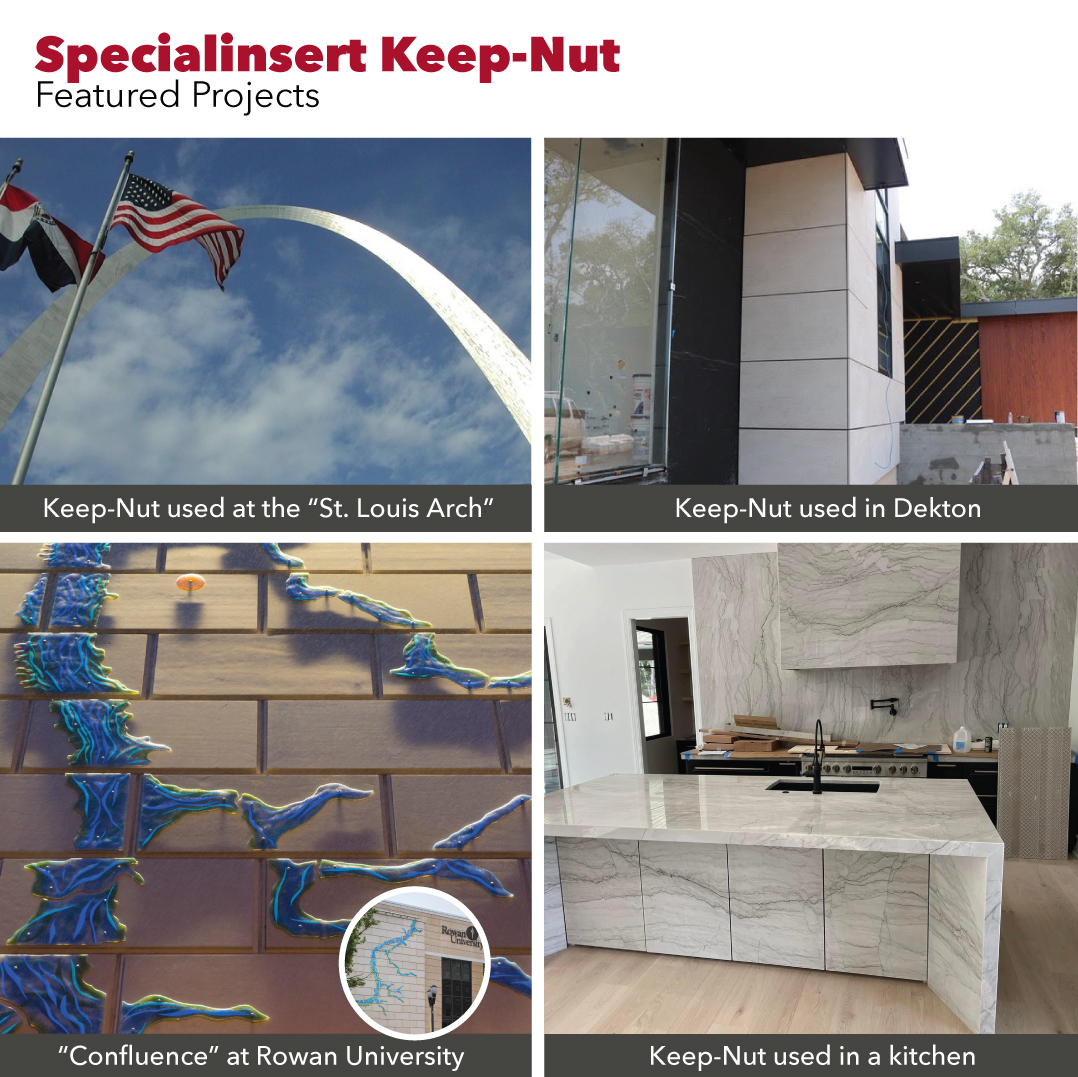
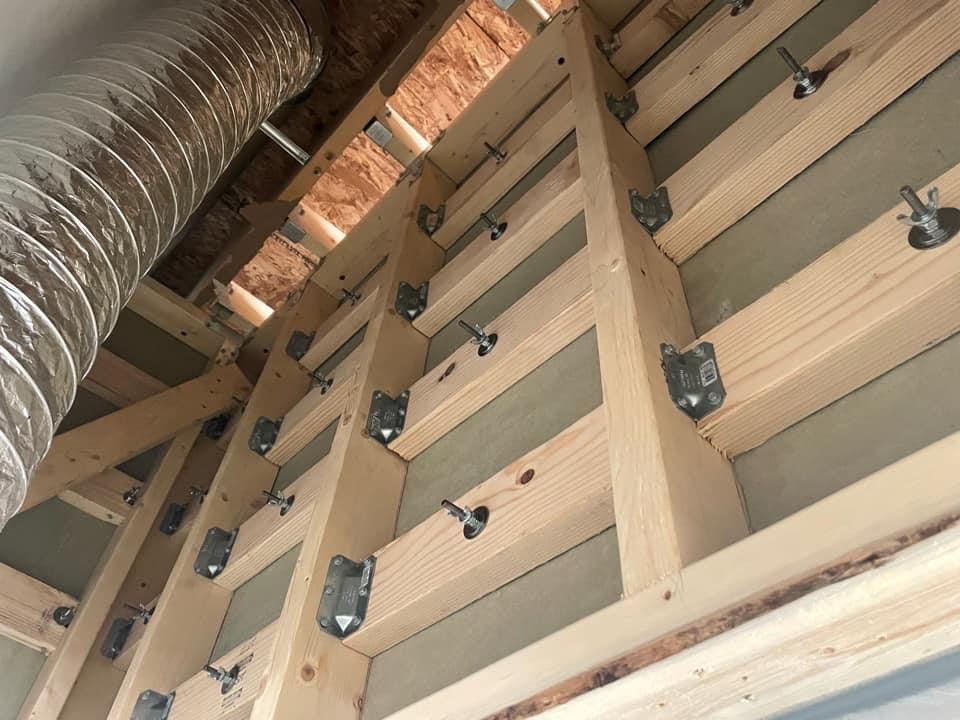
- Ventilated facade and exterior cladding panel anchoring
- Interior wall panels, fireplace surrounds, and range hood cladding
- Panel and ceiling hanging off a rail or substructure
- Furniture manufacturing and concealed joinery in stone and solid surface
- Threaded attachment points in carbon fiber, fiberglass, and composite panel
- Dishwasher bracket and hardware mounting under a countertop without drilling through
Suitable Substrates
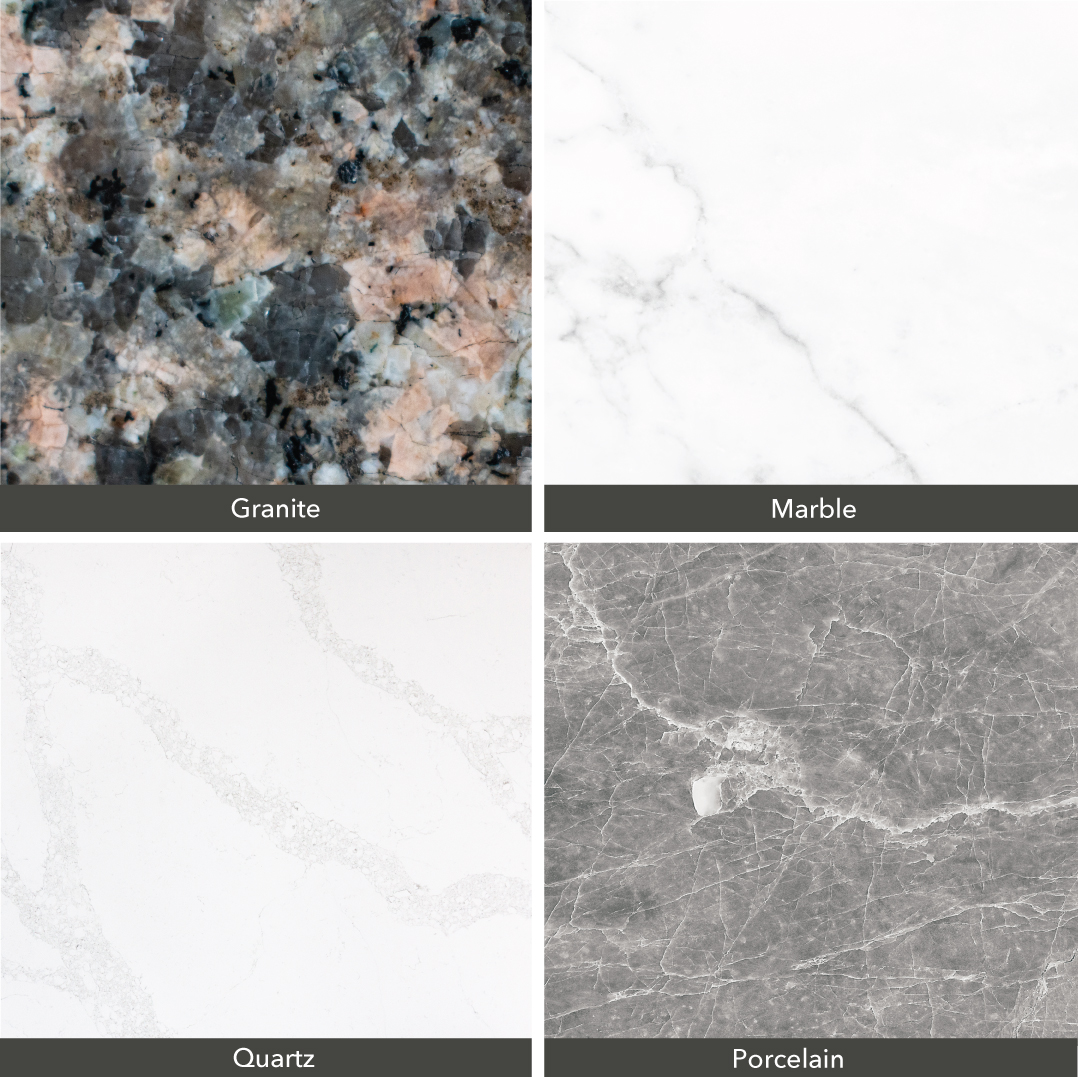
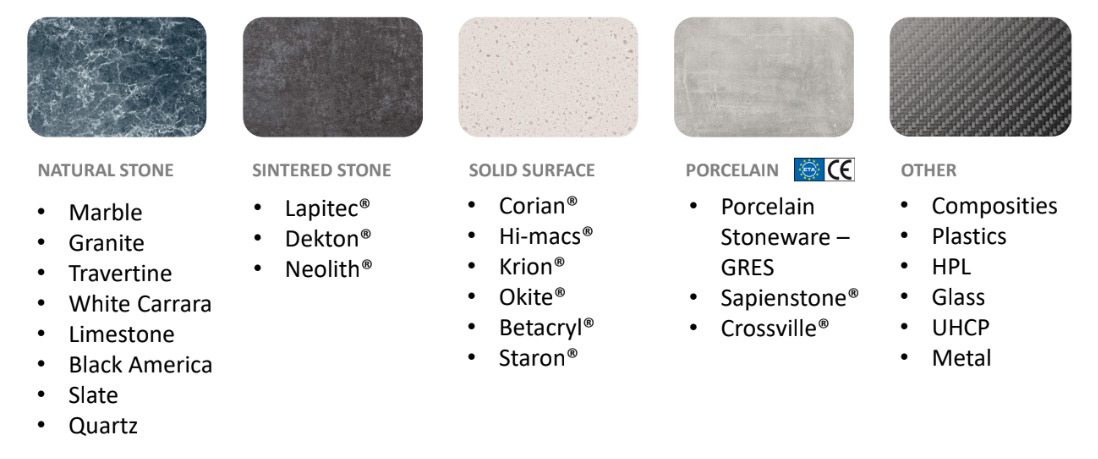
Suitable for marble, granite and other stone, sintered stone, porcelain, solid surface, composites, carbon, Corian, HPL, glass, and other compact materials. Specialinsert recommends an assembly test in the actual panel material.
Tested Pull-Out and Shear by Material
Tested by the Natural Stone Institute to ASTM C1354, except HPL and Corian, which are Specialinsert in-house results. Panel thickness is listed per row because it changes the result more than anything else here. Two 30 mm granites in this data are over 1,000 lbf apart, which is why a pull test in your own material governs and this table does not.
+View full test data, 27 tested material and insert combinations
| Material | Thickness | Insert | Tensile (lbf) | Shear (lbf) |
|---|---|---|---|---|
| Tempered glass | 5 mm | IM1S/H5 | 165 | Pending |
| HPL | 10 mm | IM1S/H5 | 247 | Pending |
| Corian | 12 mm | IM1S/H5 | 225 | Pending |
| HPL | 10 mm | IM2S/H6 | 427 | 1,021 |
| Granite, Caledonia | 10 mm | IM2S/H6 | 389 | 1,394 |
| Granite, American Mist | 10 mm | IM2S/H6 | 780 | 2,502 |
| Corian | 12 mm | IM2S/H6 | 468 | Pending |
| Sintered stone, Lapitec | 12 mm | IM2S/H6 | 436 | 1,439 |
| Sintered stone, Neolith, light | 12 mm | IM2S/H6 | 400 | 1,819 |
| Sintered stone, Neolith, dark | 12 mm | IM2S/H6 | 393 | 1,956 |
| Porcelain, Crossville | 12 mm | IM2S/H6 | 241 | 2,241 |
| Porcelain, Crossville Notorius | 13 mm | IM2S/H6 | 542 | 2,208 |
| Porcelain, SapienStone | 16 mm | IM2S/H6 | 614 | 1,670 |
| HPL | 12 mm | IM4S/H8.5 | 951 | 1,344 |
| Corian | 12 mm | IM4S/H8.5 | 839 | Pending |
| UHPC, Envel | 15 mm | IM4S/H8.5 | 441 | 1,565 |
| Sintered stone, Lapitec | 20 mm | IM4S/H8.5 | 677 | 2,338 |
| Sintered stone, Neolith Aspen Grey | 20 mm | IM4S/H8.5 | 807 | 2,579 |
| Marble | 20 mm | IM4S/H8.5 | 848 | Pending |
| Travertine | 20 mm | IM4S/H8.5 | 496 | Pending |
| Granite, Delicatus Ice | 30 mm | IM4S/H8.5 | 418 | 1,769 |
| Granite, Caledonia | 30 mm | IM4S/H8.5 | 618 | 2,082 |
| Granite, Black Absolut | 30 mm | IM4S/H8.5 | 1,428 | 2,842 |
| UHPC, Envel | 18 mm | IM4S/H15 | 603 | 1,592 |
| Sintered stone, Lapitec | 30 mm | IM4S/H15 | 1,531 | 2,626 |
| Granite, Delicatus Ice | 30 mm | IM4S/H15 | 778 | 2,190 |
| Granite, Caledonia | 30 mm | IM4S/H15 | 1,264 | 3,046 |
| Granite, Black Absolut | 30 mm | IM4S/H15 | 1,742 | 3,323 |
“Pending” means that combination has not been shear tested or the result is not published, not that it failed. Laboratory figures on specific tested specimens, offered for guidance. For a load-bearing, overhead, or exterior install, run a pull test in your actual panel material and have a qualified engineer size the anchor count and spacing.
Specifications and Materials
| Property | Value |
|---|---|
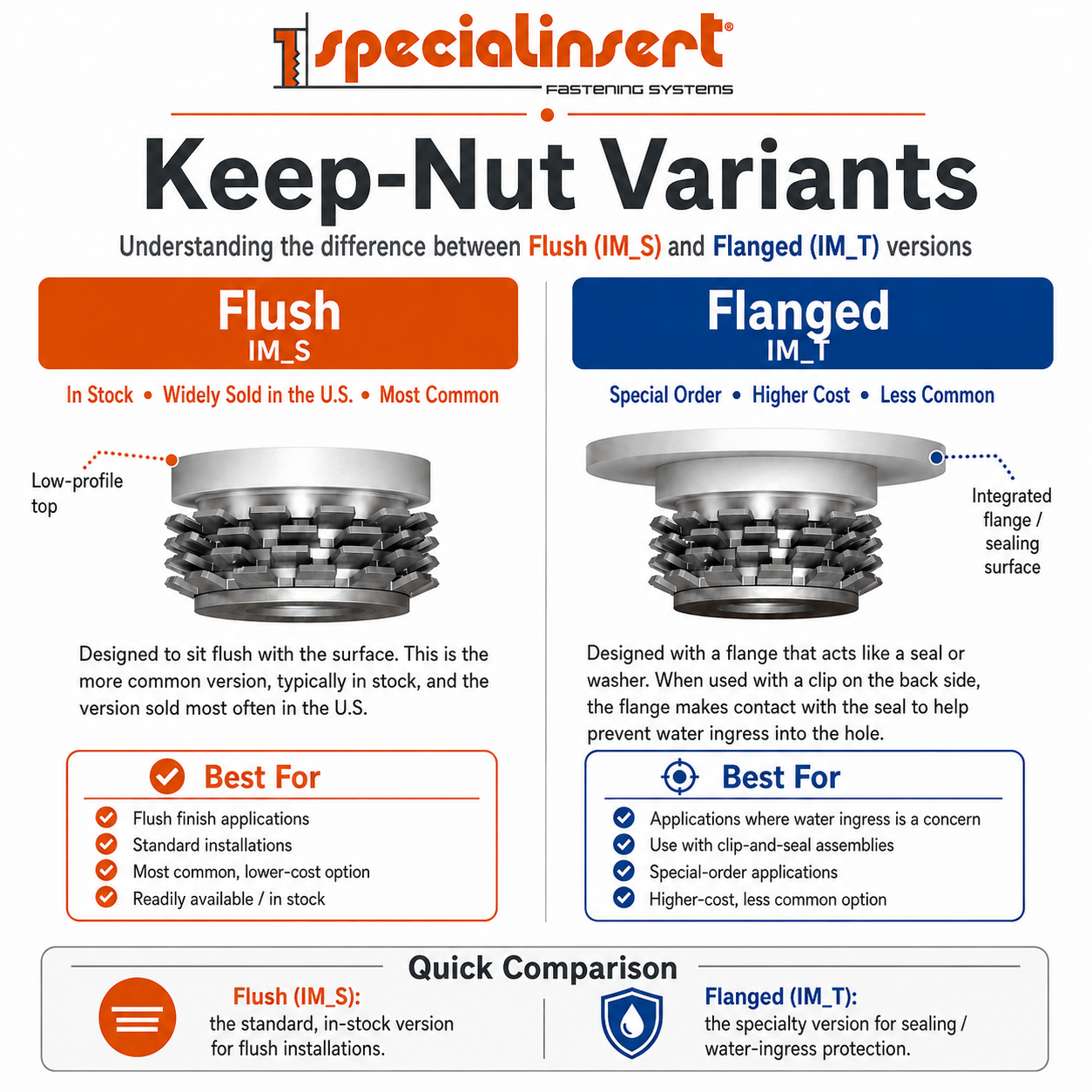
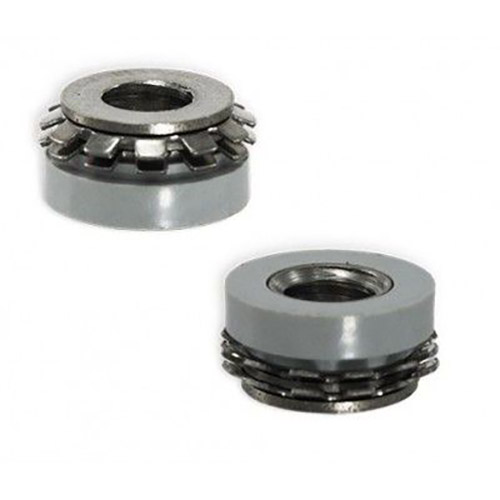
| Type | Press-in self-anchoring threaded insert, flush head (IM_S series) |
| Thread | 1/4-20 UNC, non-through |
| Thread Depth (h1) | 4.5 mm on H5, 5.5 mm on H6, 7.5 mm on H8.5, 14 mm on H15 |
| Hole Diameter Required | 12 mm (+0.2 / -0.2 mm), all heights |
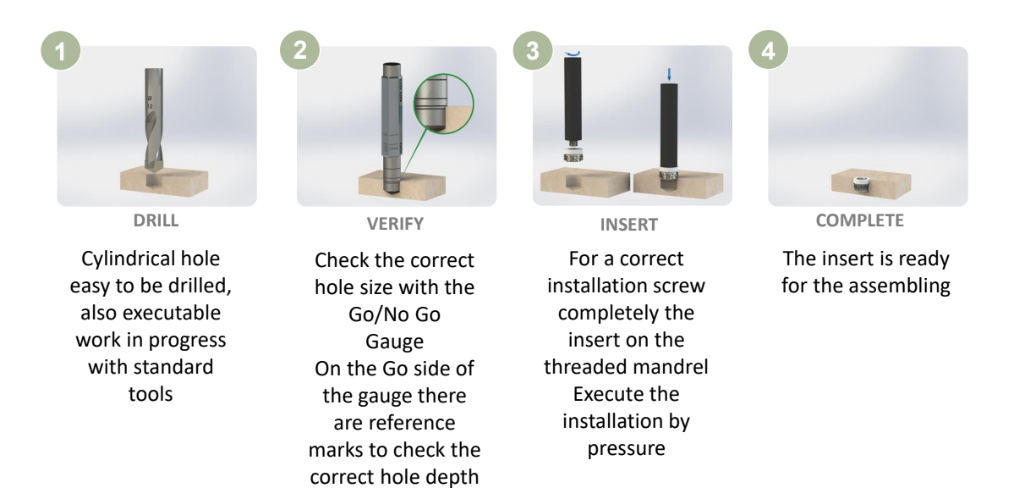
| Installation | By pressure, using a Keep-Nut setting tool. No adhesive. |
| Bush Material | 303 stainless steel |
| Crown Material | 316L stainless steel |
| Body Material | Gray polyamide PA6 |
| Finish | Natural state |
| Country of Manufacture | Italy |
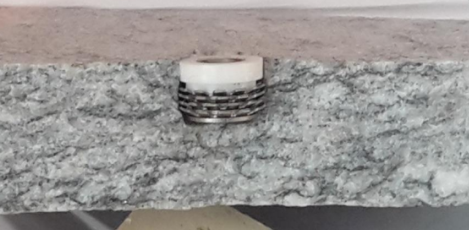
Reading a Keep-Nut part number. Codes read (Type) / (Thread) / (Height). In IM2S/P1/4-20/H6, IM2S is the 2-crown flush-head insert, P1/4-20 is the thread, and H6 is the 6 mm insert height. Crown count is the number that drives selection.
Required Tooling
Two tools do the whole job, plus a bit matched to your substrate. The setting tool is thread-specific. Each one matches the thread of the anchor it seats, so order the 1/4-20 version with these inserts. The gauge and the drill bits are shared across every Keep-Nut thread size.
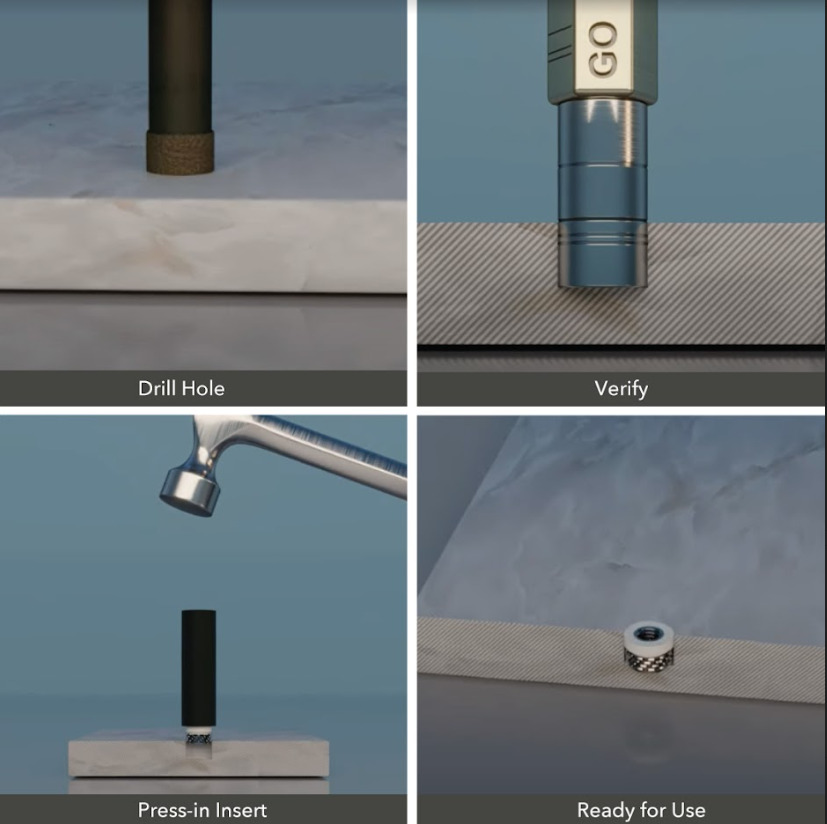
- Keep-Nut Setting Tool, 1/4-20 (CCH-KNSET-1/4). Required. The anchor threads onto it so the mallet drives the tool, not the insert. Thread-specific, so this version only fits 1/4-20 anchors.
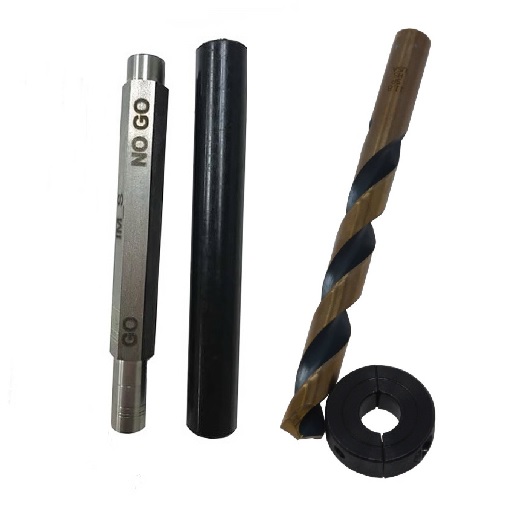
- Keep-Nut Go/No-Go Gauge (CCH-KNGAUGE). Checks hole diameter and depth before you press. One gauge covers all thread sizes.
- Keep-Nut drill bits. CNC and manual, matched to natural stone, porcelain and sintered stone, or solid surface. The universal 11.5 mm EVO bit covers all surfaces.
- KDM115 Keep-Nut Drilling Machine. Vacuum-base drilling for shops without CNC, or for field work on a set top.
How Keep-Nut Installation Works
CNC router setup
- Bit: CCH-KNBITCNC-11.8MM for natural stone and quartz, CCH-KNBITCNC-11.8-D for porcelain, ceramic, and sintered stone, or the universal 11.5 mm EVO bit FKN12X10EVO for all surfaces. 1/2 GAS male.
- RPM: 4,500 to 5,000
- Feed rate: 1.25 to 1.5 in/min (32 to 38 mm/min) in natural stone and quartz. Back off to 3/8 to 3/4 in/min max in porcelain and sintered stone, or follow the panel maker’s figure.
- Cooling: spindle and halo both
- Depth: match the insert height. H6 is 6.5 mm, H8.5 is 8.5 mm, H15 is 15.5 mm.
Manual grinder or polisher setup
- Bit: 11.4 mm non-coring diamond with 5/8-11 thread. CCH-KNBITGRI-11.4MM for natural and engineered stone, CCH-KNBITGRI-11.4-D for porcelain and sintered stone. The manual bit runs smaller than the CNC bit on purpose.
- Stop collar: set to anchor height plus 1/16 in. For the 2-crown that is roughly 5/16 in or 8 mm from the cutting edge.
- Water is required. 3,500 to 4,000 RPM.
- Start the hole at 45 degrees, then pivot to 90 once it bites. Low to moderate pressure until the collar reaches the surface.
- Do not try to round out or widen the hole. The first 1/16 in will be slightly wide or out of round, which is normal. As long as the bottom of the hole is on size, the anchor performs at or near full strength.
- Clear debris with compressed air before gauging.
Solid surface, HPL, and plastics
Use CCH-KNBITSS-11.8MM in a 1/2 in chuck cordless drill or a drill press, or CCH-KNBITSSCNC-12MM on a CNC. Corian, compact laminate, phenolic, acrylic, plastics, and wood all take this bit. No water needed.
Frequently Asked Questions
What size hole does a 1/4-20 Keep-Nut need?
The finished hole is 12 mm in diameter, +0.2 / -0.2 mm, for every height in the family. The bit you use to get there is not 12 mm. A CNC bit is 11.8 mm, a manual grinder bit is 11.4 mm, and the EVO universal bit is 11.5 mm, because the same bit cuts wider in granite or porcelain than it does in solid surface. That is why the Go/No-Go gauge exists: it reads the hole, not the bit. Gauge the first hole of every job in scrap before you drill a finished top.
I was quoted a metric Keep-Nut. Can I use 1/4-20 instead?
Usually yes, and it costs you nothing in tooling. The hole diameter, drill bits, gauge, setting depth, insert body, and crowns are identical across all five thread sizes. Only the internal thread changes. So if a quote or spec sheet from overseas lists M6 and you would rather buy imperial hardware in the US, the 1/4-20 drops into the same hole and the same process. The exception is when you are matching hardware that already exists, a metric threaded rod, stud, or bracket already on the job, in which case order the thread that matches. M6 and 1/4-20 are close in diameter, 6 mm against 6.35 mm, but they do not interchange. One thing that does change with thread: the setting tool. Chemical Concepts stocks 1/4-20, 10-24, M4, M5, and M6 anchors and setting tools in Pennsylvania.
Why is my Keep-Nut spinning in the hole?
Almost always one of two things: the hole is too deep and the anchor never bottomed out, or the hole is oversize. The anchor has to seat hard against the bottom of the hole to work. If it is floating, the post turns freely and will not tighten. Check depth and diameter with the Go/No-Go gauge. If the No-Go side drops in, that hole is out of tolerance and should not be used.
Do I need the setting tool, or can I just tap the anchor in?
You need it. The anchor threads fully onto the setting tool so the mallet drives the tool and the tool drives the anchor evenly. Hitting the insert directly deforms the crowns or the plastic body and the anchor will not hold to spec. Specialinsert is explicit that proper installation tooling is the basis of correct function. The setting tool is thread-specific, so a 1/4-20 tool fits 1/4-20 anchors only.
What is the difference between 1, 2, and 4 crown Keep-Nut anchors?
Crown count is how many rows of teeth grip the hole wall, and it sets both the holding strength and how thick your panel has to be. One crown holds 0.9 kN (202 lbf) and works in 8 mm material. Two crowns hold 2.5 kN (562 lbf) and need 8.5 mm. Four crowns hold 3.5 kN (787 lbf) and need 11 mm. The 15 mm four-crown holds 4.2 kN (944 lbf) and needs 17.5 mm. More crowns and thicker panel is always stronger, so pick the deepest anchor your material will take.
What is the thinnest panel a Keep-Nut will work in?
8 mm, using the 1-crown IM1S/H5. That is the published minimum, and Specialinsert notes the real figure depends on the receiving material, so a test on an offcut is worth five minutes. Keep-Nut has been tested down to 5 mm in tempered glass, though at 165 lbf. For thin porcelain and light panels the 1-crown is the right part; for a 10 to 12 mm top the 2-crown is the standard choice.
Do Keep-Nut anchors need epoxy or adhesive?
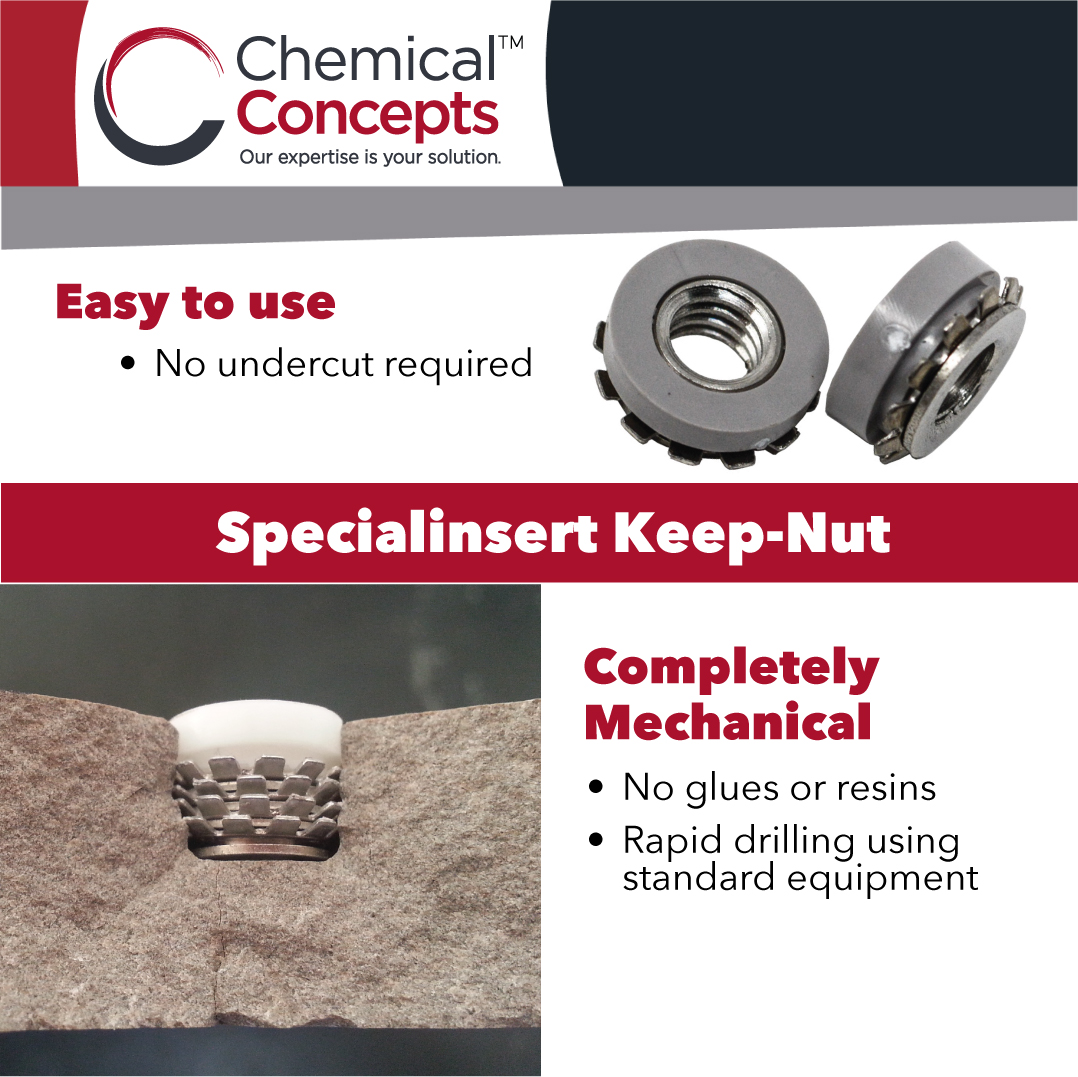
No. The anchor is purely mechanical and is loadable the moment it is pressed in. There is no cure time and nothing to mix or clean up. That is the main reason shops move off glue-on studs: the top can be handled and shipped the same shift instead of sitting overnight waiting on epoxy.
How much weight will a 1/4-20 Keep-Nut hold?
Rated average pull-out runs from 202 lbf on the 1-crown to 944 lbf on the 15 mm 4-crown, with tested figures by material in the table above. Those are laboratory averages on specific specimens and they vary a lot with substrate: two different 30 mm granites in our test data came in more than 1,000 lbf apart, and 30 mm limestone tested at a fraction of granite. For a load-bearing, overhead, or exterior install, run a pull test in your actual material and have a qualified engineer size the anchor count and spacing. Call us and we will help you scope it.
Can a long bolt push the anchor out the back of the panel?
No. The thread inside the bush is non-through, so it stops before the end of the insert. An overlong bolt bottoms out against solid metal instead of driving the anchor through and breaking out the back face. That is a deliberate design feature, not a tolerance. For best results, run the post or rod across the full useful thread length so the part you are fastening contacts the metal bush.
Can you install Keep-Nut without a CNC?
Yes, and most shops do. The three routes are a CNC router, the KDM115 drilling machine with a vacuum base, or freehand off a pneumatic or electric stone polisher with the 11.4 mm bit and a stop collar. Solid surface and plastics can be done with a cordless drill and the 11.8 mm solid surface bit. Freehand takes more care on hole diameter, which is why the gauge matters more the less automated your setup is.
Does Keep-Nut work for exterior cladding and ventilated facades?
Yes, it was originally developed for ventilated facades, building cladding, and panel mounting before it became common on countertops. The stainless steel bush and crowns hold up in exterior service, and the insert sets in the back of the panel so nothing shows on the face. For any exterior or overhead facade work, anchor spacing, embedment depth, and suitability have to be determined by a qualified engineer against the panel size, weight, and wind load, and a project-specific pull test is standard practice. Call us before you spec it and we will get you the data your engineer needs.
Where are Keep-Nut anchors made?
Italy. Keep-Nut is manufactured by Specialinsert, which has produced mechanical fastening systems in Italy since 1974. Chemical Concepts is the US distributor and stocks the 1/4-20, 10-24, M4, M5, and M6 threads in Huntingdon Valley, Pennsylvania.
Questions on Fit
Questions on fit for your panel, substrate, or install method? Call (800) 220-1966 or email [email protected].


Reviews
There are no reviews yet.