



Description
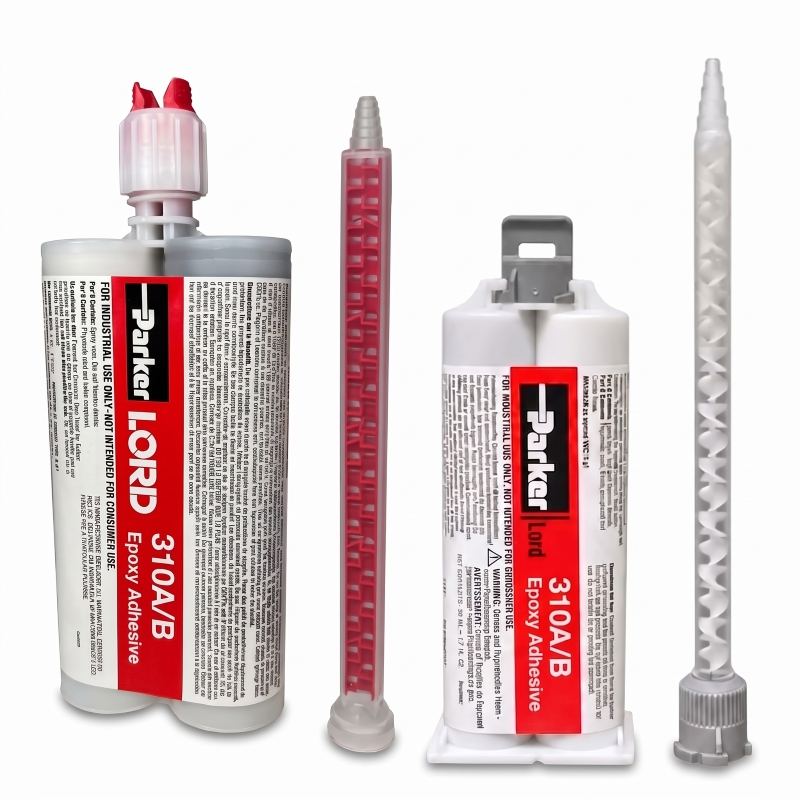
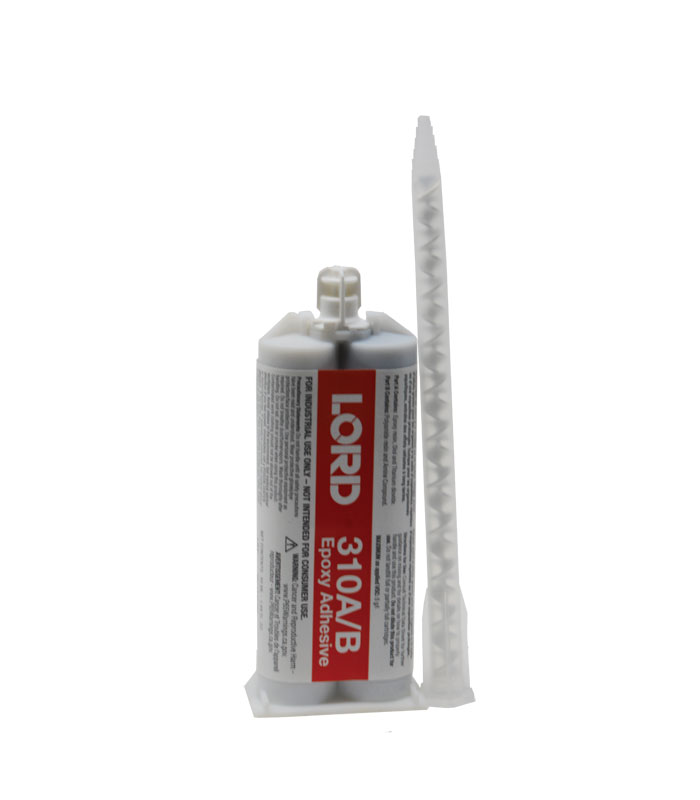
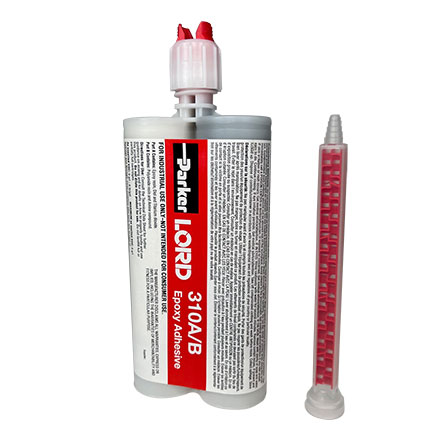
LORD 310 epoxy adhesive, sold as LORD 310-A/310-B and listed here as LORD 310 A/B, is a modified, thixotropic, two-component epoxy paste for bonding prepared metals, prepared rubber, urethane, and plastics. Parker LORD originally formulated it for primerless adhesion to SMC, and it is used on disk drives, down-hole oil field equipment, automotive body panels and spoilers, and vibration damping mounts. Sign shops buy it from us for outdoor metal-to-masonry and wood-to-metal bonding, and for setting threaded rod into drilled masonry holes. It cures at room temperature or faster with heat, and it comes in 50 mL and 210 mL 1:1 cartridges, each with one static mixer. Dispensing guns are sold separately.
Key Product Details
| Property | Value |
|---|---|
| Chemistry | Modified, thixotropic, two-component epoxy |
| Components | 310-A resin (off-white paste) and 310-B hardener (gray paste) |
| Mixed / Cured Color | Gray paste / gray |
| Mix Ratio, Cartridges | 1:1 by volume (1.15:1 by weight) |
| Solids Content | 100% |
| Viscosity, 310-A Resin | 400,000 to 820,000 cP at 77°F (25°C), Brookfield HBF, Helipath T-C spindle, 5 rpm |
| Viscosity, 310-B Hardener | 230,000 to 690,000 cP at 77°F (25°C) |
| Density, 310-A Resin | 11.7 to 12.85 lb/gal (1402 to 1540 kg/m³) |
| Density, 310-B Hardener | 10.0 to 11.0 lb/gal (1198 to 1318 kg/m³) |
| Flash Point, Closed Cup | >200°F (>93°C), resin and hardener |
| Working Time | 30 to 60 minutes at 75°F (24°C), 54 g mass |
| Time to Handling Strength | 6 to 8 hours |
| Full Cure | 24 hours when adhesive, substrates, and ambient are 65°F (18°C) or higher |
| Heat Cure | Faster cure, highest bond strength and impact resistance. Bondline not to exceed 325°F (162°C) |
| Recommended Film Thickness | Approximately 0.02 in (0.51 mm) |
| Service Temperature | -40°F to +400°F (-40°C to +204°C) |
| Postbake Resistance | Up to 400°F (204°C) |
| Outgassing Resistance | Up to 225°F (107°C) |
| Tensile Strength at Break | 4,650 psi (32 MPa), ASTM D882-83A modified |
| Elongation | 2%, ASTM D882-83A modified |
| Young’s Modulus | 245,000 psi (1,689 MPa), ASTM D882-83A modified |
| Glass Transition Temperature (Tg) | 140°F (60°C), ASTM E1640-99 by DMA |
| Solvent / Flammability | Contains no solvent, nonflammable, virtually odorless |
| Shelf Life | Two years from date of manufacture at 60 to 80°F (16 to 27°C), original unopened container |
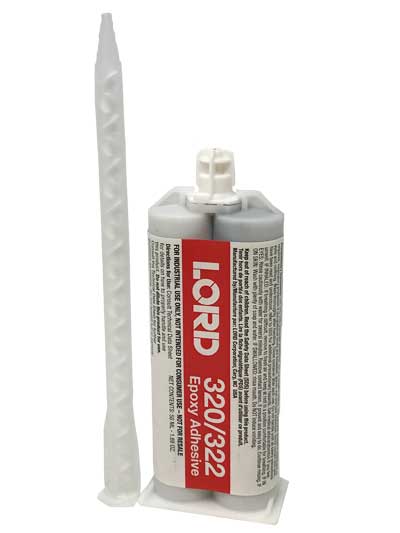
| Packaging | 50 mL and 210 mL dual cartridges, one static mixer per cartridge |
| Country of Manufacture | USA |
Data is typical and not for specification purposes. Source: Parker LORD 310 Technical Data Sheet DS3374, Rev. 8.
Mix Ratio by Joint Design (Bulk Resin and Hardener)
Cartridges dispense at a fixed 1:1 by volume. Bulk 310-A and 310-B can be run at three ratios depending on how the joint is loaded and the service temperature.
| Joint Design | Service Range | By Volume | By Weight |
|---|---|---|---|
| General purpose, mixed stress | -40°F to 400°F (-40°C to 204°C) | 1:1 | 1.15:1 |
| High temperature, shear | 50°F to 400°F (10°C to 204°C) | 1.5:1 | 1.7:1 |
| Low temperature, peel | -40°F to 100°F (-40°C to 38°C) | 1:1.5 | 1:1.5 |
Bond Performance
| Test Condition | CRS to CRS Lap Shear, psi | AL to AL Lap Shear, psi | SMC to SMC Lap Shear, psi | NR to CRS 45° Peel, pli | SBR to SBR T-Peel, pli |
|---|---|---|---|---|---|
| Room temperature | 2,520 (C) | 1,710 (A) | 630 (FT) | 55 (R) | 57 (50R/C) |
| Hot strength, 180°F (82°C) | 1,590 (A) | 1,290 (A) | 570 (FT) | 18 (8R/A) | 10 (A) |
| After 7 days in 130°F (54°C) water, tested after 24 hr | 2,540 (C) | 1,950 (A) | 670 (FT) | 55 (R) | 95 (56R/C) |
| After 14 days salt spray, tested immediately | 2,380 (20C/A) | 1,850 (A) | 670 (FT) | 50 (93R/A) | 73 (33R/C) |
| After 14 days at 100°F (38°C), 100% RH, tested immediately | 2,790 (50C/A) | 2,450 (50C/A) | 640 (98FT/A) | 58 (R) | 63 (93R/C) |
| At -30°F (-34°C) | 2,370 (A) | 1,550 (A) | 690 (FT) | 72 (R) | 122 (540R/C) |
Failure modes: A adhesive, C cohesive, FT fiber tear, R rubber failure. Steel and aluminum prepped with MEK wipe, grit blast, MEK wipe. SMC prepped with 320-grit sandpaper and dry rag wipe. SBR and NR primed with LORD 7701. All samples cured 72 hours at room temperature, mixed 1:1 by volume. Film thickness 0.010 in on metal lap shears, 0.030 in on SMC lap shears, 0.020 in on peels.
Performance in Production
- The resin runs 400,000 to 820,000 cP, so 310 dispenses as a heavy paste that holds a bead on a sign back or bracket while you position the part. The TDS does not publish a sag rating, so check it on your vertical and overhead work before you count on it.
- 30 to 60 minutes of working time at 75°F on a 54 g mass gives time to set several letters, standoffs, or rods from one mixer. Bigger masses of mixed epoxy heat up and shorten that window, so dispense what you can place and keep going.
- Handling strength comes at 6 to 8 hours and full strength at 24 hours, but only when the adhesive, the parts, and the air are all 65°F or warmer. A cold masonry wall in late fall is the usual reason a sign job stays soft overnight. Warm the substrate or plan a longer brace time.
- 2% elongation and a 245,000 psi modulus make this a rigid bond line. It spreads load across the full bonded area instead of at a fastener point, but it will not flex with a joint that moves. Test wood and long aluminum-to-masonry runs where seasonal movement will work the bond.
- Outdoor exposure data holds up: steel lap shear was 2,540 psi after 7 days in 130°F water and 2,380 psi after 14 days of salt spray, against 2,520 psi at room temperature. The TDS lists moisture, sunlight, salt spray, and thermal cycling resistance.
- Tg is 140°F and steel lap shear drops from 2,520 psi to 1,590 psi at 180°F. Dark metal faces in direct sun can get hot, so test on the finish and color you are installing.
- Heat cure speeds things up and gives the highest bond strength and impact resistance. Keep the bondline at or under 325°F.
- Clamping is optional unless the parts can move during cure. Use just enough pressure to wet both surfaces, look for a little squeeze-out at the edges, and don’t over-clamp, which starves the joint. For tight bondline control, add a small amount of solid glass beads to the mixed adhesive.
- Once cured, 310 can be filed, sanded, and machined like a light metal, and paints, lacquers, and enamels can go over it. Phosphatizing and e-coat (ELPO) do not affect the adhesive or its bond strength.
Common Applications
- Outdoor sign installation: bonding metal sign components, brackets, and standoffs to masonry, brick, and stone
- Wood-to-metal bonding on outdoor signs and sign structures
- Setting threaded rod into drilled masonry holes for non-structural sign mounting, sometimes called chemical anchoring
- Rubber-to-metal bonding for vibration damping mounts, pads, and bumpers, with LORD 7701 on the rubber
- SMC and fiberglass (FRP/GRP) panel bonding, including automotive body panels and spoilers
- Urethane and plastic parts bonded to prepared metal
- Down-hole oil field equipment and disk drive assembly
- Glass and ceramic bonding after priming with LORD AP-134
- Assemblies that go through phosphatizing, e-coat (ELPO), or postbakes up to 400°F
Available Sizes
| Size | Our SKU | LORD Part No. | In the Box | Spare Mixers (Sold Separately) | Dispensing Gun (Sold Separately) |
|---|---|---|---|---|---|
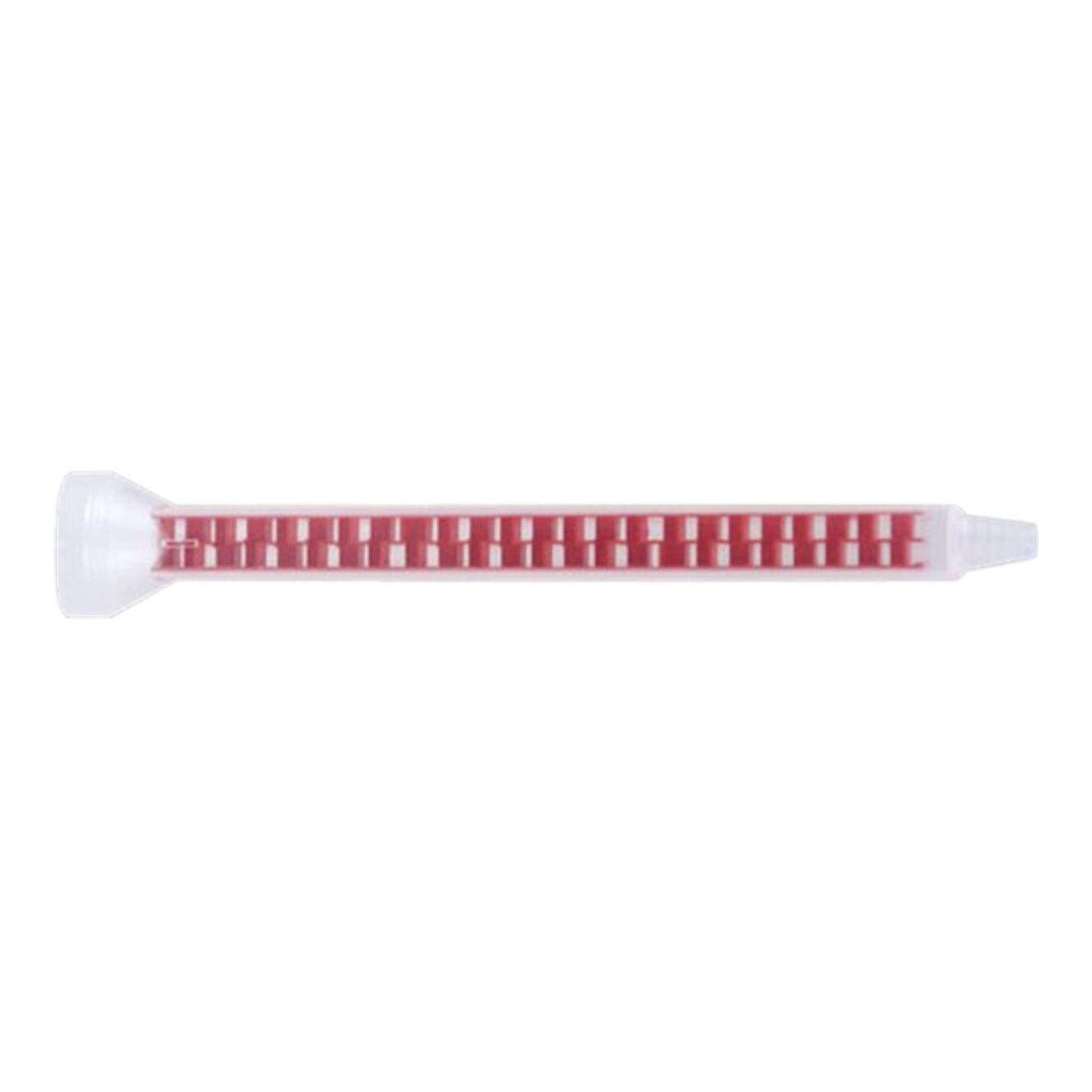
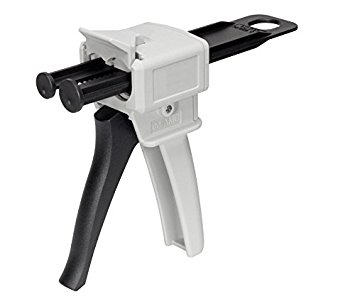
| 50 mL dual cartridge, 1:1 | LOR3003578 | 3003578 | Cartridge and one MBH 06-20T mixer | MBH 06-20T mixer (CON-MBH-06-20T) | Chem-Set PAK-50 gun |
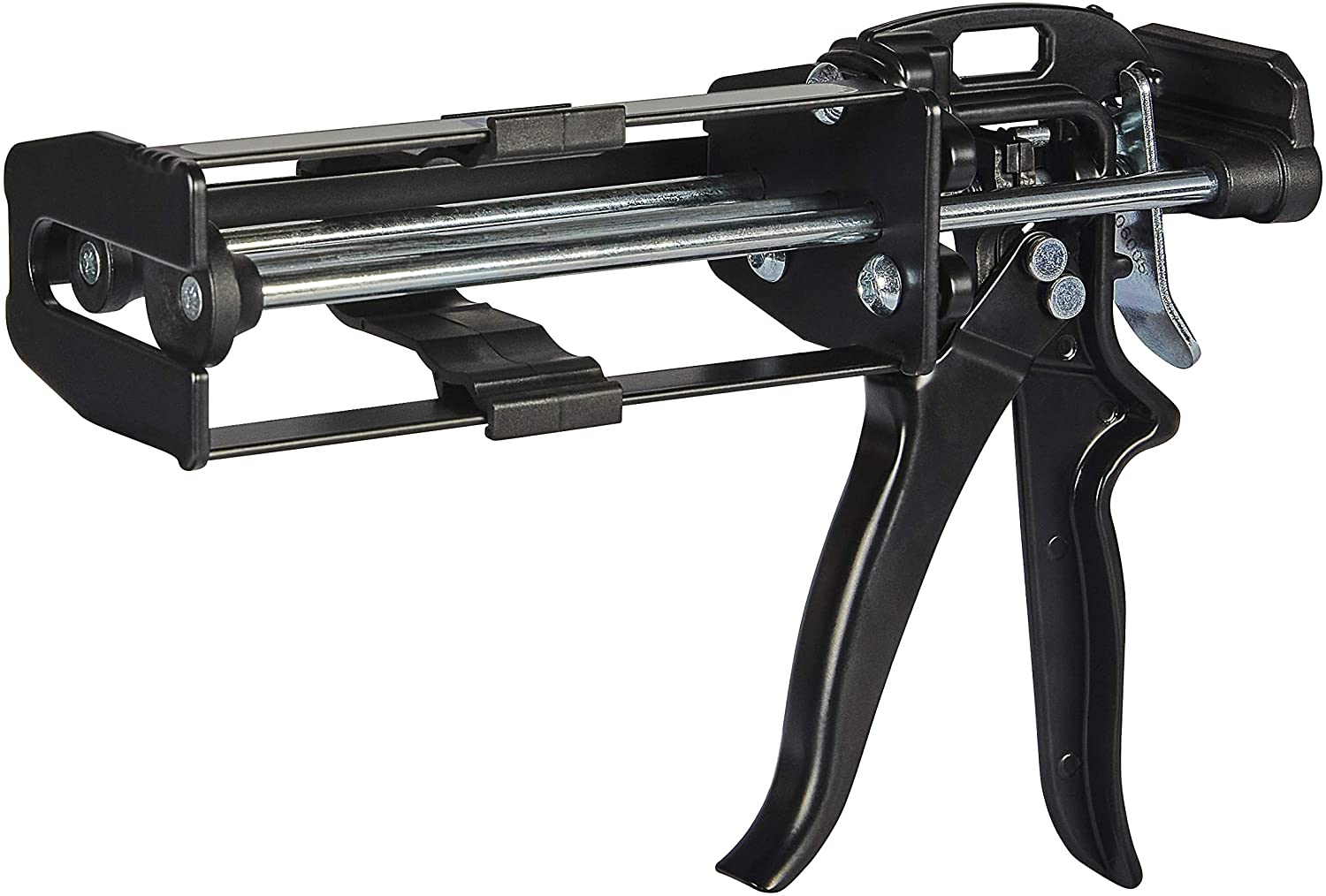
| 210 mL dual cartridge, 1:1 | LOR3031527 | 3031527 | Cartridge and one static mixer | MCQ 08-24T mixer (CON-MCQ-08-24T) | Newborn 3-203-XSP gun |
The 210 mL cartridge replaced the old LORD 310 Pak 300 (3020264) and takes a different gun than the old packaging. Running a meter-mix machine? We also carry bulk 310-A resin and bulk 310-B hardener.
Related Products
- Chem-Set PAK-50 gun for the 50 mL cartridge, sold separately
- Newborn 3-203-XSP gun for the 210 mL cartridge, sold separately
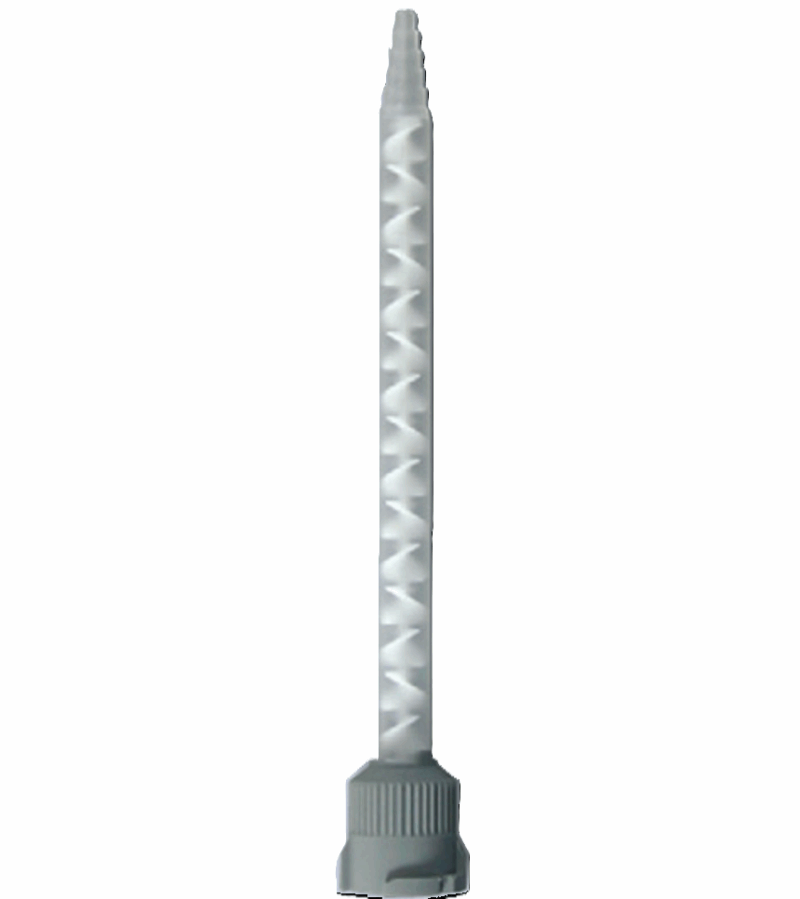
- Spare MBH 06-20T mixers for the 50 mL cartridge, sold separately
- Spare MCQ 08-24T mixers for the 210 mL cartridge, sold separately
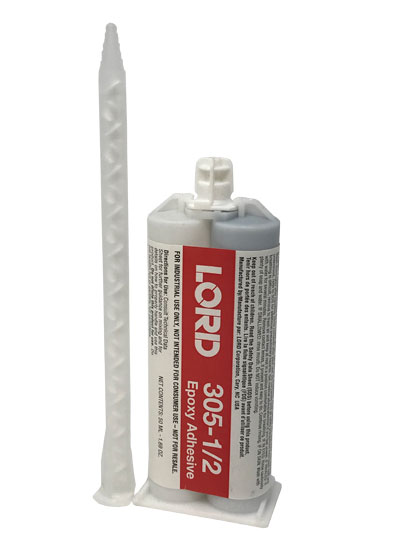
- LORD 305-1/305-2 epoxy adhesive, another LORD 1:1 epoxy in cartridges
How to Bond Metal to Masonry, Stone, or Wood with LORD 310
Most failures on a sign install come from prep and temperature, not the adhesive. The TDS prep is short and it works. Here’s how it runs on the job.
- Check temperature first. The adhesive, the wall, the sign parts, and the air all need to be 65°F or warmer for a 24 hour full cure.
- Clean the metal. Degrease to remove oil, grease, fingerprints, and dust. On metal with no oxidation, an isopropyl alcohol wipe is enough. If there’s tarnish or rust, abrade it, then clean again to pick up loose particles.
- Clean the masonry, stone, or wood. Brush off dust, loose material, and anything else that will release before the epoxy does. Drill dust left in a hole is the same problem as dust on a face.
- Mix. Push the cartridge through the static mixer until the bead comes out a uniform gray with no off-white streaks. Discard anything that isn’t uniform.
- Apply. For face bonding, about 0.02 in of film is the general-use target. Put the parts together in a way that pushes air out rather than trapping it.
- Hold. Brace or tape the part so it can’t move, but don’t clamp hard. A little squeeze-out at the edges is what you want to see. Wipe it off before cure with hot water and detergent or a ketone solvent.
- Wait. Leave it alone for the 6 to 8 hours to handling strength and give it the full 24 hours before the sign sees load.
Setting Threaded Rod in Masonry
Sign installers use 310 to pot threaded rod into drilled holes in brick, block, and stone. Blow and brush the hole clean, fill it from the bottom so you don’t trap air, seat the rod, and strike off the excess. LORD does not publish pull-out or concrete bond data for 310, and it is not sold as a code-listed anchoring adhesive. Pull-test your rod size, embed depth, and masonry before you rely on it, and where a building code or an engineer calls for a listed anchoring adhesive, use one.
Rubber, Glass, and Ceramic Prep
For cured rubber, apply LORD 7701 adhesion enhancer and let it flash off before applying 310. For glass and ceramic, prime with LORD AP-134 adhesion enhancer. Handle prepped surfaces carefully and assemble as soon as you can.
Frequently Asked Questions
What is LORD 310 epoxy used for?
LORD 310 is a two-part epoxy paste for bonding prepared metals, prepared rubber, urethane, and plastics, including SMC. LORD lists disk drives, down-hole oil field equipment, automotive body panels and spoilers, and vibration damping mounts. Our sign customers use it for outdoor metal-to-masonry and wood-to-metal bonding and for setting threaded rod in masonry.
Is LORD 310 A/B the same as LORD 310-A/310-B?
Yes. LORD 310, LORD 310 A/B, LORD 310-A/310-B, and Parker LORD 310 all refer to the same system: 310-A resin mixed with 310-B hardener. LORD 320/310-B is a different system that uses 320 resin. LORD also makes a 310-A/310-B Black version, which is not what this page sells.
Can I use LORD 310 to bond metal to masonry or stone outdoors?
Yes, sign shops use it for exactly that. The TDS lists resistance to moisture, sunlight, salt spray, and thermal cycling, and steel bonds held 2,380 psi lap shear after 14 days of salt spray. Masonry and stone are not on LORD’s 310 substrate list, so test on your wall material before a production install.
Can LORD 310 be used as a chemical anchor for threaded rod?
Sign installers do use it to set threaded rod in masonry, but LORD publishes no pull-out data for 310 and it is not a code-listed anchoring adhesive. Pull-test your rod, hole, and base material first. Where a code or an engineer requires a listed anchoring adhesive, use one.
Does LORD 310 bond wood?
Our customers use it for wood-to-metal bonding on outdoor signs, but wood is not on LORD’s substrate list for 310. The cured epoxy is rigid, at 2% elongation, and wood moves with moisture and season. Test on your species and finish, and design the joint so movement doesn’t peel the bond.
How long does LORD 310 take to cure?
Working time is 30 to 60 minutes at 75°F, handling strength comes at 6 to 8 hours, and full strength at 24 hours. The 24 hour figure needs the adhesive, parts, and air at 65°F or warmer. Heat speeds the cure, with the bondline kept at or under 325°F.
What gun and mixer do I need for LORD 310?
Each cartridge comes with one static mixer and nothing else. Guns and spare mixers are sold separately. The 50 mL cartridge comes with one MBH 06-20T mixer and runs in a Chem-Set PAK-50 gun. The 210 mL cartridge comes with one mixer and runs in a Newborn 3-203-XSP gun. Spares are MBH 06-20T mixers for the 50 mL and MCQ 08-24T mixers for the 210 mL.
Is LORD 310 made in the USA?
Yes. LORD 310 is made in the USA by Parker LORD, based in Cary, North Carolina.
Questions on fit for your sign install or bonding job? Call (800) 220-1966 or email [email protected].


Reviews
There are no reviews yet.